What Is Biometric ID: Kenya Now Fingerprints 7-Year-Olds
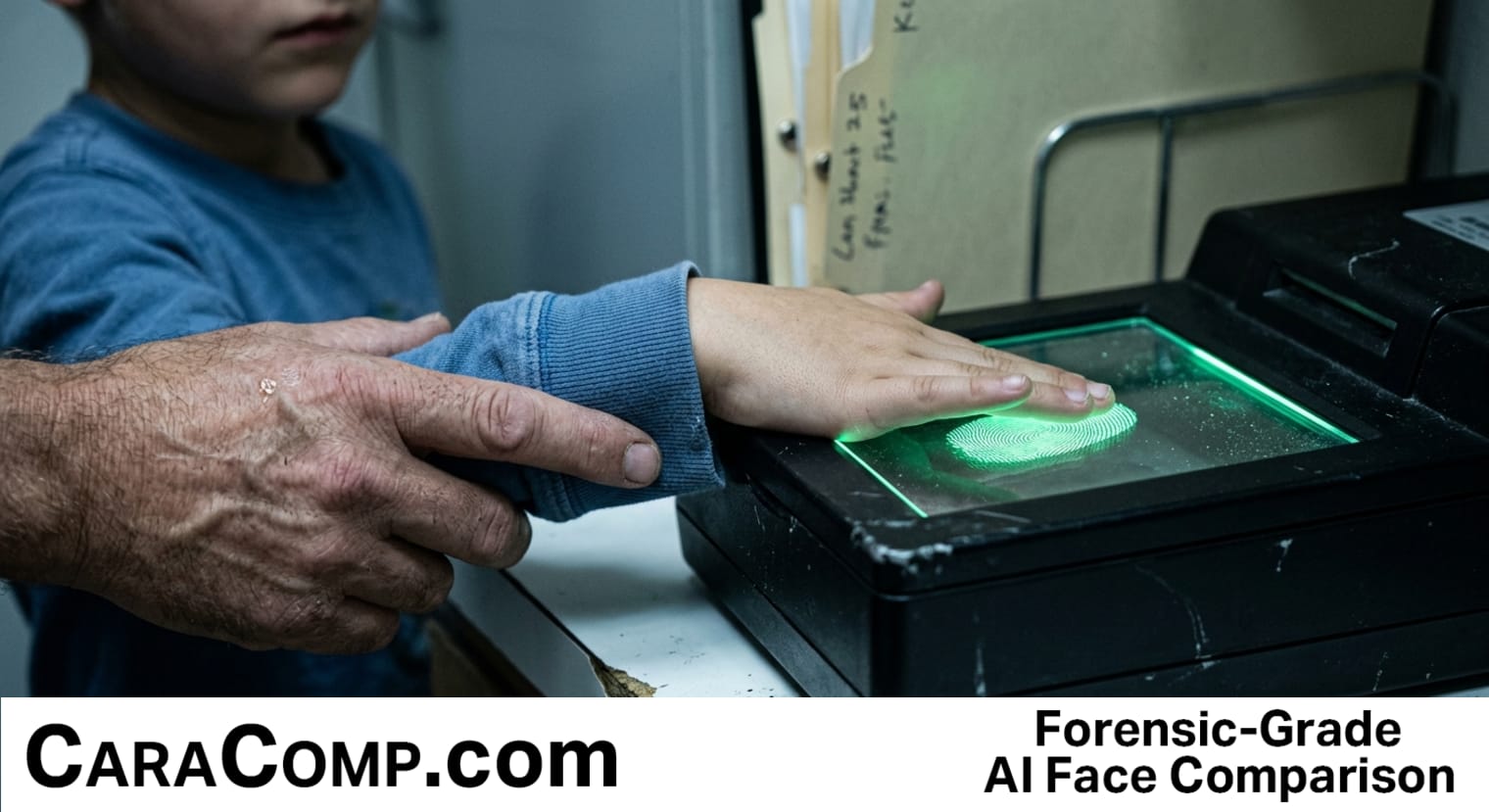
Kenya just set the baseline entry age for national biometric registration at seven years old. Under the expanding Taifa Care program, over 8,200 public health facilities are now deploying scanners to capture the fingerprints of young children. While health administrators celebrate this deployment as a milestone for eliminating system fraud, it marks a pivotal, irreversible turning point in how physical identity is cataloged and verified globally.
For professionals working within digital biometrics and investigative analysis, this development highlights the critical shift from vulnerable paper credentials to algorithmic verification. A physical trait is mathematically unique and immutable. However, when centralized databases ingest biometric vectors from minors, it exposes a massive governance problem: once an individual's physiological data enters a network, there is no password reset or reissue protocol available if that system is compromised.
This massive expansion emphasizes key realities every investigator and biometrics analyst needs to understand:
- Biometric data is permanent and unchangeable: Unlike lost cards or compromised tokens, an individual's physical markers remain fixed for life, making the precision and security of how that data is compared absolutely paramount.
- Algorithmic verification replaces human estimation: Relying on manual human review for identity verification or photo matching introduces severe error rates, whereas modern Euclidean distance analysis provides reproducible, mathematical precision for case analysis.
- Targeted analysis protects data integrity: There is a fundamental technical difference between building centralized identity repositories and executing secure, side-by-side facial comparison for specific case investigations where data control remains entirely in professional hands.
As biometric verification becomes the default standard worldwide, the tools used to process this data must meet strict evidentiary standards. Whether addressing public program fraud or building a private case file, high-level verification is no longer exclusive to government agencies—it is becoming the baseline requirement for modern investigative work.
Read the full article on CaraComp: What Is Biometric ID: Kenya Now Fingerprints 7-Year-Olds


Comments
Post a Comment