TSA Facial Recognition Airports: 84 Now Scan Faces at Security
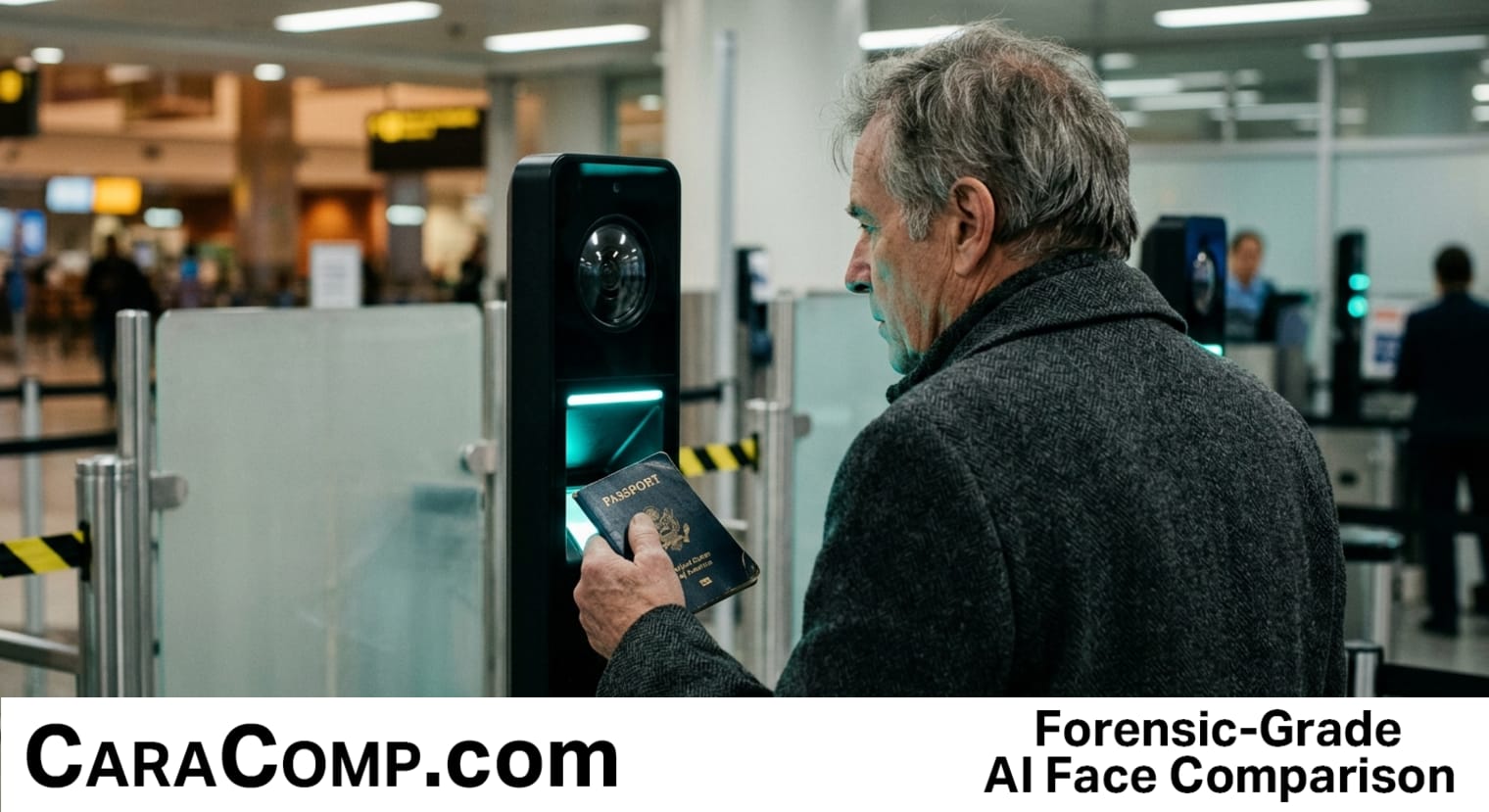
Federal security checkpoints can now verify your biometric identity in two seconds flat across 84 major airports, yet 170 million stolen identity credentials were dumped onto the open market in the exact same news cycle. That stark contrast exposes the widening gap between front-end verification speed and the complex reality of modern identity fraud.
The rapid expansion of automated facial comparison at checkpoint gates proves that algorithmic 1:1 verification has officially transitioned from specialized agency tech to standard operational infrastructure. But while screening lines move faster, professional investigators know the uncomfortable truth: matching a live face to a plastic credential only answers one narrow question at a single point in time. It does nothing to unravel forged documentation, synthetic profiles, or organized fraud rings operating behind the scenes.
For private investigators, intelligence analysts, and fraud specialists, this rollout delivers an unmistakable signal. When airport gates process biometrics instantaneously, spending three hours manually eyeballing case photos side by side is no longer thoroughness—it is a severe liability. Rigorous Euclidean distance analysis and objective mathematical comparison are now mandatory capabilities for any serious investigative workflow.
This aggressive infrastructure expansion carries direct implications for field professionals:
- Algorithmic comparison is the new operational baseline: Precision biometric matching is no longer exclusive to federal agencies with massive budgets; it has become the standard benchmark for verifying subject identity.
- Point-of-contact verification leaves massive investigative gaps: Real-time matching confirms physical presence at a checkpoint, but uncovering deep fraud schemes still requires thorough, multi-image case analysis across fragmented evidence.
- Manual photo evaluation is decisively obsolete: As compromised credentials flood illicit markets, investigators who fail to leverage automated comparison will consistently fall behind faster, tech-enabled adversaries.
The technology to analyze facial geometry in seconds is already active nationwide. The only question is whether independent investigators are equipping themselves with that same analytical caliber or letting their methodology lag behind.
Read the full article on CaraComp: TSA Facial Recognition Airports: 84 Now Scan Faces at Security


Comments
Post a Comment