Online Identity Verification: One ID, Three Hiring Checks
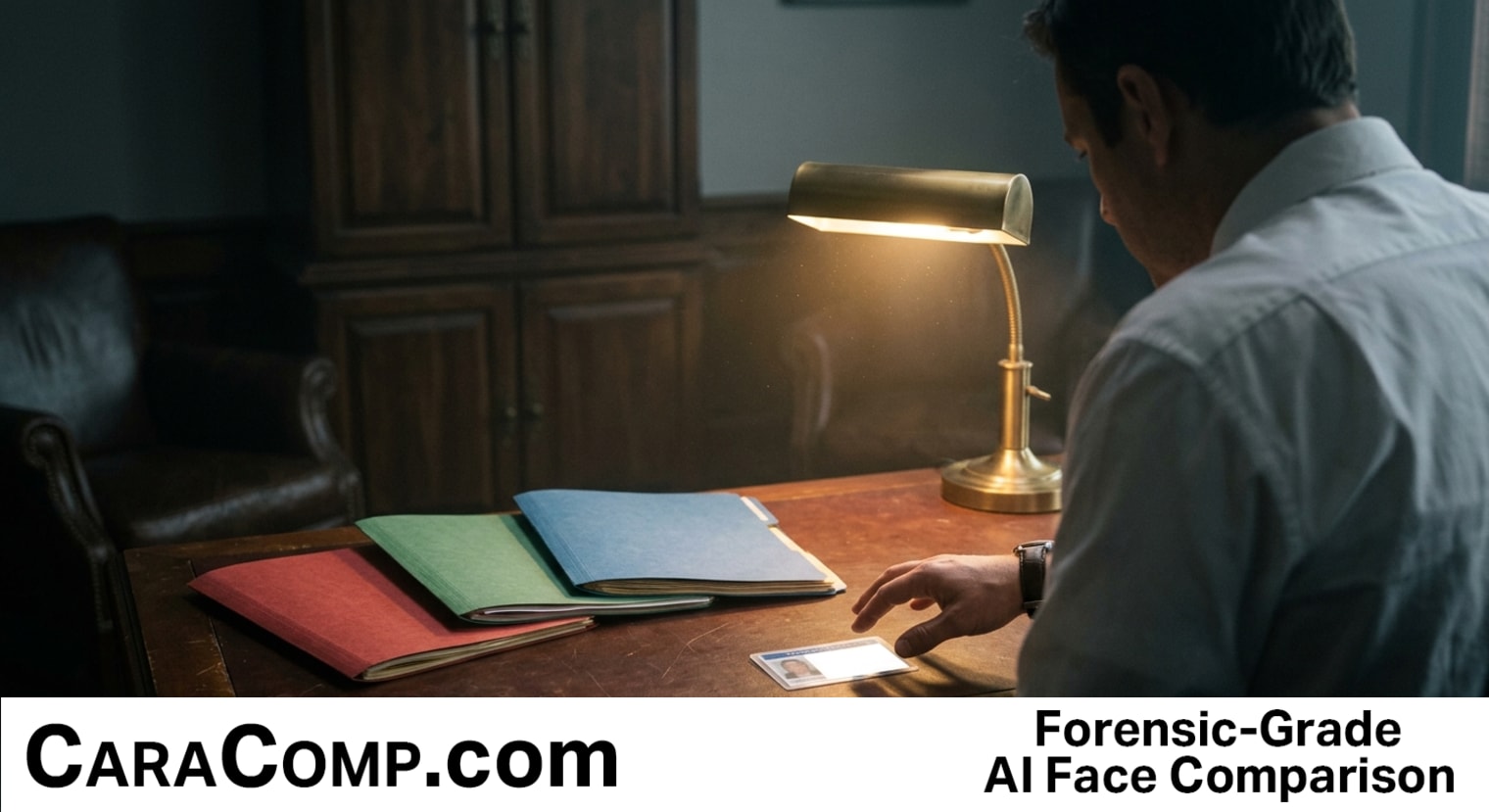
Roughly 76% of paper federal employment forms contain fineable errors, and industry analysts project that one in four job applicants will be completely fabricated by 2028. Yet organizations continue making the fatal mistake of treating a single photo ID upload as an all-in-one verification solution. Confusing visual proof of identity with legal eligibility and credential authorization is creating massive compliance exposure.
For fraud investigators, private investigators, and compliance professionals, this systemic breakdown highlights a critical distinction. A driver's license or passport photo answers exactly one question: does the human face match the reference credential? It says nothing about work authorization or professional licensing. In professional case analysis, rigorous facial comparison relies on precise Euclidean distance analysis to confirm identity between known images. Conflating that 1:1 image comparison with full-spectrum vetting allows synthetic identities and forged credentials to slip past intake desks unnoticed.
As corporate verification demands tighten and federal enforcement eliminates leniency for paperwork errors, investigators must rethink how identity data is evaluated:
- Visual comparison is only step one: Precise 1:1 facial comparison scientifically verifies whether two images represent the same subject. It must never be conflated with authorization or credentialing, which require distinct data verification pipelines.
- The financial risk of sloppy vetting is surging: With statutory fines scaling into thousands of dollars per error, relying on single-document assumptions leaves enterprises and screening firms dangerously exposed to fraud.
- Defensible case analysis requires specialized tools: Professional investigations demand reliable, court-ready facial comparison reporting rather than bloated systems making unsupported verification claims.
As fraudulent applications multiply across hiring and onboarding workflows, investigators cannot rely on sloppy assumptions. Precision matters. Knowing exactly what visual comparison technology proves—and where separate verification checks must take over—is the only way to build bulletproof case files and prevent costly fraud.
Read the full article on CaraComp: Online Identity Verification: One ID, Three Hiring Checks


Comments
Post a Comment