Meta Smart Glasses Facial Recognition: Code Pulled in 48 Hours
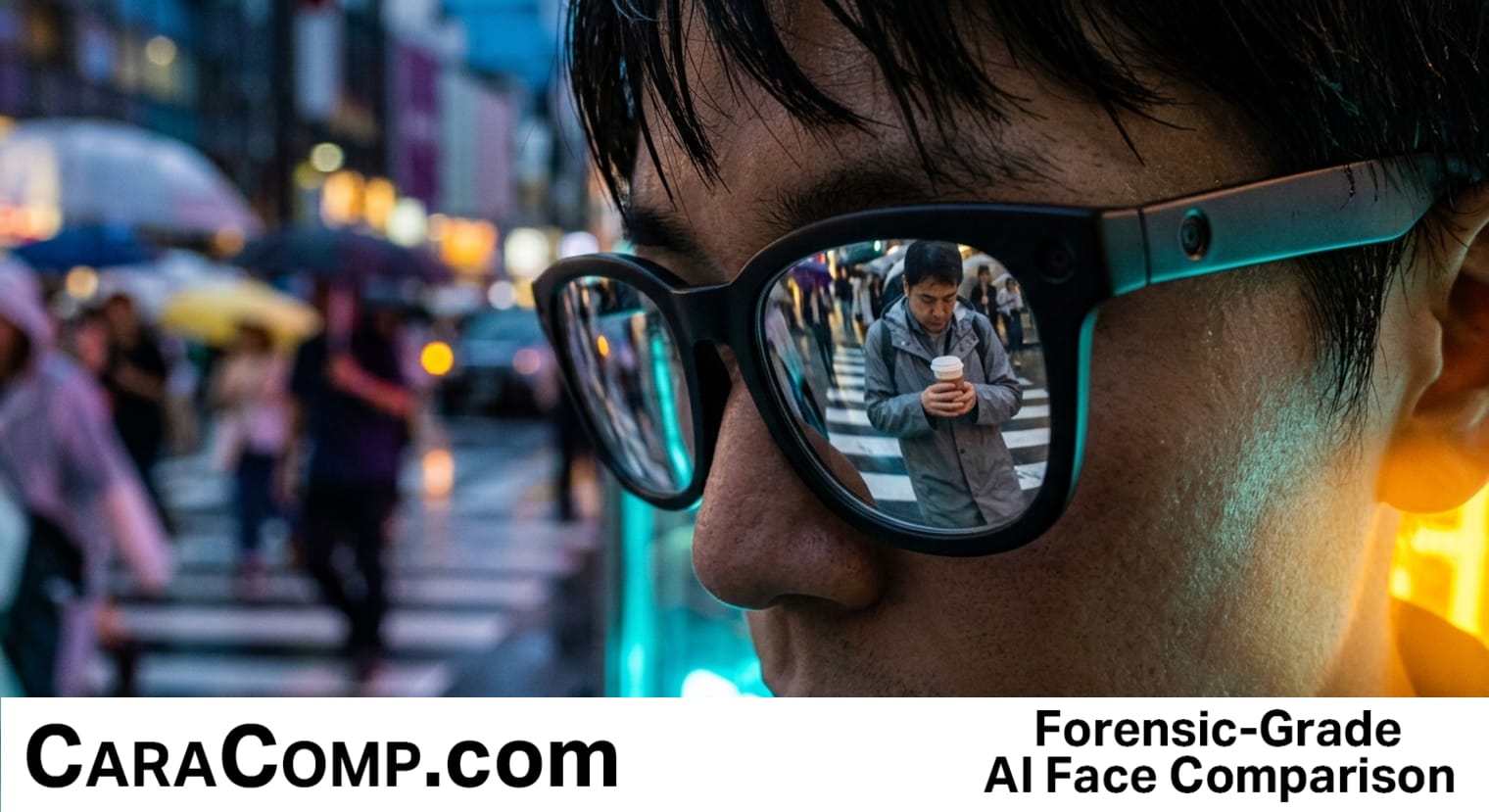
A pair of college students turned standard smart eyewear into a live face-matching scanner over a single weekend, and Meta hastily pulled dormant code from its app within 48 hours. That swift retreat tells you everything you need to know about where big tech is stumbling. The issue was never whether the multi-model AI pipeline worked—it was the realization that invisible biometric capture in public spaces crosses an ethical line regulators are eager to penalize.
This controversy highlights a vital distinction that serious practitioners understand: the difference between ambient public face matching and disciplined, case-based facial comparison. When consumer platforms build passive data pipelines into everyday eyewear, they invite regulatory crackdowns under strict biometric statutes like Illinois' BIPA. For the broader AI industry, this backlash creates collateral damage, confusing real-time public scanning with professional investigation technology.
- The physical form factor breaks consent: Chaining detection, facial alignment, and vector extraction is standard computer vision. The friction begins when the familiar visual cue—raising a camera—is erased, leaving bystanders unaware that their biometric data is entering a remote processing pipeline.
- Regulatory scrutiny will intensify across biometrics: Lawmakers already demand answers regarding wearable optics. Systems operating without clear visual accountability will face severe liability, accelerating the demand for transparent, compliant analysis methodologies.
- Targeted comparison remains the legitimate gold standard: Professional investigators do not need passive ambient data feeds. True investigative workflow requires rigorous Euclidean distance analysis performed directly on case files, producing structured, court-ready documentation rather than automated bystander identification.
Pulling code from a mobile build does not eliminate the underlying capability; it simply hits pause until the regulatory waters calm. As hardware manufacturers struggle to balance consumer optics with biometric privacy, professional OSINT analysts and private investigators must double down on reliable, photo-to-photo facial comparison systems that maintain absolute chain-of-custody and clear legal boundaries.
Read the full article on CaraComp: Meta Smart Glasses Facial Recognition: Code Pulled in 48 Hours


Comments
Post a Comment