ID Scan Data Breach: 170 Million Faces Can't Be Reset
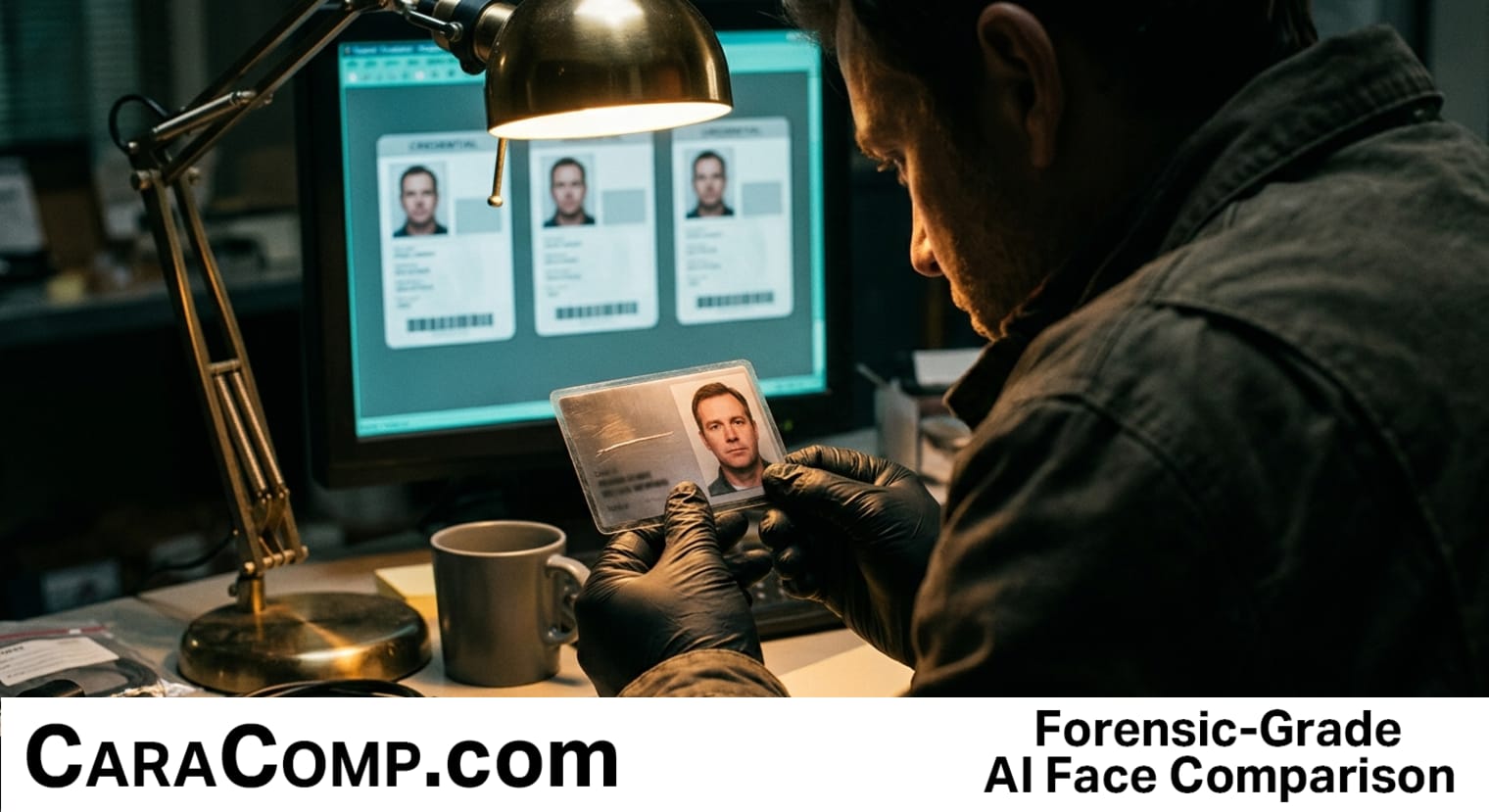
When 170 million government ID scans hit the dark web, criminals didn't just buy a database of stolen photos—they purchased pre-packaged master keys designed to systematically dismantle modern identity verification. If your password leaks, you reset it in ninety seconds. If your driver's license is compromised, the DMV issues a replacement number. But when your facial biometric template is extracted and weaponized, you cannot reissue your face.
This massive exposure reveals an uncomfortable reality that fraud examiners, OSINT analysts, and private investigators face every day: automated onboarding systems are failing because bad actors now hold complete, high-resolution credential packs. Fraudsters aren't relying on crude deepfakes; they are deploying real identity bundles to defeat first-line defense checks. The 128-dimensional mathematical measurements that map jawlines, eye spacing, and facial geometry are circulating permanently among criminal networks.
For professional investigators, this breach shifts how identity verification and fraud detection must be approached:
- Biometric templates outlast document cancellations: Reissuing a physical ID card invalidates the document number on paper, but the mathematical vector extracted from the photo remains tied to the target permanently, allowing repeated unauthorized verification attempts.
- Standard intake security is structurally compromised: When fraud rings possess high-resolution document scans paired with authentic face templates, simple automated gatekeepers fail to flag the intrusion, demanding deeper case-level investigation.
- Manual photo review is no longer defensible: Eyeballing photos or relying on generic consumer tools is ineffective against weaponized identity files. Investigators require precise, objective facial comparison powered by Euclidean distance analysis to establish court-ready proof.
The era of treating a photo as a static image is over. In modern case analysis, every face is a complex biometric dataset. When 170 million permanent facial profiles are active in the wild, investigators cannot afford to waste three hours manually comparing photos or guessing whether a match is legitimate. The industry demands enterprise-grade facial comparison methodologies to cut through identity manipulation, expose fraudulent claims, and deliver undeniable evidence.
Read the full article on CaraComp: ID Scan Data Breach: 170 Million Faces Can't Be Reset


Comments
Post a Comment