Facial Recognition Bias: 34% Error Rate for Some Faces
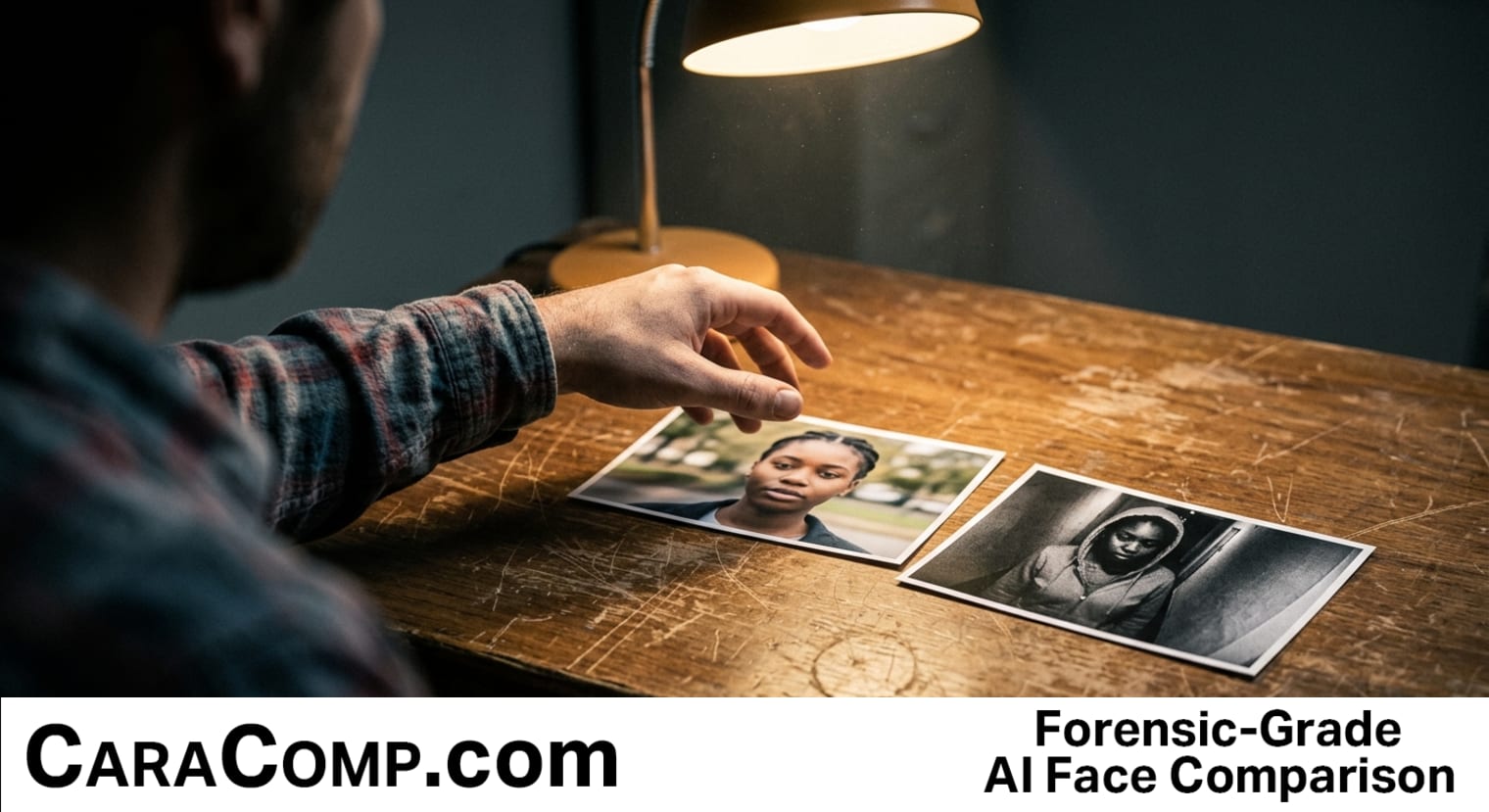
A 99% accuracy claim on an algorithm's spec sheet sounds definitive until you realize it can quietly conceal a 34% failure rate on real-world faces. Landmark research, including extensive evaluations by the National Institute of Standards and Technology across 189 algorithms, proves that broad aggregate metrics routinely mask staggering demographic blind spots. When a system misfires one out of three times depending on lighting, demographic calibration, or skin contrast, treating a single automated confidence percentage as indisputable fact is investigative malpractice.
For private investigators, OSINT specialists, and fraud analysts, this statistical gap exposes the danger of relying on opaque, consumer-level tools. Staking a professional reputation or a client's case on an unvetted percentage invites catastrophic error. The future of reliable investigative work does not belong to unaccountable crowd-matching systems; it demands precise, transparent facial comparison built on sound scientific principles. Deploying direct Euclidean distance analysis across case photos allows practitioners to evaluate geometric similarity mathematically while retaining complete control over source quality and decision thresholds.
Key implications for modern investigators and forensic analysis:
- Aggregate metrics create courtroom liabilities: Top-line accuracy numbers hide demographic variance; entering unverified match scores into evidence exposes findings to devastating cross-examination.
- Controlled facial comparison outperforms black-box systems: Professional case analysis requires side-by-side mathematical assessment of specific case assets rather than blind trust in automated search algorithms.
- Human verification remains the ultimate standard: Algorithmic distance measurements provide powerful initial filtering, but court-ready reporting requires human oversight to account for image compression, lighting, and angle.
A match score is never a final verdict—it is merely a mathematical measurement that reflects lighting, image resolution, and algorithm training conditions. Sharp investigators are moving past generic marketing claims and adopting structured, verifiable facial comparison workflows that deliver rigorous enterprise-level precision without enterprise overhead.
Read the full article on CaraComp: Facial Recognition Bias: 34% Error Rate for Some Faces


Comments
Post a Comment