Digital Identity Verification: Proving 18+ Without a Birthday
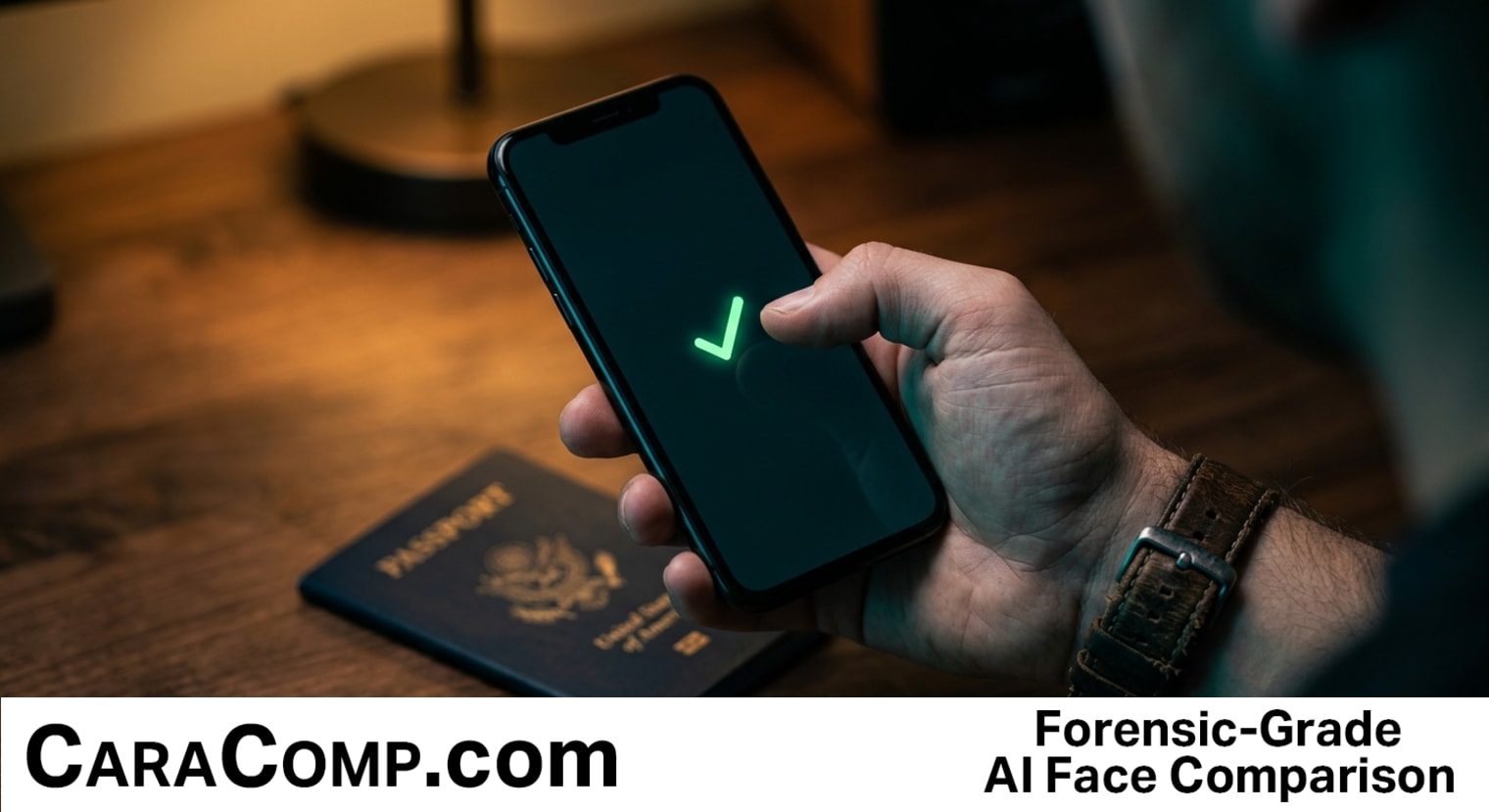
Proving eligibility without surrendering identity is the biggest paradigm shift hitting digital biometrics today—and most observers are missing the broader investigative lesson. The rise of zero-knowledge digital verification proves that modern digital systems no longer need to collect, store, and expose full dossiers just to validate a single mathematical fact. You do not need to expose a complete life history simply to answer a single threshold question.
This development exposes a fundamental truth that modern investigators understand well: there is a massive difference between broad identity harvesting and targeted mathematical analysis. In private investigations, insurance fraud reviews, and OSINT research, the goal is never indiscriminate data collection. Professional case work relies on precise, side-by-side evaluation of case assets. Investigators need to know whether the individual in one photo matches a subject in another photo based on rigorous Euclidean distance analysis—not build permanent data silos that risk data breaches.
As privacy regulations tighten globally, the technology industry is finally waking up to what advanced investigative methodology has always required: lean, objective math that answers a specific question and delivers reliable results.
Here are the key implications driving the industry forward:
- Targeted verification replaces broad data hoarding: The shift toward zero-knowledge proofs demonstrates that systems can confirm specific facts without retaining excessive personal files, setting a clear standard for ethical biometric analysis.
- Mathematical analysis provides court-ready clarity: Moving away from manual guesswork toward automated Euclidean distance calculations gives investigators defensible, objective metrics that stand up to professional scrutiny.
- Purpose-built investigation technology beats bloated enterprise suites: Modern practitioners do not need expensive, five-figure government platforms when focused facial comparison software can execute rapid, accurate one-to-one and batch case analysis on demand.
Investigators who adopt precise, mathematical case tools now will outpace competitors still bogged down by hours of manual comparison and outdated workflows.
Read the full article on CaraComp: Digital Identity Verification: Proving 18+ Without a Birthday


Comments
Post a Comment