Deepfake scams: Singapore tags real government calls
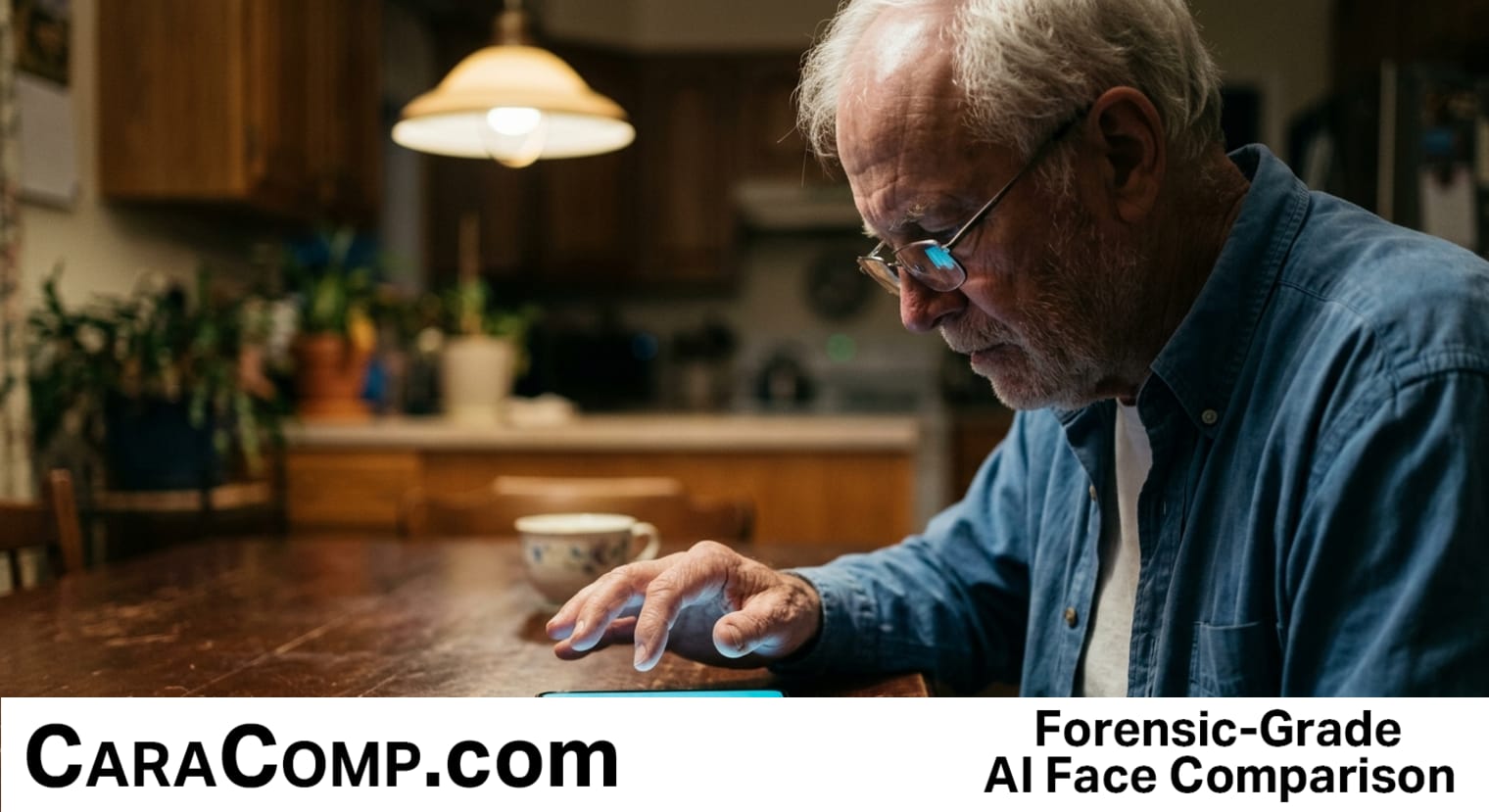
When a national government admits that human perception is completely useless against generative AI, the old playbook for identity verification is officially dead. Singapore’s decision to pilot an authenticated prefix for real government calls proves that warning the public to simply "stay alert" no longer works. After government impersonation cases surged to 3,363 in 2025—more than doubling in a single year—the state realized that a cloned voice built from three seconds of audio can fool anyone from retirees to seasoned professionals.
This shift from subjective trust to hard technical validation is a wake-up call for the entire investigative industry. For decades, both ordinary citizens and professional investigators relied on sight and sound: if a voice sounded familiar or a face matched a memory, it was accepted as fact. Generative AI has shattered that premise. Just as phone networks cannot rely on standard caller ID to verify a caller, modern investigators cannot rely on casual manual checks to verify subjects across photos and video evidence.
Whether examining potential insurance fraud, running background checks, or conducting OSINT analysis, manual inspection is becoming a massive professional liability. Defeating synthetic manipulation and establishing truth requires objective mathematical measurement rather than human gut feeling.
- Subjective human verification is finished: Voice cloning and synthetic media have rendered sensory intuition obsolete. If an identity check relies on "does this look or sound right," it will fail.
- System-level verification is the new baseline: Just as telecom carriers must introduce structural tags to authenticate calls, case analysis requires systematic, reproducible validation before any evidence is trusted.
- Objective comparison replaces manual guesswork: Private investigators and fraud analysts must shift toward structured tools like Euclidean distance analysis to mathematically measure facial consistency rather than wasting hours on unreliable manual side-by-sides.
Singapore’s call prefix is just the beginning of a universal pivot toward automated identity verification across digital communications and visual forensics alike.
Read the full article on CaraComp: Deepfake scams: Singapore tags real government calls


Comments
Post a Comment