Biometric Data Definition: Why BASF's Apple Suit Isn't Privacy
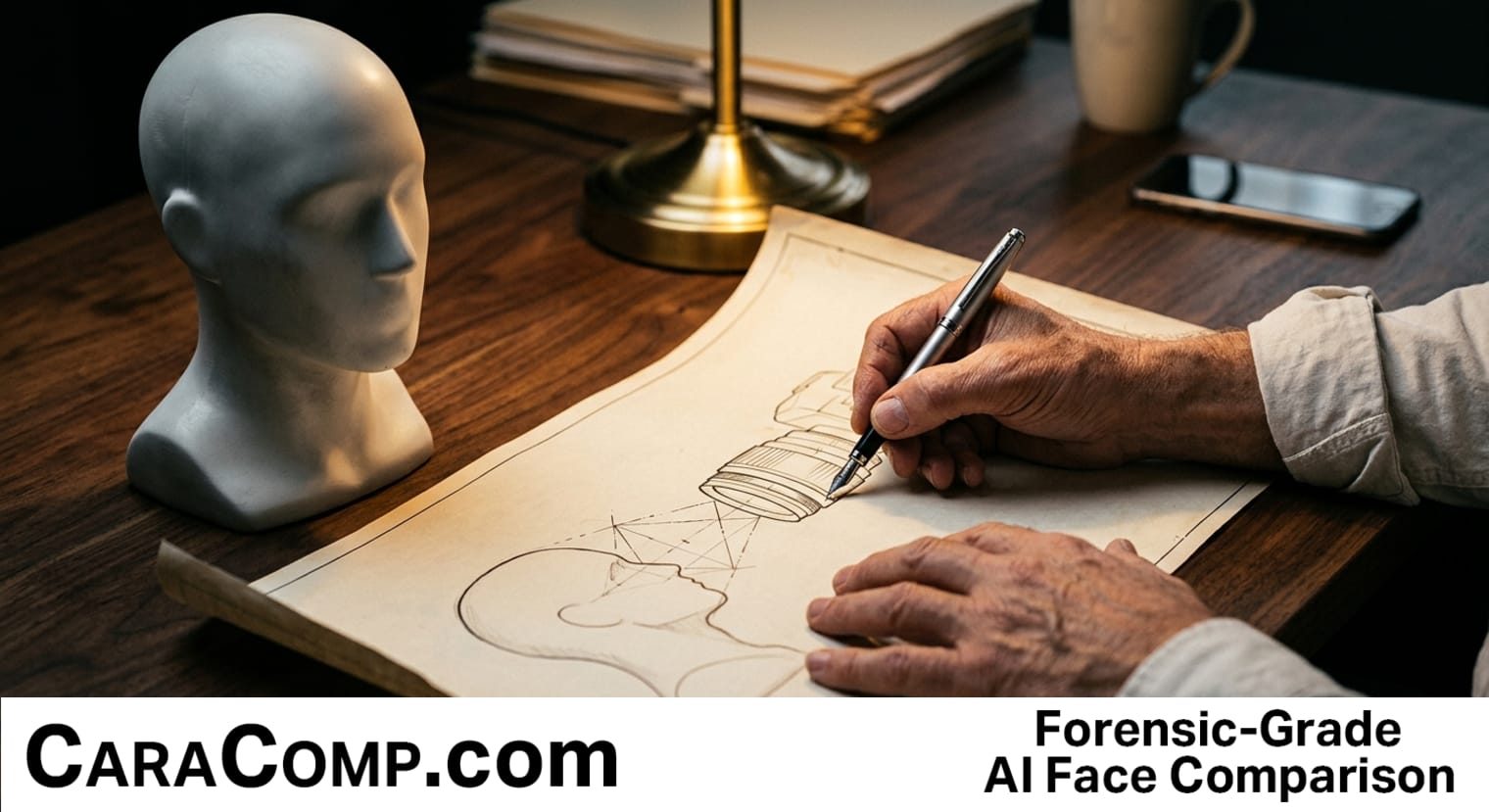
A 150-year-old industrial chemical giant suing Apple over biometric patents sounds like an absurd headline, but it exposes a massive blind spot in how the tech industry and legal system discuss facial analysis. While mainstream commentary instinctively frames every biometric lawsuit as an alarming personal data breach, BASF’s multi-million-dollar lawsuit against Apple has nothing to do with stolen face scans. It is an intellectual property battle over the proprietary blueprints, mathematical algorithms, and optical engineering that power modern identity verification.
For private investigators, fraud analysts, and OSINT researchers, understanding this distinction is critical. Public discourse routinely confuses technical methodology with mass data harvesting, failing to separate targeted forensic comparison from invasive practices. In reality, professional-grade facial comparison relies on objective mathematical frameworks, including light-reflection anti-spoofing and Euclidean distance analysis. The fight between BASF and Apple centers entirely on who holds the rights to that foundational math, not how individual user data is stored.
This high-stakes dispute highlights three essential implications for the investigative and biometric sectors:
- Algorithmic ownership dictates industry accessibility: High-profile patent disputes determine which underlying mathematical models survive in commercial software, directly impacting whether enterprise-caliber facial comparison remains restricted to government agencies or available to independent investigators.
- Anti-spoofing is the true forensic benchmark: Distinguishing living facial geometry from flat photographs, masks, or synthetic replicas requires sophisticated optical depth analysis, separating dependable investigative tools from unreliable consumer search engines.
- Evidentiary credibility demands mathematical precision: As facial comparison evidence faces stricter courtroom scrutiny, legal defensibility will depend on proven geometric algorithms and repeatable reporting rather than emotional headlines about privacy.
Defaulting to privacy panic whenever biometrics make the news obscures the real technological evolution underway. The real challenge for modern investigators is securing accurate, spoof-resistant comparison tools that generate defensible case results without enterprise-level overhead. The BASF lawsuit proves that biometrics is an engineering discipline first—and that mathematical rigor, not sensationalism, defines the future of case analysis.
Read the full article on CaraComp: Biometric Data Definition: Why BASF's Apple Suit Isn't Privacy


Comments
Post a Comment