AI Identity Verification: 8,065 Deepfakes Hit One Bank
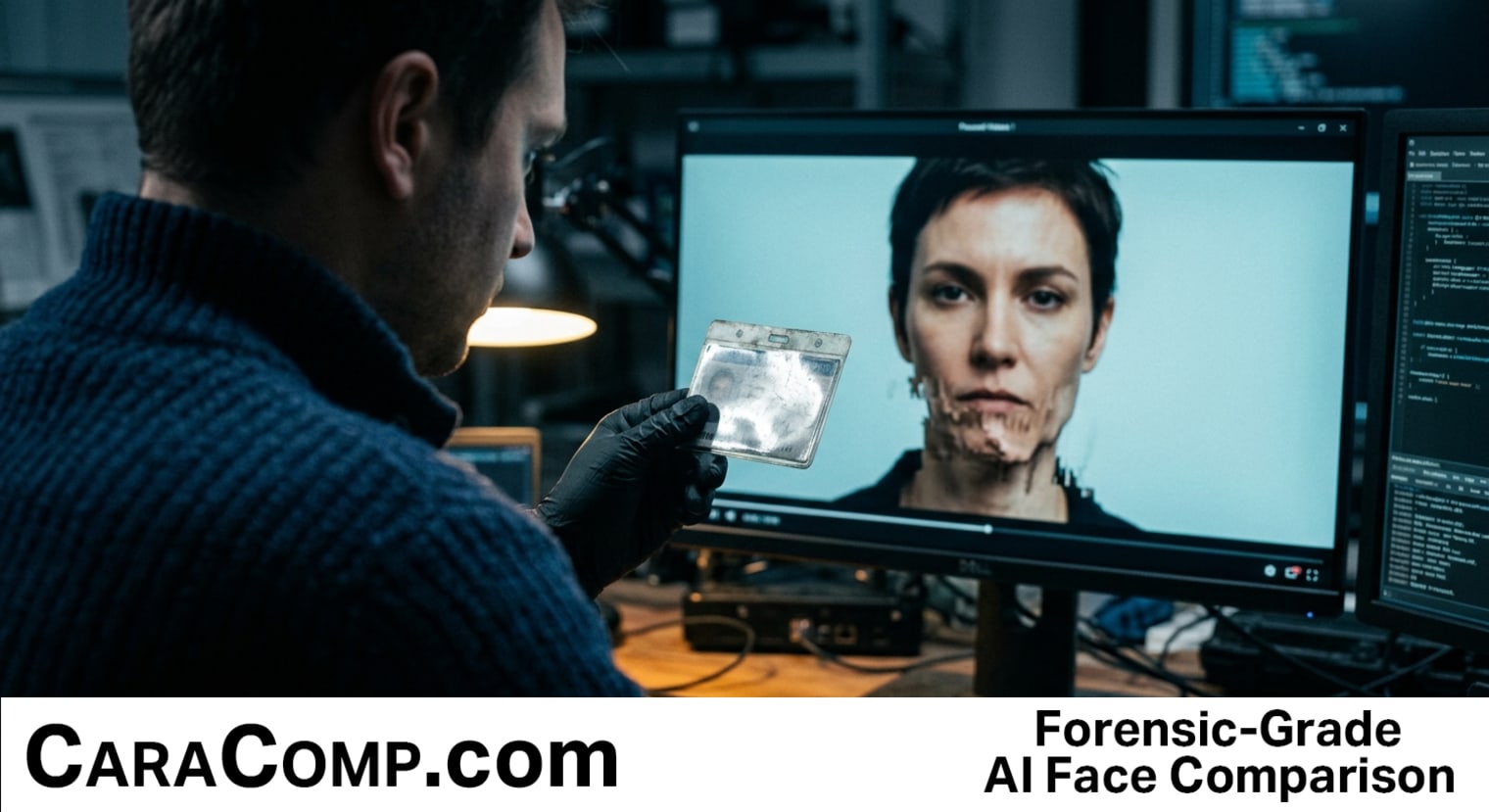
Over eight thousand synthetic deepfake attacks hammered a single financial institution in under eight months. This was not a broad sweep across the global banking sector—it was 8,065 automated, AI-generated attempts aimed squarely at cracking one onboarding system. If anyone in the investigative or intelligence space still believes visual inspection or consumer-grade search tools are sufficient to verify human identity, this should serve as an immediate wake-up call.
Fraudsters are no longer relying on crude document alterations; they are weaponizing generative AI to spoof standard facial matching algorithms. The fundamental flaw in many verification workflows is treating biometric assessment as a simple visual match. A sophisticated deepfake is engineered specifically to achieve high similarity scores against static reference photos. When investigators or security teams rely on superficial matching without understanding the mathematical precision behind the data, they invite catastrophic blind spots into their case files.
For private investigators, insurance fraud specialists, and OSINT researchers, this technical escalation changes the playing field entirely. Staking your professional reputation on manual comparison or uncalibrated consumer apps is a liability. When synthetic faces can bypass standard checks, professional case analysis demands high-grade precision. Modern investigations require objective, defensible facial comparison built on precise Euclidean distance analysis to separate authentic subjects from digitally generated decoys.
The operational takeaways for modern investigators are clear:
- Superficial matching is dead: Generative models are designed specifically to defeat basic similarity checks, meaning visual resemblance alone no longer proves authentic identity.
- Defensible mathematical metrics are mandatory: Eyeballing photos creates massive liability in fraud cases; investigators need court-ready Euclidean distance measurements to validate evidence.
- Independent investigators must adapt fast: With bad actors utilizing automated generation tools, solo practitioners and small firms cannot afford to rely on outdated, manual review processes.
The flood of synthetic media has permanently transformed biometric analysis from a visual estimation into an exacting data science. Investigators equipped with enterprise-grade facial comparison tools will continue to expose sophisticated fraud, while those relying on manual methods will find themselves validating ghosts.
Read the full article on CaraComp: AI Identity Verification: 8,065 Deepfakes Hit One Bank


Comments
Post a Comment