Your Walk Is a Password — and Your Shoes Just Changed It
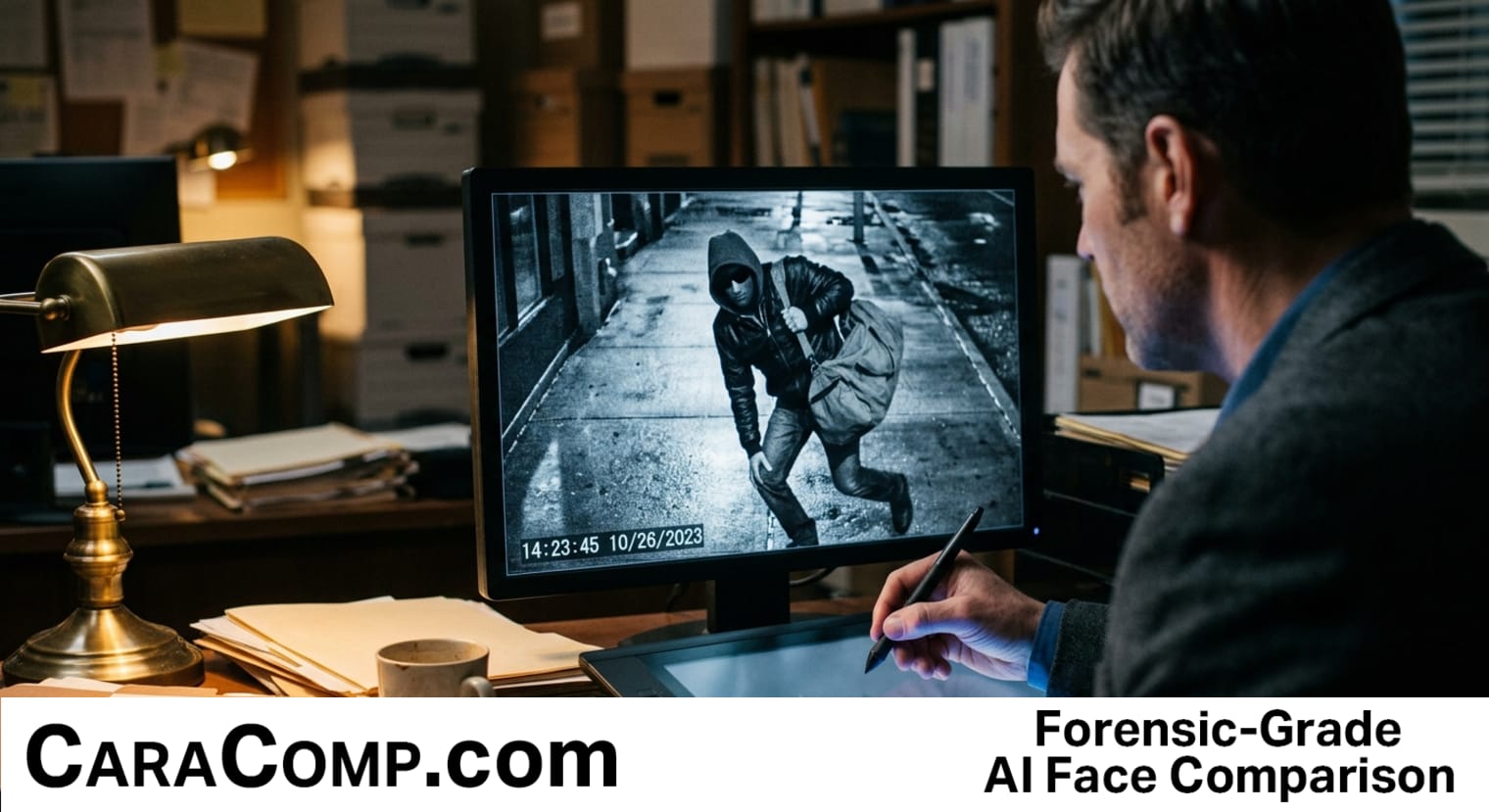
That hoodie you’re wearing to dodge the camera is practically useless—unless you also happen to change your shoes, your stride length, and the way your torso sways in the next thirty seconds.
While most investigators are busy squinting at grainy pixels to find a face, the real biometric frontier is moving toward gait analysis. There are 32 measurable features in a single walking cycle—from the angle of a foot strike to the rhythm of an arm swing. It’s a mathematical signature that doesn’t require a clear view of the eyes or a fingerprint. In fact, it has been used as forensic evidence in criminal courts since 2000. But for the solo private investigator or OSINT researcher, there is a massive catch: gait recognition is incredibly fragile.
From an industry perspective, we’re seeing a dangerous trend where "lab accuracy" is being confused with "field reliability." A gait algorithm might boast a 95% success rate in a controlled environment, but the moment your subject puts on a heavy backpack, switches from sneakers to boots, or walks past a camera mounted at a 45-degree angle, the signal degrades. For a solo PI or a small firm, relying on movement patterns as a primary identification tool is a liability, not an asset.
At CaraComp, we maintain that facial comparison remains the gold standard for a reason. Unlike the fluid and easily altered nature of a person's walk, the Euclidean distance between facial landmarks provides a stable, quantifiable metric that holds up under scrutiny. While gait analysis is a fascinating secondary signal, it’s too easy for a "confident match" to become a "confident mistake" when the environmental variables change. In a profession where your reputation is staked on the accuracy of your case analysis, you cannot afford to bank on a biometric that changes because the subject has a blister on their heel.
Key implications for modern investigators:
- Environmental variables are the enemy of gait analysis. Unlike facial comparison, which relies on fixed geometry, gait is corrupted by footwear, carried loads, and camera height, making it a risky primary identification tool for non-government agencies.
- The "Cooperation Gap" is closing. Biometrics no longer requires a subject to look at a lens; investigators must now account for 360-degree identity markers, even when the face is obscured.
- Professional reporting requires stability. For results to be court-ready, investigators should prioritize Euclidean distance analysis of facial features over more volatile biometrics that lack the same level of side-by-side visual proof.
The future of investigation technology isn't just about collecting more data—it’s about knowing which data points won't lead you down a blind alley. If you’re still comparing photos manually or relying on "vibes" to match a walk, you’re already behind the curve.
Read the full article on CaraComp: Your Walk Is a Password — and Your Shoes Just Changed It


Comments
Post a Comment