Your Name, a Nickname, and a Stranger's Bets: The Gambling Loophole Hitting Households
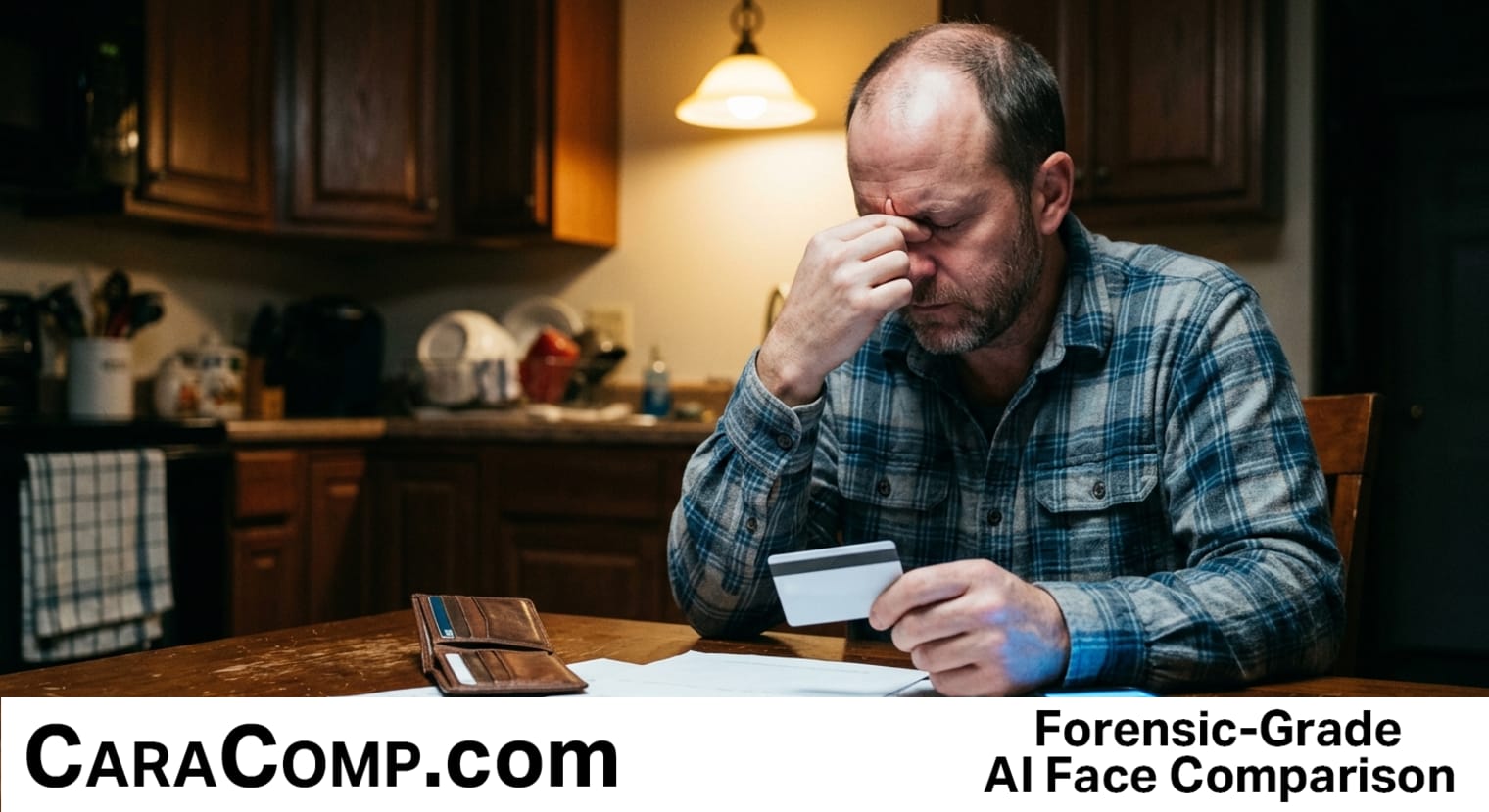
When your legal identity can be swapped for a casual nickname and a business address, we aren’t just looking at a regulatory "oops"—we’re looking at a systemic failure of identity verification that leaves investigators holding the bag. The UK Gambling Commission’s recent alarm over identity gaps isn’t just about bad habits in the betting world; it’s a direct indictment of how poorly "identity" is being defined in the digital age. If a platform can’t reliably prove who is behind an account, the door for fraud doesn't just swing open; it’s taken off the hinges.
For the private investigator or OSINT professional, this news is a call to arms. Sloppy onboarding creates a playground for identity theft and financial crime, proving that traditional, text-based KYC (Know Your Customer) is no longer sufficient. If a platform accepts initials or "J. Smith" instead of a full legal name, they aren't verifying a person; they’re verifying a string of characters. This is where facial comparison becomes the only reliable anchor for truth. When the text data is unreliable, the biological reality of the individual is the only evidence that holds up.
We see this tension in the field every day. Investigators are often forced to spend hours manually comparing faces across photos because the digital trail is a mess of aliases and incomplete profiles. But as platforms get lazier with their data, professional investigators must get sharper with their technology. High-level Euclidean distance analysis—the same mathematical precision used by major agencies—is no longer a luxury for the elite. It is the baseline requirement for anyone trying to close cases where the paper trail has gone cold. By moving from manual "gut checks" to algorithmic comparison, investigators can bypass the "nickname loophole" entirely.
- Biometric reality vs. digital aliases: As text-based ID fails, investigators must pivot to facial comparison to verify the human behind the account, regardless of the name or address provided during sign-up.
- The professionalization of proof: With 25% of regulator complaints tied to ID disputes, investigators need court-ready reporting that proves identity through mathematical distance, not just manual observation.
- Closing the "Identity Gap": The ability to run batch comparisons across multiple case photos allows solo PIs to catch fraud patterns that gambling platforms and banks are currently missing due to low-friction onboarding.
The gambling industry might be comfortable with "close enough" to keep their conversion rates high, but a professional investigation cannot afford that risk. Whether it’s insurance fraud or a complex OSINT deep-dive, the goal is certainty. If the platforms won't do the heavy lifting of verification at the front door, the investigator will—and they’ll do it faster by using enterprise-grade comparison tech that fits a solo firm's budget.
Read the full article on CaraComp: Your Name, a Nickname, and a Stranger's Bets: The Gambling Loophole Hitting Households


Comments
Post a Comment