Your Mom's Voice on the Phone Isn't Proof Anymore — Here's the 10-Second Habit That Stops the Scam
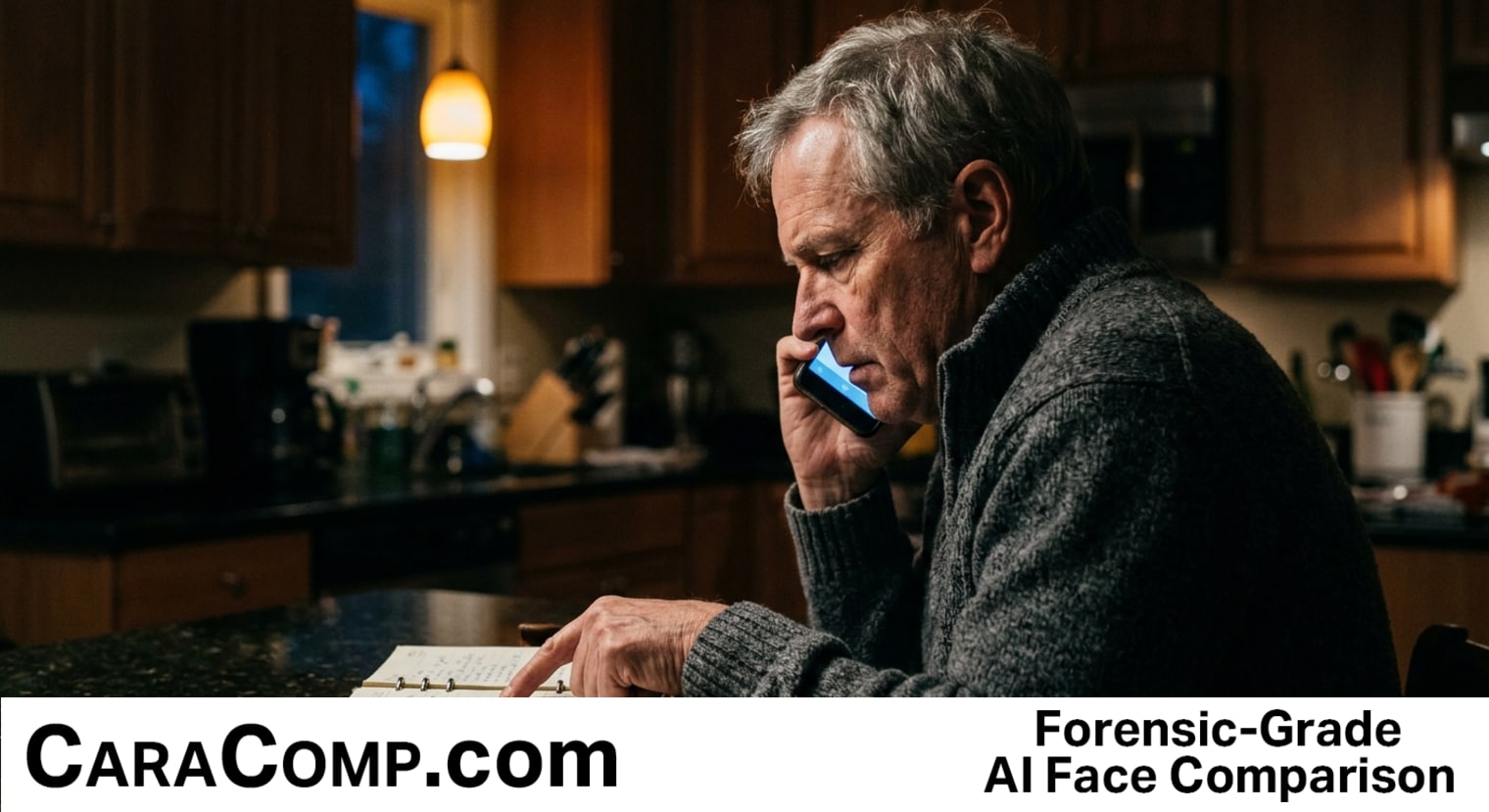
The human brain's 200,000-year-old identity verification system just collapsed. When synthetic audio models require only three seconds of source material to clone a person's exact cadence and vocal resonance, sensory perception ceases to function as proof. It becomes an active investigative liability.
This sudden collapse of sensory trust represents a massive inflection point for private investigators, fraud analysts, and OSINT professionals. The rapid rise of generative audio and manipulated imagery means that traditional human "eyeballing" and instinctive recognition are officially dead. If human observers fail to catch over 75% of high-quality deepfakes without specialized tooling, relying on visual or auditory intuition in modern case analysis is bordering on professional malpractice.
Scammers exploit emotional panic to bypass logic, but the structural threat to the investigation industry runs far deeper. When any subject's digital footprint can be synthesized, how do you verify identity with certainty? The answer lies in replacing subjective assumptions with structured, mathematical facial comparison.
The shift from qualitative observation to objective verification carries major implications for the field:
- Sensory evidence is no longer conclusive: Audio recordings, unverified photos, and casual video feeds cannot establish identity in serious casework without side-by-side mathematical validation.
- Euclidean distance analysis replaces gut instinct: Professional case analysis now requires repeatable, metric-driven facial comparison—measuring precise facial landmarks across reference images rather than trusting visual appearance.
- Verification tools must be democratized: As synthetic fraud accelerates at a massive scale, solo investigators and small firms cannot afford to be locked out of enterprise-caliber analysis simply due to four-figure software barriers.
Identity verification has definitively moved from a passive sensory check to an active forensic discipline. The investigators who thrive in this environment are those who abandon subjective visual guesswork in favor of precise, structured comparison workflows.
Read the full article on CaraComp: Your Mom's Voice on the Phone Isn't Proof Anymore — Here's the 10-Second Habit That Stops the Scam


Comments
Post a Comment