Your Kid's Face, Stored 14 Years — To Save 5 Minutes at Roll Call
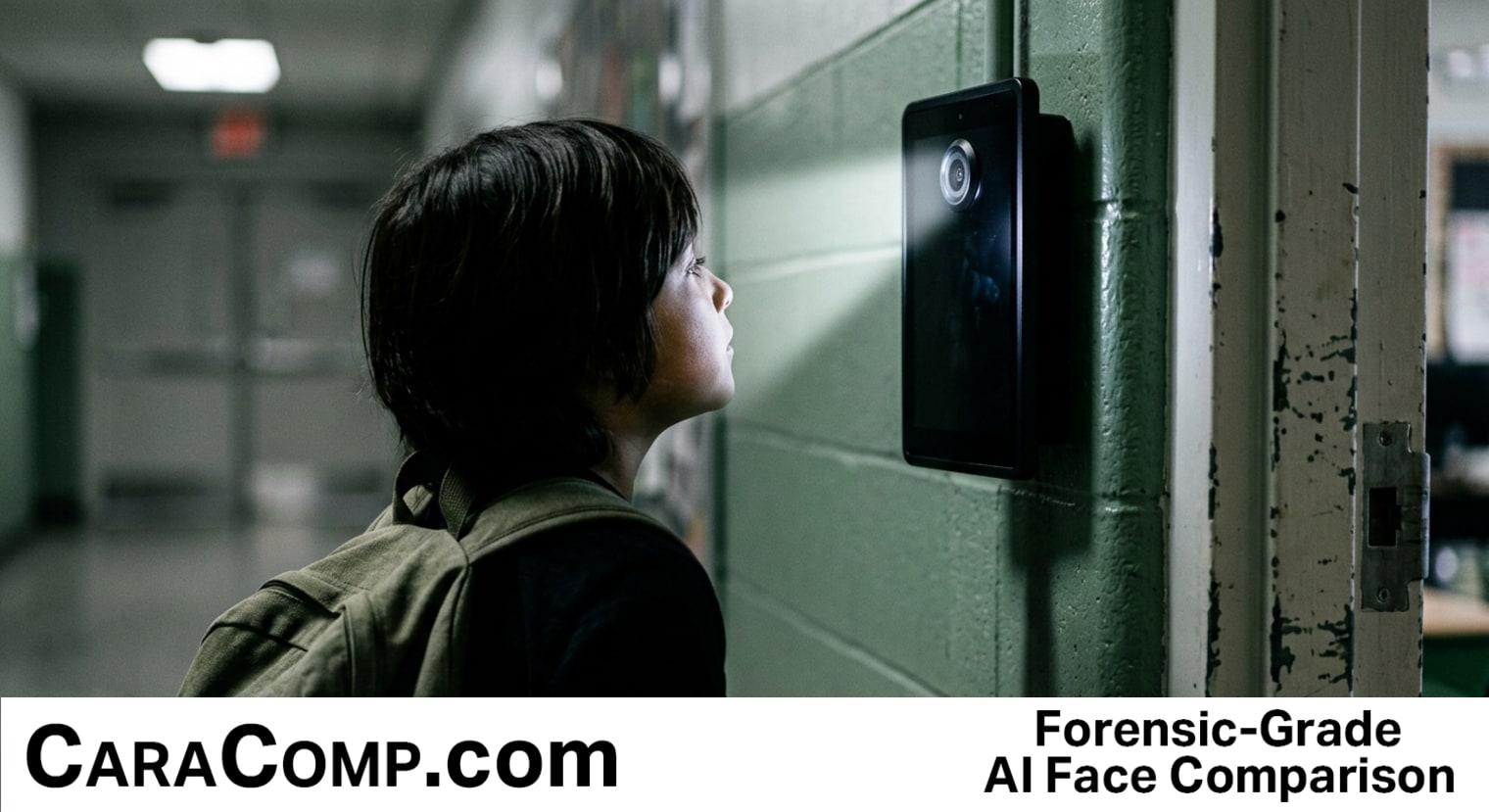
Storing one million children's permanent biometric face-maps for fourteen years just to shave five minutes off morning roll call was never an efficiency upgrade—it was an operational and regulatory disaster waiting to happen. When Brazil's data protection authority abruptly halted the state of Paraná's automated classroom attendance rollout across 1,700 public schools, it drew a critical line between unnecessary mass data harvesting and disciplined biometric investigation technology.
The regulatory shutdown exposes a fundamental misunderstanding plaguing both public institutions and the security sector. Forcing unconsenting individuals into massive live-capture databases creates unmanageable legal and security liability. Biometric data cannot be reset like a compromised password. Once digitized into a central repository, mathematical facial vectors remain vulnerable to breaches, vendor mismanagement, and indefinite institutional drift. Worse still, field reports revealed the automated system was often slower than a teacher reading names from a paper clipboard.
For private investigators, OSINT analysts, and detectives, this regulatory intervention reinforces the vital technical distinction between indiscriminate live harvesting and targeted facial comparison. Legitimate case analysis does not involve building perpetual population databases. Instead, it relies on precise, side-by-side photo evaluations using Euclidean distance analysis on specific case files. As oversight tightens around bloated biometric rollouts, the investigative sector must maintain rigorous separation between administrative overreach and sound investigative methodology.
Here are the key takeaways from this enforcement action:
- Convenience is no longer a legal justification for biometric databases: Global authorities are actively penalizing organizations that deploy live capture systems without proportional necessity or strict, audited data retention limits.
- Closed-system facial comparison safeguards privacy and evidence: Conducting case analysis using isolated, side-by-side image comparison completely insulates investigators from the legal risks of mass biometric indexing.
- Poorly calibrated automation creates operational drag: Systems deployed without rigorous verification protocols introduce high false-positive rates and administrative friction rather than deliver real-world efficiency.
As legal scrutiny mounts against unchecked biometric repositories, professional investigators utilizing precise, targeted facial comparison workflows will remain ahead of the curve while sloppy automated systems get dismantled.
Read the full article on CaraComp: Your Kid's Face, Stored 14 Years — To Save 5 Minutes at Roll Call


Comments
Post a Comment