Your Face Just Failed as a Password — and Crooks Paid $20 to Prove It
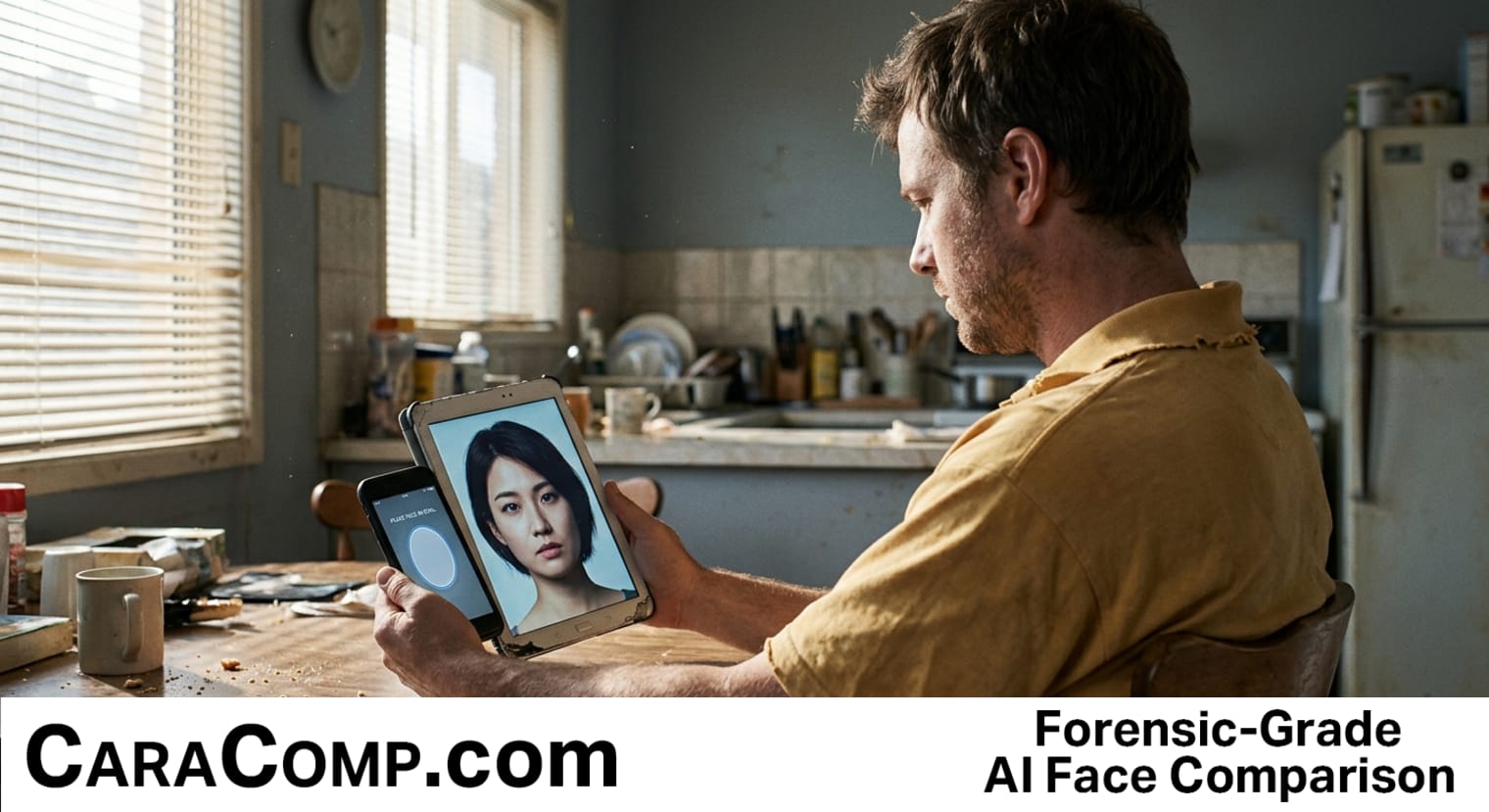
For roughly the price of a takeout lunch, a low-level fraudster can now buy a digital skeleton key that bypasses the biometric "fortress" of most major banks. The news that AI fraud kits are selling for as little as $20 isn’t just a headache for IT departments; it’s a massive alarm bell for every private investigator and OSINT professional who relies on visual evidence to close cases.
The "selfie check" was supposed to be the gold standard of identity, but when criminal marketplaces commoditize deepfake liveness bypasses, the "green checkmark" of a consumer app becomes a liability. For investigators, this shift changes the stakes. We can no longer trust that a face is real just because a platform’s automated system says so. This is why the distinction between simple scanning and professional facial comparison has never been more critical. While consumer tools are being fooled by $20 kits, enterprise-grade Euclidean distance analysis remains the bedrock of high-fidelity investigation technology.
As professionals, we are seeing the "Identity Gap" widen in real-time. Solo investigators are often stuck between manual comparison—which takes hours and is prone to human error—and expensive enterprise contracts they can’t afford. Meanwhile, the criminals are moving faster than ever. If your methodology relies on "gut feeling" or unreliable consumer search tools with high false-positive rates, you aren't just falling behind; you’re risking your reputation in court. The industry is moving toward a standard where only mathematical, court-ready reporting can differentiate a genuine subject from an AI-generated spoof.
- The commoditization of deepfakes has turned biometric "locks" into "suggestions," making it easier for fraudsters to fabricate entire identities that pass basic liveness tests.
- Automated "recognition" is failing, but professional facial comparison is the cure. Using Euclidean distance analysis allows investigators to verify identities based on mathematical constants that AI kits still struggle to replicate perfectly across multiple frames.
- Professional reputation now hinges on court-ready documentation. As spoofing becomes common, PIs must provide evidence that stands up to the scrutiny of AI-aware legal teams.
The era of "automated trust" is over. Investigators who don't adopt professional-grade comparison tools will find themselves unable to verify the very subjects they are being paid to find. It’s time to move past the consumer-grade fluff and get back to the math.
Read the full article on CaraComp: Your Face Just Failed as a Password — and Crooks Paid $20 to Prove It


Comments
Post a Comment