Your Boss Wants to Scan Your Face to Log You In. Ask These 3 Questions First.
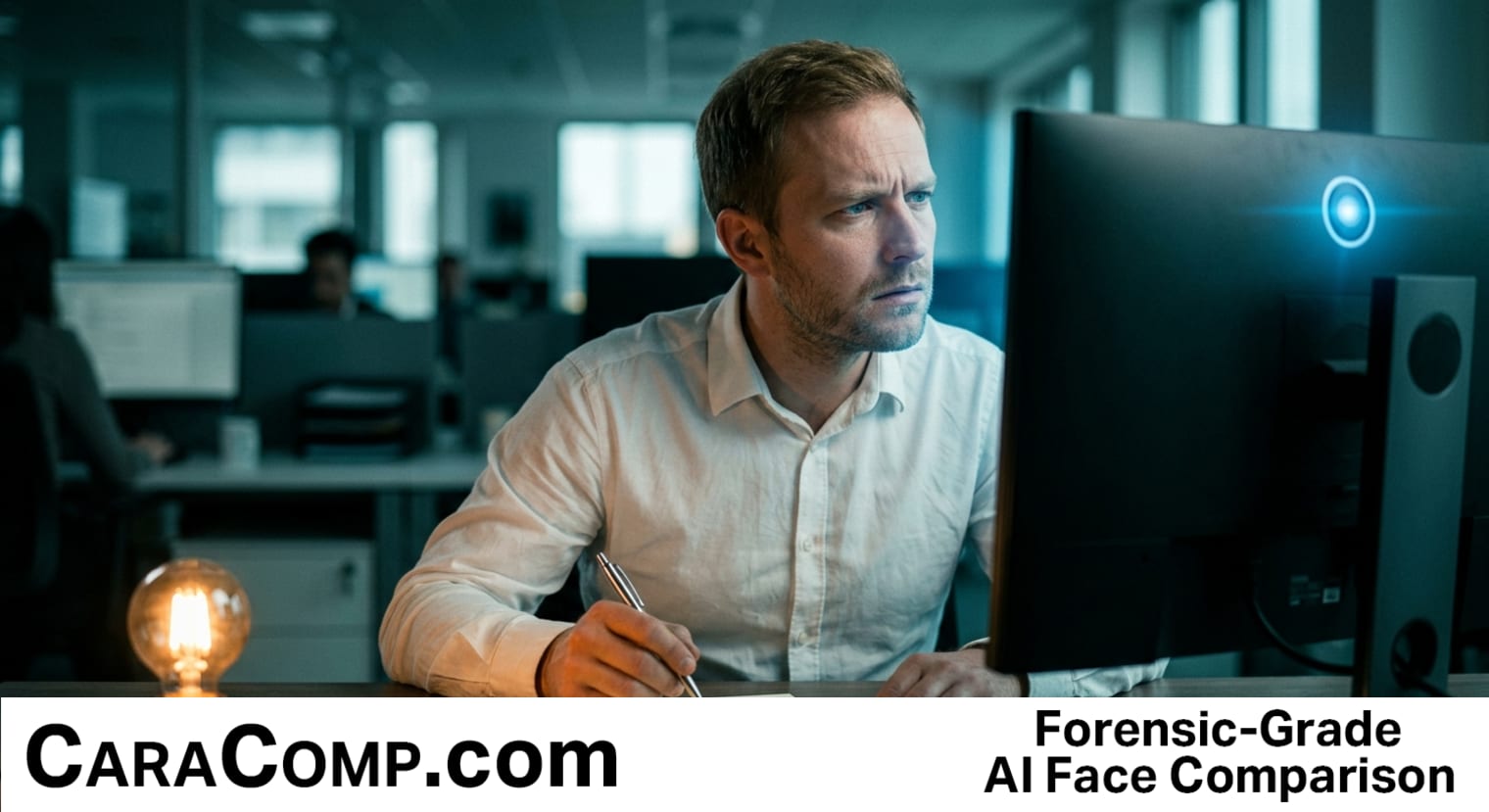
Your desk monitor is about to start judging your face before it lets you work, and most HR departments are completely unprepared for the technical and ethical fallout. Philips recently unveiled its new B-line business monitors, which feature built-in Windows Hello facial recognition. While the tech world applauds the "frictionless" login experience, professional investigators see a different reality: the commoditization of Euclidean distance analysis is here, but it’s being deployed for office convenience rather than solving cases.
At CaraComp, we follow these developments closely because they highlight a massive irony in our industry. While major hardware manufacturers are now putting facial comparison sensors into standard office equipment, "enterprise" software vendors are still trying to charge solo private investigators and small firms upwards of $2,000 a year for similar technology. If a desktop monitor can perform a biometric match in two seconds, there is no longer a valid reason for investigative tools to be locked behind a five-figure paywall or complex government contracts.
However, we must draw a sharp line between passive recognition—the kind used by these monitors to scan whoever sits down—and intentional facial comparison. For the OSINT professional or the insurance fraud investigator, the goal isn't to build a database of employees; it’s to take two specific images and determine the mathematical probability of a match. One is a matter of institutional oversight; the other is a vital piece of investigative methodology.
Key implications for the investigative industry:
- The "Enterprise Tax" is Dead: As biometric sensors become standard office peripherals, the high-cost gatekeeping of facial comparison technology is officially obsolete. Solo PIs can now access the same Euclidean math as federal agencies without the enterprise price tag.
- Comparison vs. Recognition: The public backlash against office-based scanning systems makes it more critical than ever for investigators to use professional tools that focus on side-by-side comparison of case-specific photos rather than scanning crowds.
- Evidence Standardization: With biometric hardware becoming a workplace staple, courtrooms will soon expect more than just a "gut feeling" from investigators. Professional, math-based comparison reports will become the baseline for admissible evidence.
The tech is outgrowing the cubicle. If your employer is ready to use your face as a password, you should be ready to use that same caliber of technology to close your cases faster and more affordably than ever before.
Read the full article on CaraComp: Your Boss Wants to Scan Your Face to Log You In. Ask These 3 Questions First.


Comments
Post a Comment