You Can Change Your Password. You Can't Change Your Fingerprints.
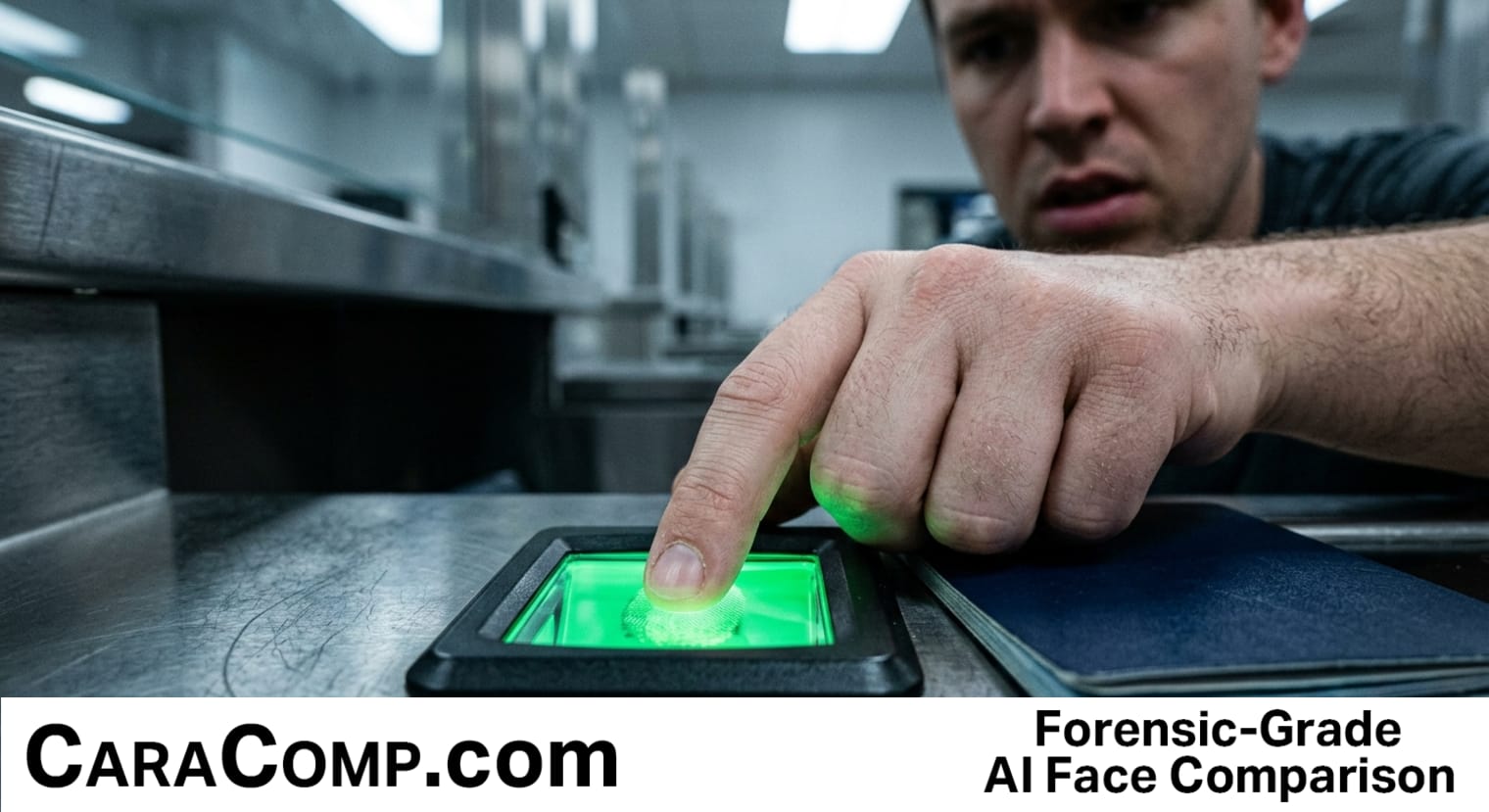
You can replace a compromised password in sixty seconds, but when a national biometric repository gets breached, you cannot issue someone a new set of fingerprints. Sri Lanka’s latest legislative move to mandate fingerprint matching for all passport applicants under an automated "one person, one passport" system exposes a critical fault line in biometric deployment: administrative convenience consistently outpaces data governance. While closing identity fraud loopholes is a legitimate objective, establishing massive state databases without clear retention schedules, third-party access limits, or breach protocols creates permanent vulnerabilities for citizens.
For investigators, fraud analysts, and OSINT professionals, this development highlights a sharp industry divide between centralized identity storage and precise, case-level verification. Modern case analysis depends heavily on algorithmic matching—specifically side-by-side facial comparison using Euclidean distance analysis—to authenticate subjects across disparate case files. However, the integrity of biometric technology relies on disciplined execution. When institutions adopt automated matching systems without transparent audit mechanisms or clear operational guardrails, they compromise long-term security in exchange for rapid intake.
The transition toward automated identity verification is accelerating across global jurisdictions, yet true investigative rigor does not require sprawling, vulnerable identity registries. The industry's key implications include:
- Permanent data liability: Unlike alphanumeric credentials, physical biometric traits cannot be rotated post-compromise, making rigorous data governance and transparent retention policies essential.
- Case-specific analysis over centralized aggregation: Reliable investigation technology thrives on isolated, deterministic image comparison workflows that process specific evidence without creating massive identity honeypots.
- Auditable mathematical matching: Whether authenticating suspect identities or producing court-ready reports, investigators require objective mathematical frameworks rather than opaque black-box algorithms operating without verification standards.
As biometric verification becomes standard international practice, the investigative community must champion precise, mathematically sound comparison methodologies that protect case integrity without relying on unchecked database accumulation.
Read the full article on CaraComp: You Can Change Your Password. You Can't Change Your Fingerprints.


Comments
Post a Comment