What Are Deepfakes: Fake Shriver Ads Cost Victims $500
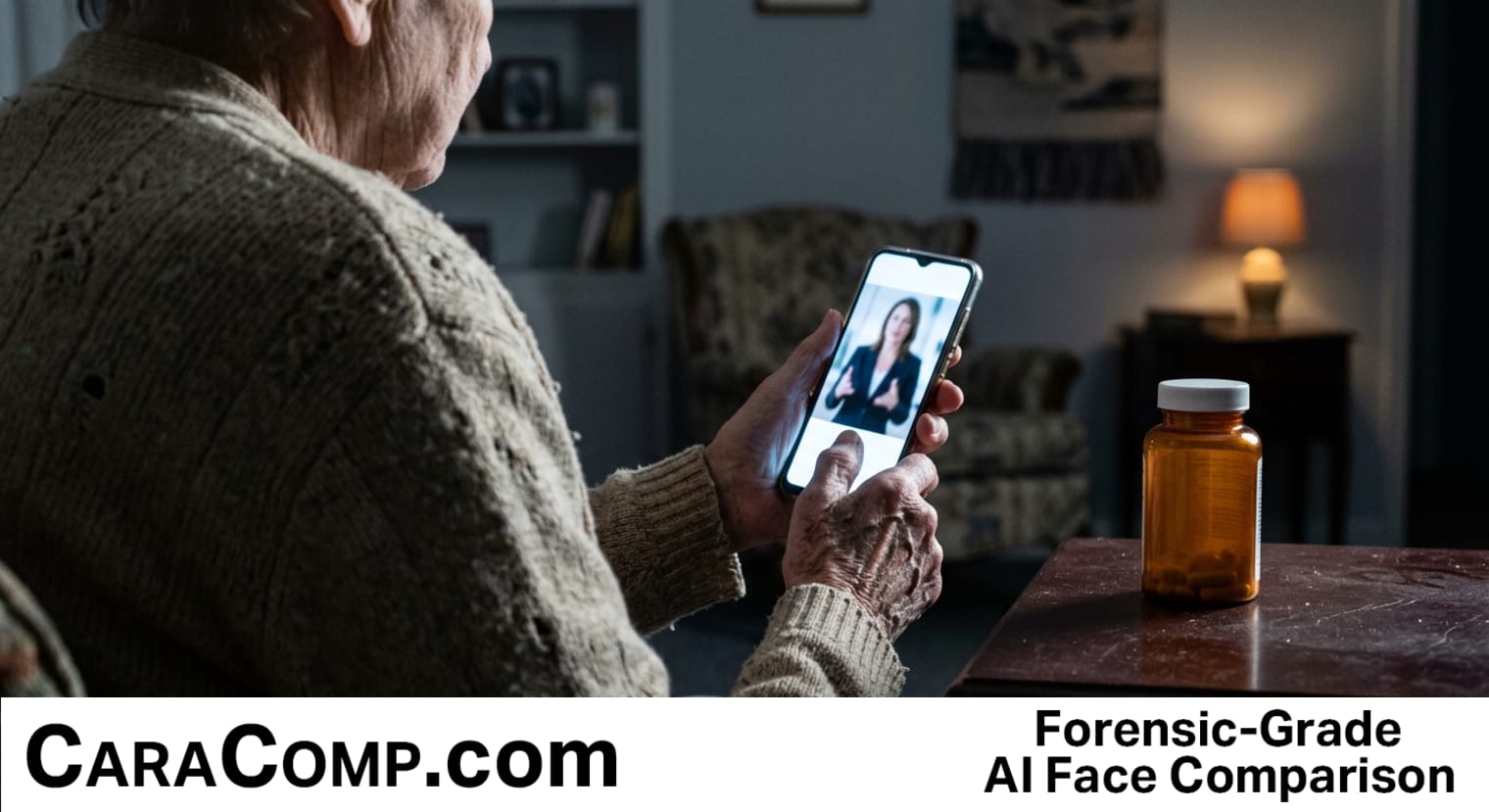
Scammers just weaponized authority, stealing Maria Shriver's face to siphon hundreds of dollars from families desperate for Alzheimer's cures. The uncomfortable reality behind this syndicate operation isn't just that vulnerable consumers fell for a fake supplement ad—it is that human visual verification is officially obsolete.
When high-profile figures have their likeness forged to drive recurring billing traps that net criminal rings hundreds of millions, the burden shifts directly to investigative verification. Telling the public to look for "weird blinking" or misaligned lip movements is no longer reliable advice. Those superficial glitches are disappearing fast. For private investigators, insurance fraud teams, and intelligence researchers, the industrialization of synthetic media means subjective human observation is now a critical liability in case analysis.
Investigators can no longer afford to spend hours manually squinting at video stills or guessing whether source imagery has been manipulated across case files. Countering identity spoofing demands mathematical rigor. The rapid growth of synthetic media carries urgent implications for the field:
- Visual verification is officially a dead methodology: As AI generation advances, relying on manual inspection to spot altered faces or match individuals across multiple case photos guarantees missed matches and compromised evidence.
- Synthetic deception is an enterprise-scale threat: From healthcare scams to corporate imposter schemes, bad actors leverage stolen authority to bypass skepticism. Fraud investigators must adopt objective Euclidean distance analysis to systematically analyze case photos side-by-side.
- Court-ready documentation is non-negotiable: Debunking fabricated media and establishing legitimate identity connections requires defensible, professional case reporting that proves facial comparison results beyond reasonable doubt.
The arms race between synthetic fraud and digital investigation has permanently changed. If you are still relying on naked-eye photo comparisons, you are fighting next-generation deception with outdated methods. Staying ahead requires objective, accessible facial comparison software that delivers definitive answers in seconds.
Read the full article on CaraComp: What Are Deepfakes: Fake Shriver Ads Cost Victims $500


Comments
Post a Comment