The Fake Call Sounds Exactly Like Mom. Listen for the Pauses Instead.
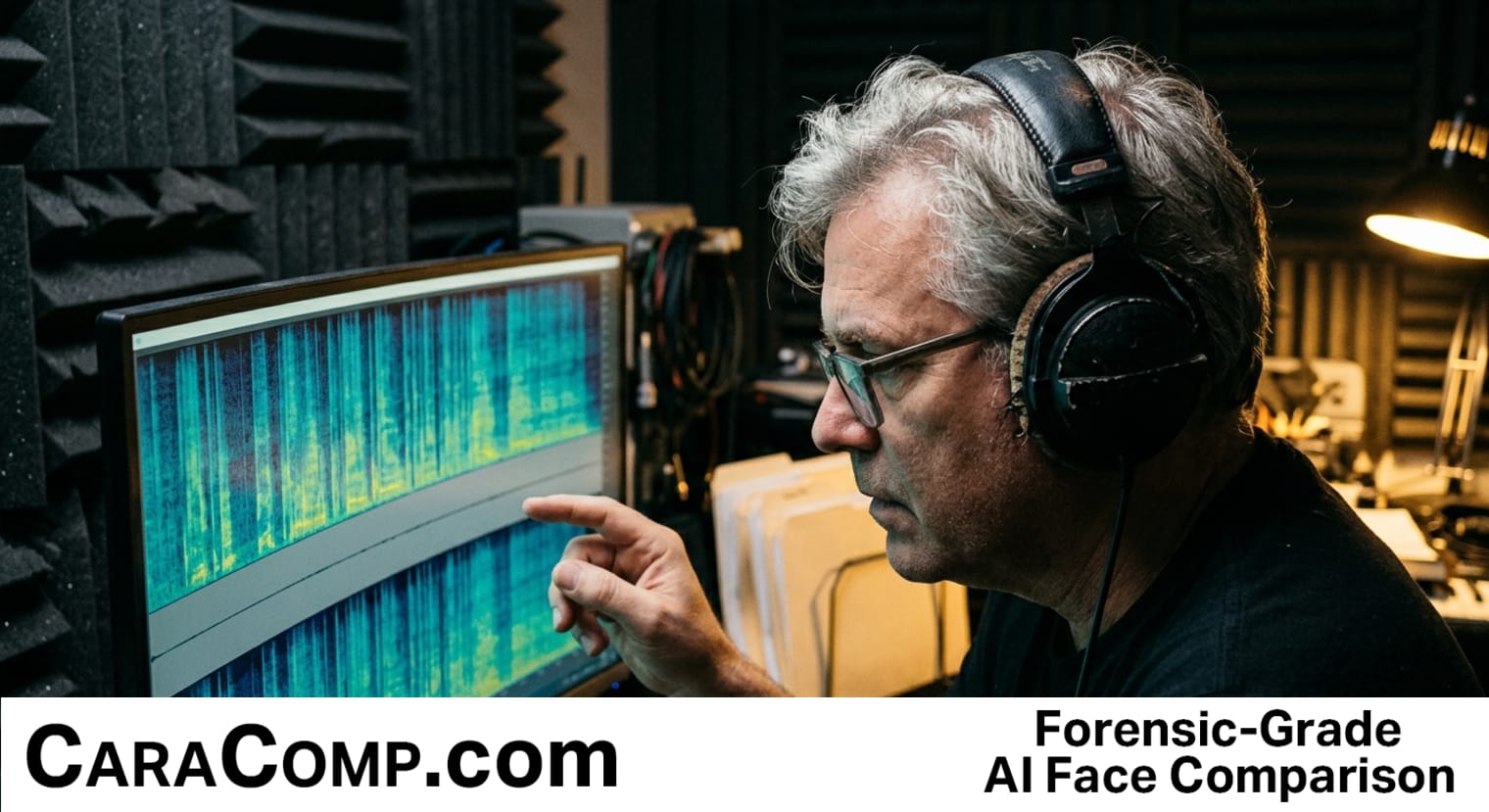
Five seconds of audio is all an algorithm needs to clone a voice convincingly enough to fool your gut instinct, but it completely falls apart the second you examine the timing. Recent forensic linguistic research utilizing voice cloning models proves a critical rule every modern investigator needs to internalize: surface aesthetics are trivially easy to fake, but structural behavior and mathematical precision are not.
When synthetic audio mimics pitch and accent, human ears get tricked because we naturally evaluate superficial familiarity. Yet detection models achieve an 81% accuracy rate simply by analyzing pause durations and breathing intervals. Cloned audio sounds right, but it speaks too smoothly, eliminating the micro-hesitations intrinsic to human biology.
This exact dynamic is playing out across visual biometrics and modern investigation technology. Relying on casual visual inspection to identify a subject or verify evidence is becoming a massive investigative liability. Just as synthetic voice generation replicates tone without mastering speech mechanics, superficial visual similarities easily deceive the naked eye. Real investigative rigor requires moving past whether an asset merely "looks right" and shifting toward objective measurement.
In professional case analysis, this is why modern investigators rely on side-by-side facial comparison powered by Euclidean distance analysis rather than subjective visual sweeps. You do not evaluate a subject based on surface impressions; you calculate exact spatial landmarks and geometric vectors across case photos. As synthetic media and identity manipulation continue to complicate fraud investigations, the division between casual observation and mathematical verification will dictate which case files stand up to legal scrutiny.
- Superficial matching is an investigative liability: Generative tools effortlessly mimic surface tone and visual likeness, rendering informal "eyeball tests" and uncalibrated consumer tools completely inadequate for defensible verification.
- Structural metrics expose anomalies: Whether measuring milliseconds between conversational pauses or calculating vector coordinates between facial landmarks, forensic certainty relies on underlying mathematical consistency.
- Standardized comparison builds courtroom credibility: Private investigators and fraud analysts must ground their findings in repeatable facial comparison methodology rather than intuition to ensure case evidence remains unassailable.
Read the full article on CaraComp: The Fake Call Sounds Exactly Like Mom. Listen for the Pauses Instead.


Comments
Post a Comment