The Face Scanner Judging You May Have Learned From Faces That Don't Exist
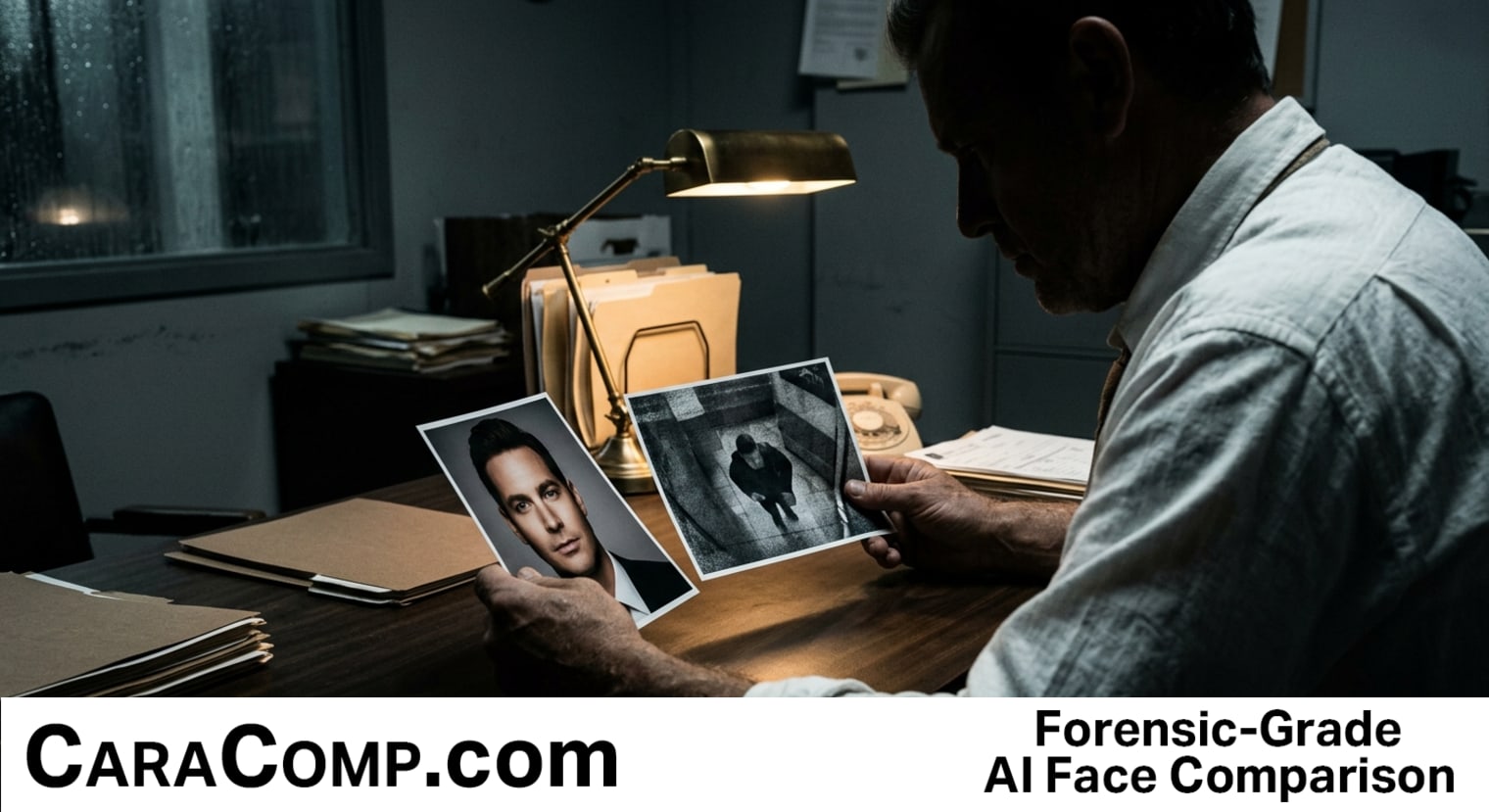
If your evidence fails in court because the underlying software was trained on people who don’t exist, "artificial intelligence" starts to feel like a liability rather than an investigative asset. Recent reports highlight a growing trend where facial comparison systems are trained using synthetic, AI-generated faces to avoid the legal minefields of data privacy. While this keeps researchers out of court, it leaves solo investigators and OSINT professionals holding the bag when those systems fail to handle the messy, grainy reality of a real-world case.
At CaraComp, we see this "synthetic-real gap" as a massive red flag for the industry. A system trained on "perfect" pixel-generated faces is effectively learning to identify people in a vacuum. When you’re a private investigator trying to match a blurry CCTV frame against a decade-old social media profile, you don’t need a tool that excelled at a laboratory benchmark. You need rigorous Euclidean distance analysis that understands how human features actually translate across disparate, low-quality images. The "95% accuracy" claims touted by enterprise software often crumble the moment they encounter a tilted head or fluorescent lighting—scenarios synthetic data struggles to replicate.
The pivot toward synthetic training is a convenience for developers, not a feature for investigators. For those of us in the field, the goal isn't just to get a "match" score; it's to produce a professional, court-ready report that stands up to scrutiny. Relying on "black box" models trained on non-existent people makes that job significantly harder. It’s time to move past the marketing hype of foundation models and get back to toolsets that focus on the side-by-side comparison of your photos, using math that stays consistent regardless of whether the training data was "legal" or not.
- Synthetic training creates a "perfection bias" that can lead to false negatives in grainy, real-world investigative environments where lighting and angles are never ideal.
- Reliability in court hinges on methodology, and explaining that a match was determined by a system trained on "ghost faces" is a quick way to have your evidence dismissed.
- Enterprise price tags don't guarantee field performance; high-cost tools often prioritize avoiding privacy lawsuits over the practical accuracy required by solo PIs and small firms.
The industry is at a crossroads. We can choose tools built for the convenience of lab researchers, or tools built for the gritty reality of investigation technology. For the professional who can't afford to miss a match, the choice is clear: prioritize Euclidean distance analysis over synthetic shortcuts.
Read the full article on CaraComp: The Face Scanner Judging You May Have Learned From Faces That Don't Exist


Comments
Post a Comment