That "Urgent" Video From Your Kid Tonight? It's About to Be Fake 500% More Often
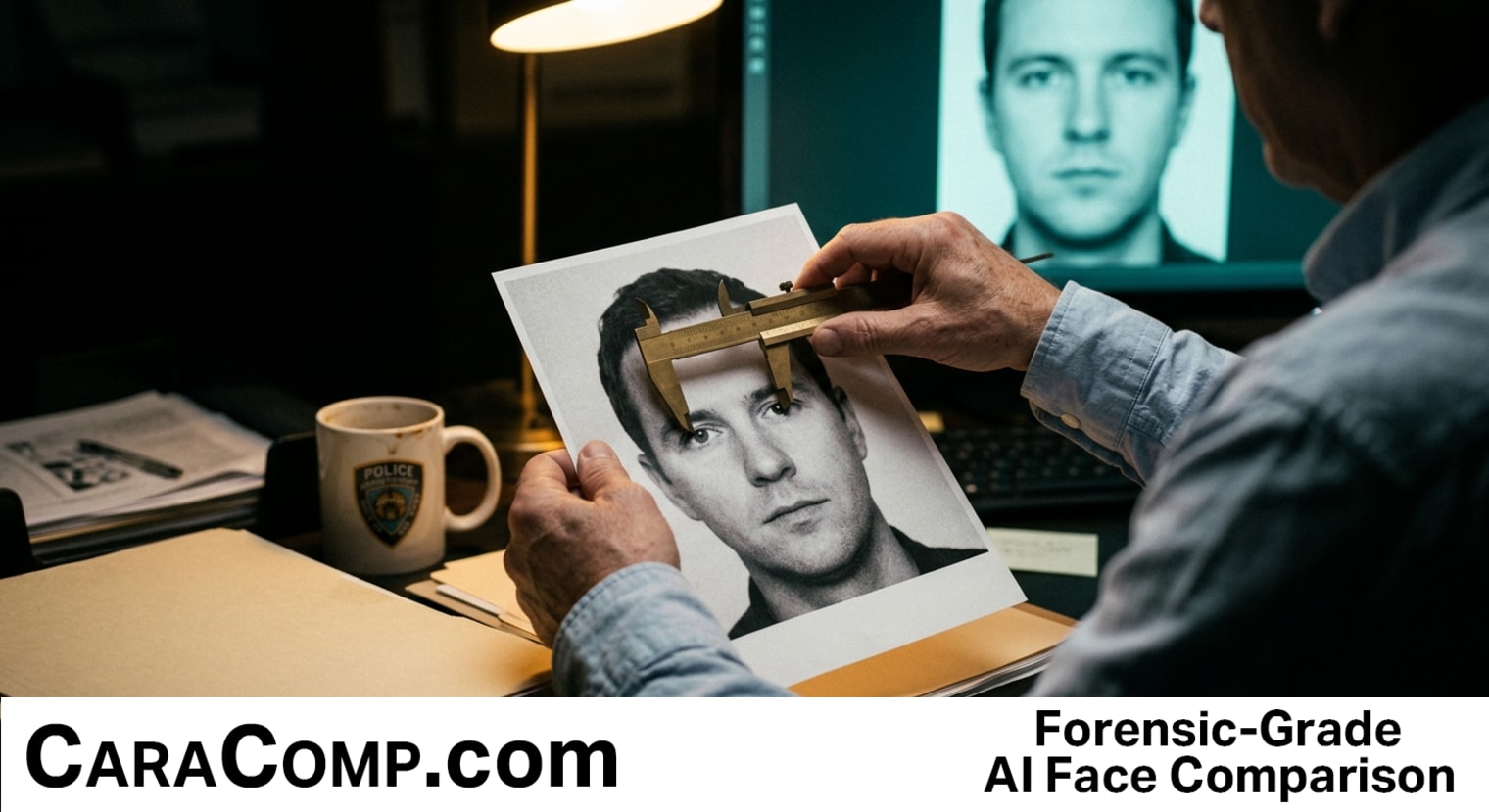
Your client’s "smoking gun" video just became your biggest professional liability. With deepfake attacks projected to surge by 500% by 2026, the days of relying on your "good eye" to verify a subject’s identity are officially dead. For the solo private investigator or OSINT researcher, this isn't just a tech trend; it’s a fundamental shift in how we handle evidence. If you aren't using mathematical precision to verify faces, you’re guessing—and in a court of law, a guess is a career-ender.
The numbers coming out of the latest fraud reports are staggering. While the 500% jump in synthetic media is headline-grabbing, the 3,892% spike in fake identity documents is the real gut punch for investigators. We are entering an age where digital masks are indistinguishable from reality to the human brain. Scammers are now cloning voices in three seconds and generating high-fidelity facial overlays for less than the cost of a lunch special. For an insurance fraud investigator or a detective, this means every piece of digital evidence now carries a "synthetic" risk profile.
At CaraComp, we see this as a call to arms for the investigative community. You cannot fight high-speed AI with slow, manual comparison. Spending three hours squinting at pixels to see if a claimant’s earlobe matches a social media photo is an archaic waste of billable time. More importantly, it’s unreliable. Professional investigators need enterprise-grade Euclidean distance analysis—the kind of math that doesn't get "fooled" by a deepfake’s emotional trickery—without the $2,000-a-year gatekeeping practiced by big tech firms.
- The "Manual Gap" is a Malpractice Risk: As synthetic media becomes the standard tool for fraudsters, relying on manual facial comparison will eventually be viewed as professional negligence. Accuracy must be backed by data, not just intuition.
- The Democratization of Verification: Prohibitive pricing for high-end analysis tools has historically left solo PIs behind. To survive the 2026 deepfake surge, investigators must adopt affordable, batch-processing tools that provide court-ready reporting.
- Comparison Over Recognition: The future of investigation isn't about scanning crowds; it’s about side-by-side Euclidean analysis. Verifying the subject in YOUR case against YOUR evidence is the only way to maintain a chain of custody that stands up to scrutiny.
The barrier to entry for fraudsters has evaporated. It’s time for the barrier to entry for high-level investigative technology to do the same. If you aren't quantifying the distance between facial landmarks, you aren't investigating—you're just looking.
Read the full article on CaraComp: That "Urgent" Video From Your Kid Tonight? It's About to Be Fake 500% More Often


Comments
Post a Comment