That "Urgent" Video From Your Boss? Watch the Mouth, Not the Face
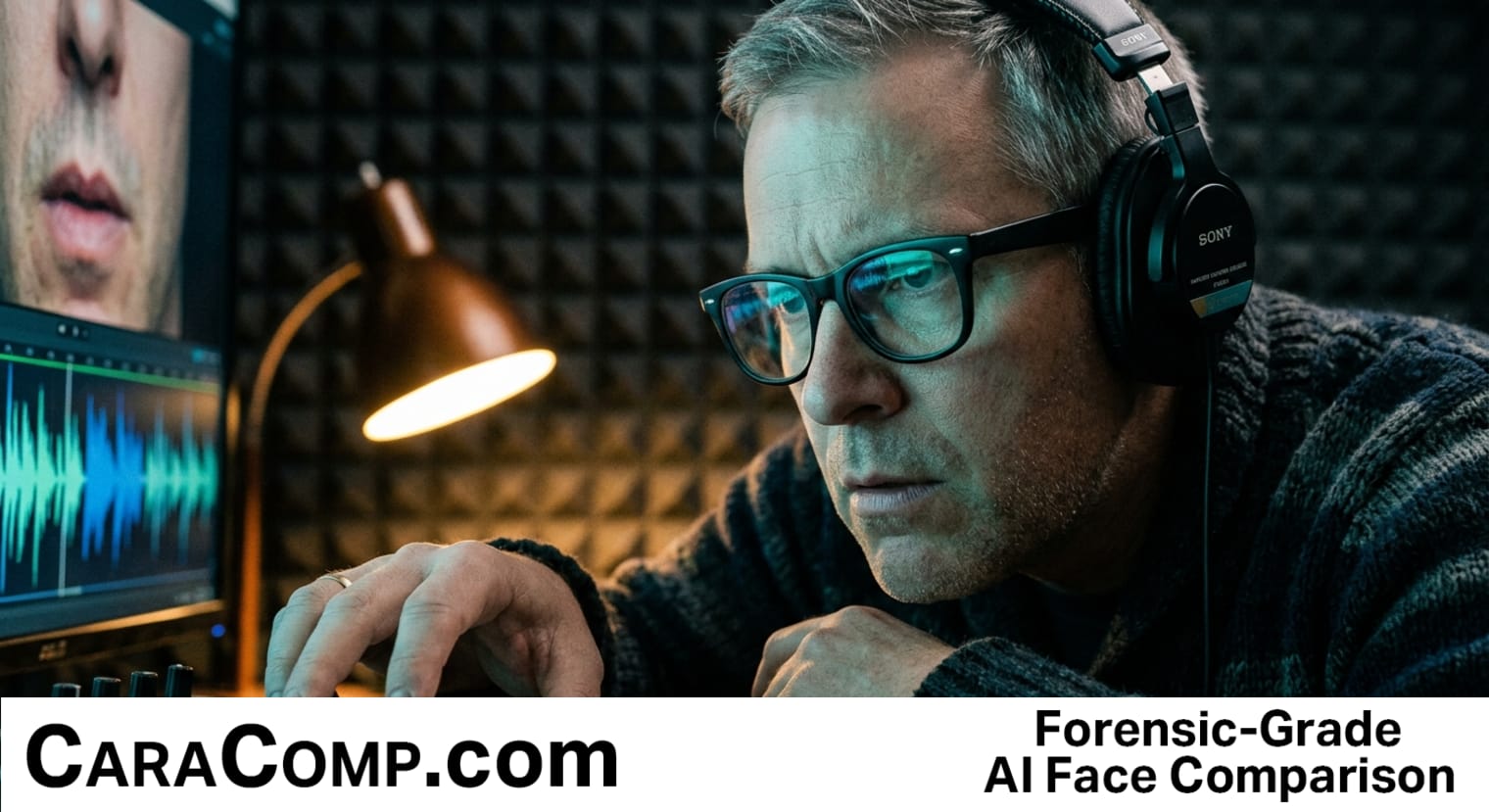
The "eyeball test" for digital evidence is officially dead. If you’re still relying on your gut feeling or looking for "glitchy" pixels to verify a person's identity in a video, you’ve already lost the arms race. New data confirms that deepfake volume has surged by 550% since 2023, but the real story isn't the volume—it's the disappearance of obvious visual artifacts. We’ve entered a phase where synthetic faces are visually perfect, leaving investigators with only one reliable trail: biometric synchronization.
For the modern private investigator or OSINT professional, this news is a wake-up call. The source article highlights that detection is shifting from visual inspections to "multimodal" checks—analyzing whether the mouth movement perfectly matches the audio at a millisecond level. This is the same logic we apply to facial comparison technology. You cannot rely on a general "look." You need mathematical precision, specifically Euclidean distance analysis, to determine if the person on your screen matches your subject of interest.
While the public frets over deepfakes, the professional investigator should see this as the ultimate validation for advanced facial comparison tools. If the most sophisticated AI systems on earth still struggle to synchronize facial muscles with audio, it proves that the micro-details of human biometrics are the ultimate "fingerprint." Relying on manual comparison is no longer just slow; it’s a professional liability. When a client’s case—or a court’s decision—hinges on identity, "it looks like him" isn't an answer. You need a report that shows the math.
- Manual visual analysis is no longer court-defensible. As synthetic media achieves visual parity with reality, "eyeballing" a match is an outdated methodology that won't hold up under scrutiny.
- Identity verification requires mathematical consistency. The "gap" in deepfakes exists because of desynchronization. Specialized investigation technology exploits these minute biometric discrepancies that the human eye simply cannot perceive.
- The barrier to entry for professional-grade analysis has collapsed. You don't need federal-level budgets to access the Euclidean distance analysis required to debunk fakes or confirm matches; you just need the right investigation technology.
The investigative landscape is shifting from "what we see" to "what we can measure." As deepfakes get better, the value of precise, side-by-side facial comparison only grows. Don't get left behind using manual methods in a synchronized world.
Read the full article on CaraComp: That "Urgent" Video From Your Boss? Watch the Mouth, Not the Face


Comments
Post a Comment