That "Too Perfect" Video? 4 Hidden Clues It's Fake
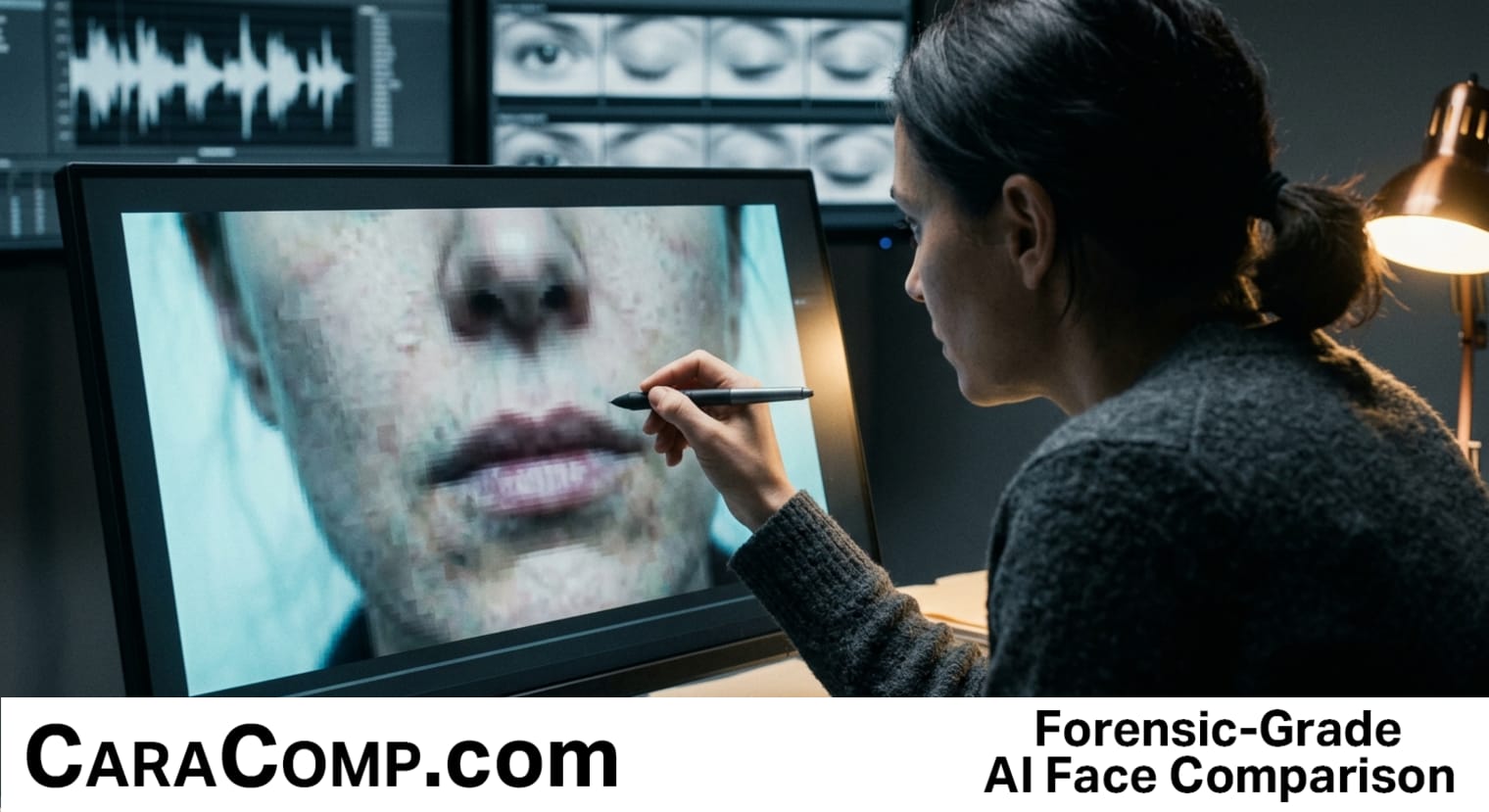
Stop trusting your eyes. In the investigative world, a "perfect" video is no longer the gold standard; it’s a massive red flag. While the average person sees a high-definition clip and assumes authenticity, seasoned OSINT professionals and private investigators should see a manufactured facade. The more polished a video looks, the more likely it was optimized to exploit human trust, hiding its digital fingerprints in the mathematical gaps between frames.
Deepfake detection is shifting from a simple "real or fake" toggle to a rigorous process of evidence stacking. For investigators, this mirrors the shift from manual "eyeballing" to precise facial comparison. The latest insights into digital forensics highlight four hidden clues: eye blinks, lip timing, compression scars, and temporal drift. These aren't things you catch while sipping coffee and watching a clip at 1x speed. They are anomalies buried in the data, requiring a shift toward forensic, measurement-based analysis.
At CaraComp, we see this evolution as a validation of the Euclidean distance analysis we provide. Just as deepfake detectors look for "temporal drift"—mathematical inconsistencies in a face over time—professional investigators must rely on the mathematical "location" of facial features to confirm identity across photos. You can't stake your reputation, or a court case, on a visual hunch anymore. Whether it’s an insurance fraud claim or a missing persons case, a "too perfect" video must be met with the same skepticism as a forged signature.
- The Death of the "Eye Test": Visual polish is now a distraction. Investigators must pivot toward tools that measure the underlying geometry of a face rather than relying on subjective observation that AI is designed to fool.
- Probabilistic Reporting is the New Standard: Just as deepfake detection provides "confidence flags" rather than binary answers, your investigative reports need the weight of mathematical comparison to survive scrutiny in a world of synthetic media.
- Enterprise-Grade Forensics are No Longer Optional: As forgers get better at hiding artifacts, solo investigators must adopt the same Euclidean analysis used by federal agencies to maintain their competitive edge and ensure their evidence holds up.
The line between authentic and synthetic is blurring, but the math doesn't lie. If you’re still manually comparing faces across case files or relying on "gut feelings," you’re not just wasting time—you’re falling behind the tech that your subjects are already using to deceive you.
Read the full article on CaraComp: That "Too Perfect" Video? 4 Hidden Clues It's Fake


Comments
Post a Comment