That Tattoo in the Photo? It's Now Searchable — But It Can't Prove It's You
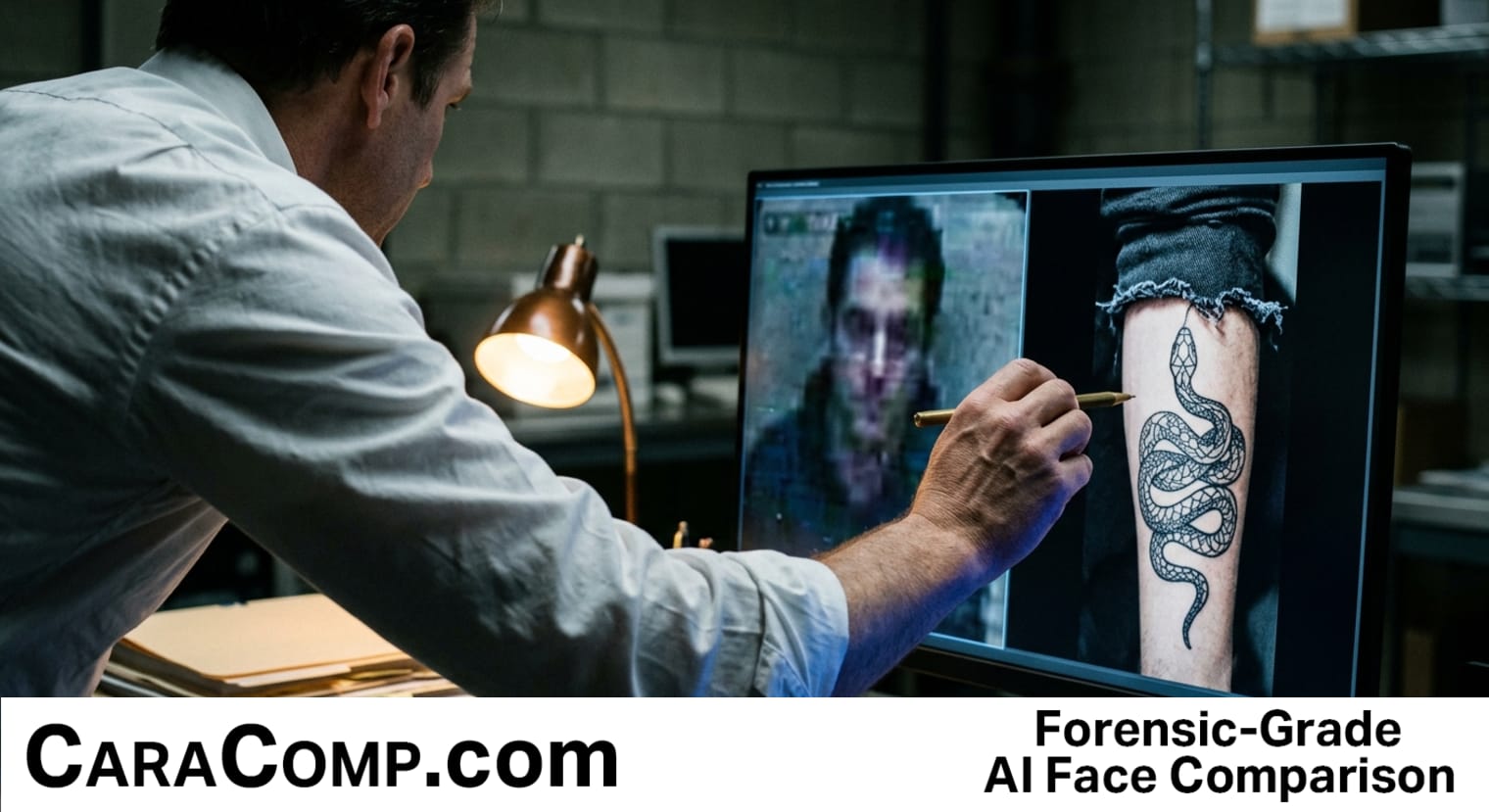
Most investigators are still looking at tattoos like they’re reading a police blotter from 1985. Categorizing a suspect by a written description like "dragon, left forearm" is a useless methodology in a world where NIST is now benchmarking tattoo recognition as a rigorous mathematical science. If you aren't treating every mark on a subject’s skin as a searchable geometric fingerprint, you’re essentially working with one eye closed.
The shift from text-based descriptions to image-based Euclidean distance analysis is the most significant leap in biometric investigation since the advent of digital facial comparison. While the FBI and NIST are currently stress-testing algorithms that can navigate the complexities of skin stretch, fading, and poor lighting, the message for the private sector is clear: visual evidence is no longer a "guessing game" for the human eye. It is a data point that can be ranked, filtered, and analyzed with mathematical precision.
However, the industry-insider secret that many tech providers won't tell you is that no biometric match—whether it’s a tattoo or a face—is a "lights-out" identification. A machine can narrow a database of 100,000 images down to the top 20 most likely candidates, but the burden of the final call still rests on the investigator. This is exactly why we built CaraComp to empower the human analyst rather than replace them. You need tools that provide court-ready reporting and professional-grade analysis without the five-figure enterprise price tag.
- Tattoos have evolved from art to searchable geometric data, making manual text-based database searches obsolete for serious OSINT and fraud investigators.
- The "human-in-the-loop" remains the most critical component of any identification, as algorithms provide probability-ranked candidate lists rather than definitive legal proof.
- Affordable Euclidean distance analysis is leveling the playing field, allowing solo PIs to leverage the same mathematical comparison logic used by federal agencies to close cases faster.
If you are still manually squinting at photos to see if a tribal design matches a booking shot, you are wasting the most valuable asset you have: time. The future of investigation technology isn't just about seeing more; it's about calculating the distance between what you see and what you can prove. Don’t let your firm fall behind because you’re relying on outdated manual methods when enterprise-grade comparison is finally within your reach.
Read the full article on CaraComp: That Tattoo in the Photo? It's Now Searchable — But It Can't Prove It's You


Comments
Post a Comment