That Call From Your Kid? Your Ear Fails This Test Worse Than a Coin Flip
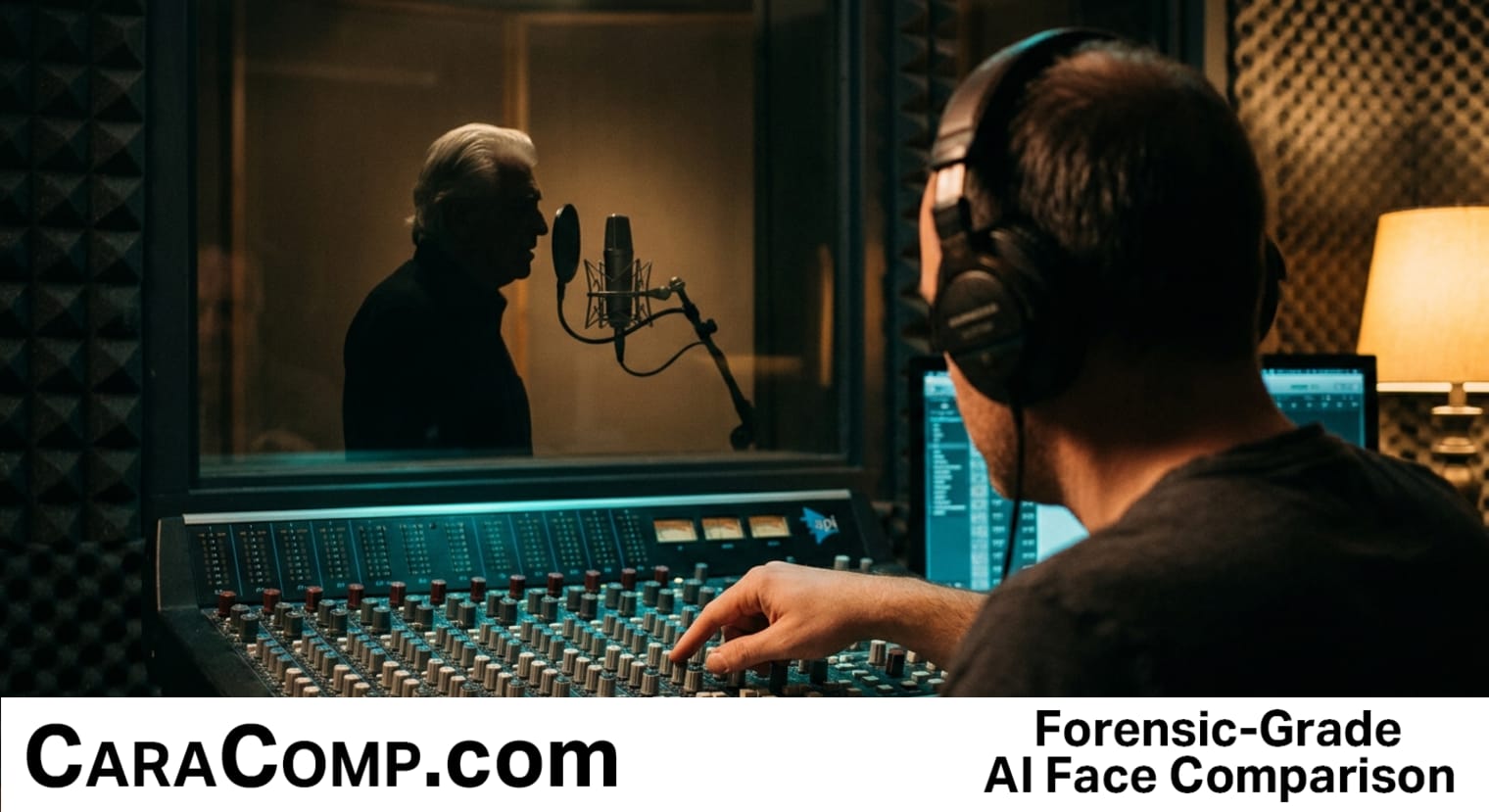
Human sensory intuition has officially expired as a credible forensic filter. Recent University of York research proved that listeners identify AI voice clones at below-chance accuracy—worse than flipping a coin—because human cognition evaluates whether a narrative sounds plausible rather than analyzing the underlying acoustic artifacts.
When even Sir Michael Caine has to donate his vocal blueprints to science just to establish an objective baseline for detection, investigators should recognize the writing on the wall. The biometric authenticity crisis is not confined to audio. For private investigators, OSINT analysts, and fraud specialists, relying on human perception to verify identity across digital evidence is a catastrophic liability.
Just as listeners fall for plausible voice clones, investigators regularly suffer from cognitive confirmation bias when manually comparing case photos. The human brain naturally smooths over discrepancies, mistaking familiarity for fact. In modern digital investigations, manual photo matching is no longer a defensible methodology; it is an unforced error waiting to be challenged in court.
- Perception is no substitute for mathematical verification: Modern synthetic tools engineer away surface-level tells in both audio and imagery. Investigators must replace subjective visual matching with objective Euclidean distance analysis to establish verified facial comparisons.
- Controlled baselines are mandatory: Just as audio researchers need paired synthetic-and-authentic samples to evaluate forensic accuracy, investigative case analysis requires structured, side-by-side comparison to generate court-admissible reports that withstand judicial scrutiny.
- Forensic workflows must eliminate human confirmation bias: Whether evaluating audio anomalies or analyzing complex case photos, modern investigators require scalable technology that processes mathematical landmarks rather than relying on flawed human intuition.
The myth that seasoned professionals can intuitively spot digital manipulation or accurately match subjects across case files without specialized tools has completely collapsed. As identity verification grows more complex, precision facial comparison technology is no longer an enterprise luxury—it is the baseline requirement for closing cases efficiently and defending your professional reputation.
Read the full article on CaraComp: That Call From Your Kid? Your Ear Fails This Test Worse Than a Coin Flip


Comments
Post a Comment