That App Wants Your Whole ID. It Only Needs One Fact.
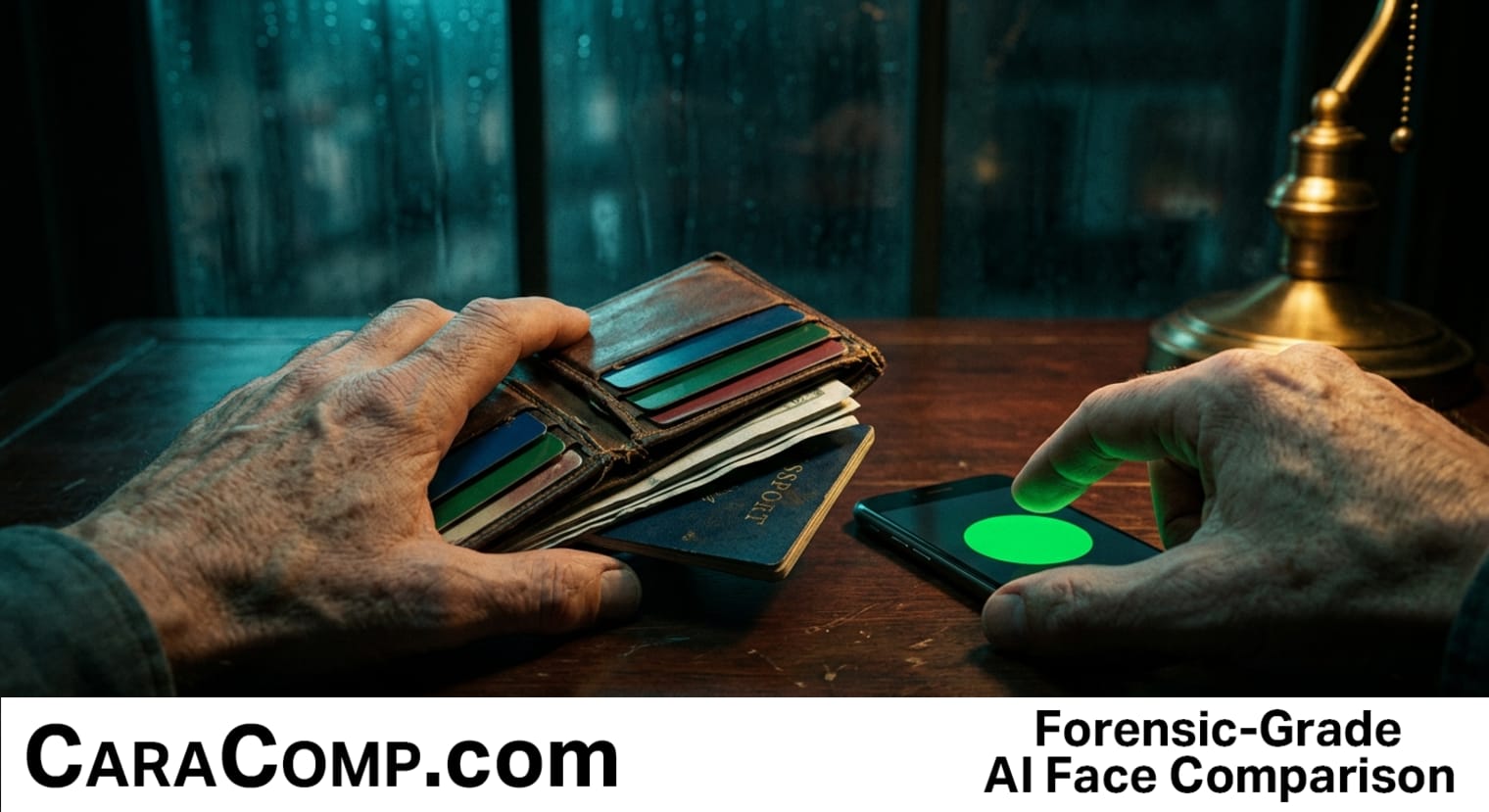
Handing over your entire driver’s license to a stranger just to prove you are over 21 is the digital equivalent of giving a bouncer your house keys, your social security card, and your medical records. It is overkill, it is risky, and in the very near future, it will be considered a professional embarrassment. The shift toward decentralized identity and zero-knowledge proofs (ZKP) is finally untethering "verification" from "collection," and for the modern investigator, this change is everything.
For too long, the investigative industry has been told that more data is always better. We have been conditioned to believe that to find a match or verify a subject, we need to hoover up every available scrap of information and store it in a vulnerable database. But the news is clear: the market is moving toward surgical precision. Zero-knowledge proofs allow a person to prove a fact—like their identity or age—without actually revealing the underlying document. This mirrors the exact philosophy we champion at CaraComp regarding facial comparison.
While the "big data" giants are focused on broad-spectrum scanning and massive, controversial databases, the tech-savvy solo investigator knows that the real wins happen through side-by-side analysis of specific evidence. Just as ZKPs allow for verification without bulk data collection, professional facial comparison allows an investigator to use Euclidean distance analysis to confirm a match between two specific images without needing to scan a crowd or participate in invasive data-mining practices.
- The "Collection" Liability is Ending: Investigators who continue to rely on tools that demand massive data intake are walking into a regulatory and reputational minefield. The future belongs to tools that verify facts without creating new data liabilities.
- Affordability Meets Enterprise Precision: As decentralized tech cuts verification costs by up to 60%, the barrier to entry for high-level analysis is collapsing. Solo PIs can now access the same mathematical certainty—like Euclidean distance metrics—that was once reserved for federal agencies with six-figure budgets.
The transition from "scan everyone" to "compare these two" is more than a technicality; it is a fundamental shift in how cases are closed. By focusing on comparison rather than broad data collection, investigators can produce professional, court-ready reports that respect privacy while delivering undeniable results. If you are still spending hours manually squinting at photos or overpaying for enterprise contracts that treat you like a government agency, you are working harder, not smarter.
Read the full article on CaraComp: That App Wants Your Whole ID. It Only Needs One Fact.


Comments
Post a Comment