That "99% Face Match" Flagging You? It's Not What You Think.
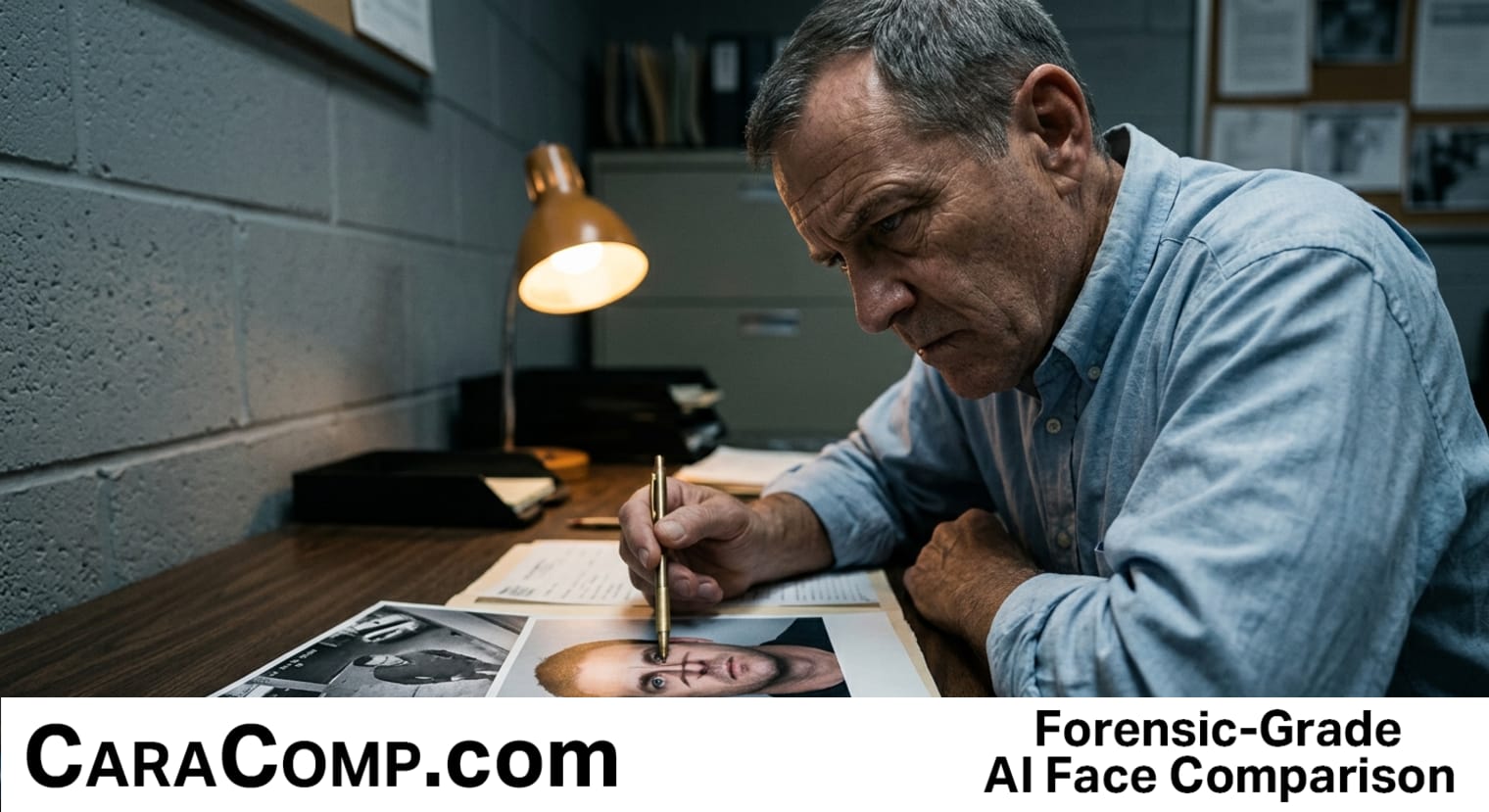
A "99% face match" is one of the most dangerous numbers in a private investigator’s toolkit. To a client or a jury, that percentage looks like a mathematical certainty—a slam dunk. But for the professional investigator, that number is often a lie. It isn't a probability of being right; it’s a measurement of similarity based on a "threshold" that someone else decided for you. If you don’t understand the math behind the match, you aren't just risking a case; you’re risking your professional reputation.
The industry is currently wrestling with the reality that facial comparison is far more nuanced than simple search-and-find. Factors like lighting and head rotation aren't just "minor issues"—they are technical dealbreakers. Most automated systems lose all reliability once a subject’s head rotates past 45 degrees. Yet, solo investigators are often forced to choose between enterprise tools costing $2,000 a year and cheap consumer search sites that offer zero professional reporting and questionable reliability. This gap leaves small firms leaning on manual comparison, which is prone to fatigue and human error.
At CaraComp, we view facial comparison through the lens of Euclidean distance analysis. This isn't about scanning crowds or mass surveillance; it’s about taking two specific images and calculating the mathematical distance between facial landmarks. When an investigator uses enterprise-grade analysis, they move from "I think this is him" to "The Euclidean distance confirms a match." This distinction is what separates a hobbyist from a tech-savvy professional who can stand behind their results in a court of law.
- Match scores are policy choices, not scientific facts. A system can be tuned to be "aggressive" or "permissive," meaning a high score is only as good as the threshold settings used during the analysis.
- Lighting is the ultimate "false positive" generator. Algorithms can be more sensitive to the direction of light than to the actual features of a human face, making side-by-side human verification essential.
- The "math of scale" complicates results. Searching a massive database exponentially increases the risk of a false candidate appearing as a high-confidence match simply due to the sheer volume of data.
For the solo PI or the small OSINT firm, the goal isn't just to find a match—it's to find a match that holds up under scrutiny. You need the same analytical power that federal agencies use, but without the gatekeeping of enterprise pricing. Professional investigation requires more than a percentage; it requires a methodology that turns facial comparison into an admissible, objective science.
Read the full article on CaraComp: That "99% Face Match" Flagging You? It's Not What You Think.


Comments
Post a Comment