That "95% Face Match" Could Be 1 of 500,000 Wrong Guesses
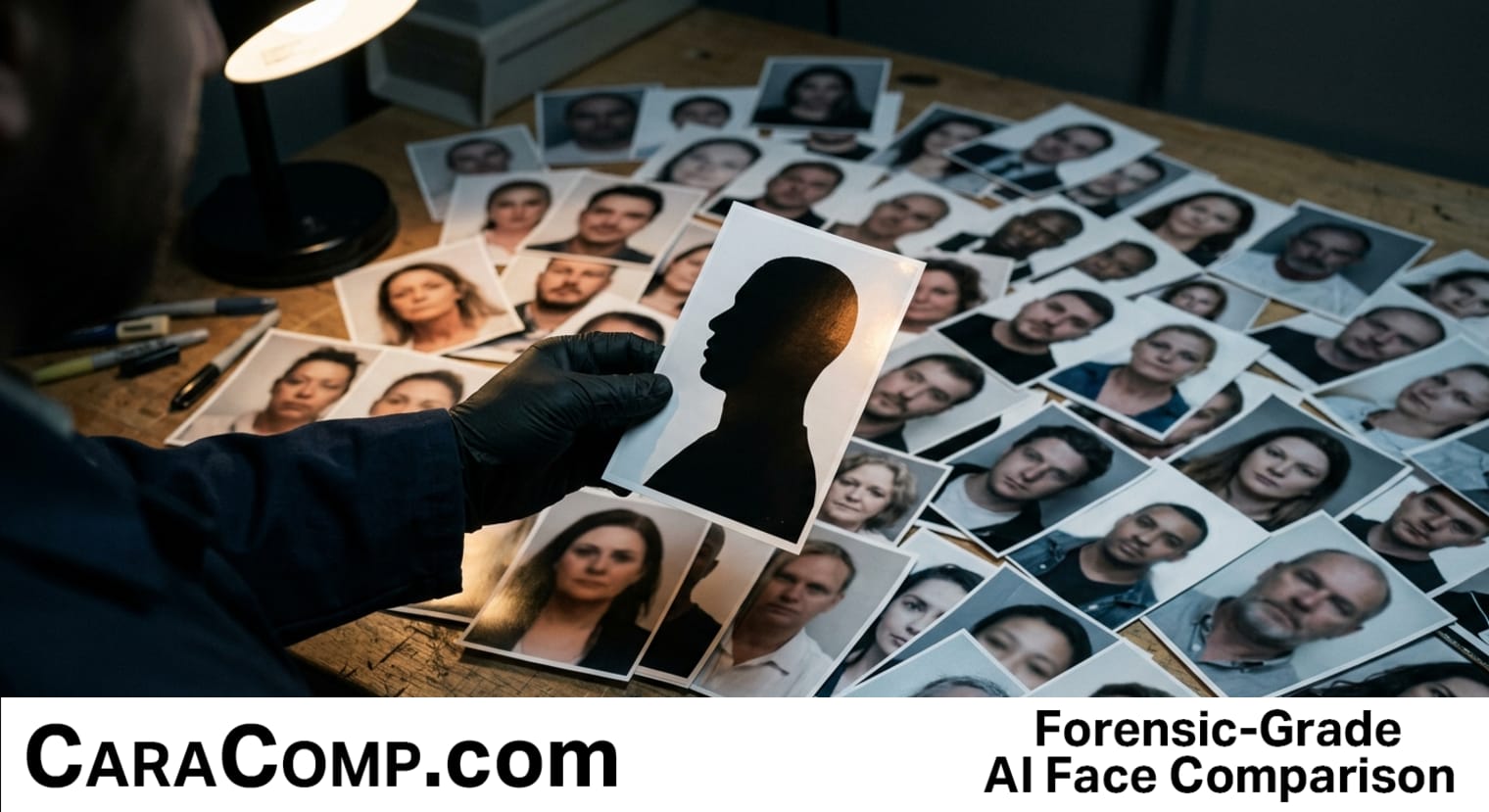
A 95% confidence score is widely treated as the gold standard in biometric evidence, but it might actually represent the top pick among 500,000 mathematical errors. The tech sector has spent years blurring the fundamental line between speculative mass-database searches and rigorous side-by-side case analysis. For investigators staking their reputations on digital evidence, misunderstanding this distinction is a direct path to legal exposure.
When an algorithm sweeps through a database of ten million scraped photos, a standard five percent error rate does not vanish—it multiplies across every single profile in the index. That search can generate hundreds of thousands of false-positive candidates competing to be labeled a "top match." Calling an unvetted database query definitive proof is mathematically flawed and devastating to case credibility.
Investigators, fraud examiners, and intelligence analysts must separate broad web search tools from disciplined facial comparison technology. Controlled one-to-one Euclidean distance analysis measures vector distances between two specific case images. It does not fish through millions of strangers to see who looks closest; it evaluates the exact visual evidence you upload under strict forensic parameters.
- Database scale distorts match reliability: A 95% confidence score pulled from an index of millions is merely a statistical lead, whereas the exact same score in a targeted, two-photo comparison provides verifiable analytical support.
- Courtroom defensibility requires controlled methodology: Presenting an open-database "best guess" as forensic proof collapses under scrutiny when variables like illumination, angle, and aging shift underlying mathematical vectors.
- The industry is pivoting to side-by-side verification: Modern investigative workflows are shifting toward direct, batch-processed facial comparison that delivers auditable, court-ready reporting rather than unregulated web scrapes.
If you cannot explain whether a match score came from a controlled mathematical comparison or a mass database lottery, you do not have forensic evidence—you have a gamble. Biometric technology must be treated as serious investigative methodology, not an automated guessing game.
Read the full article on CaraComp: That "95% Face Match" Could Be 1 of 500,000 Wrong Guesses


Comments
Post a Comment