That "94% Match" That Could Ruin Your Life Isn't What You Think
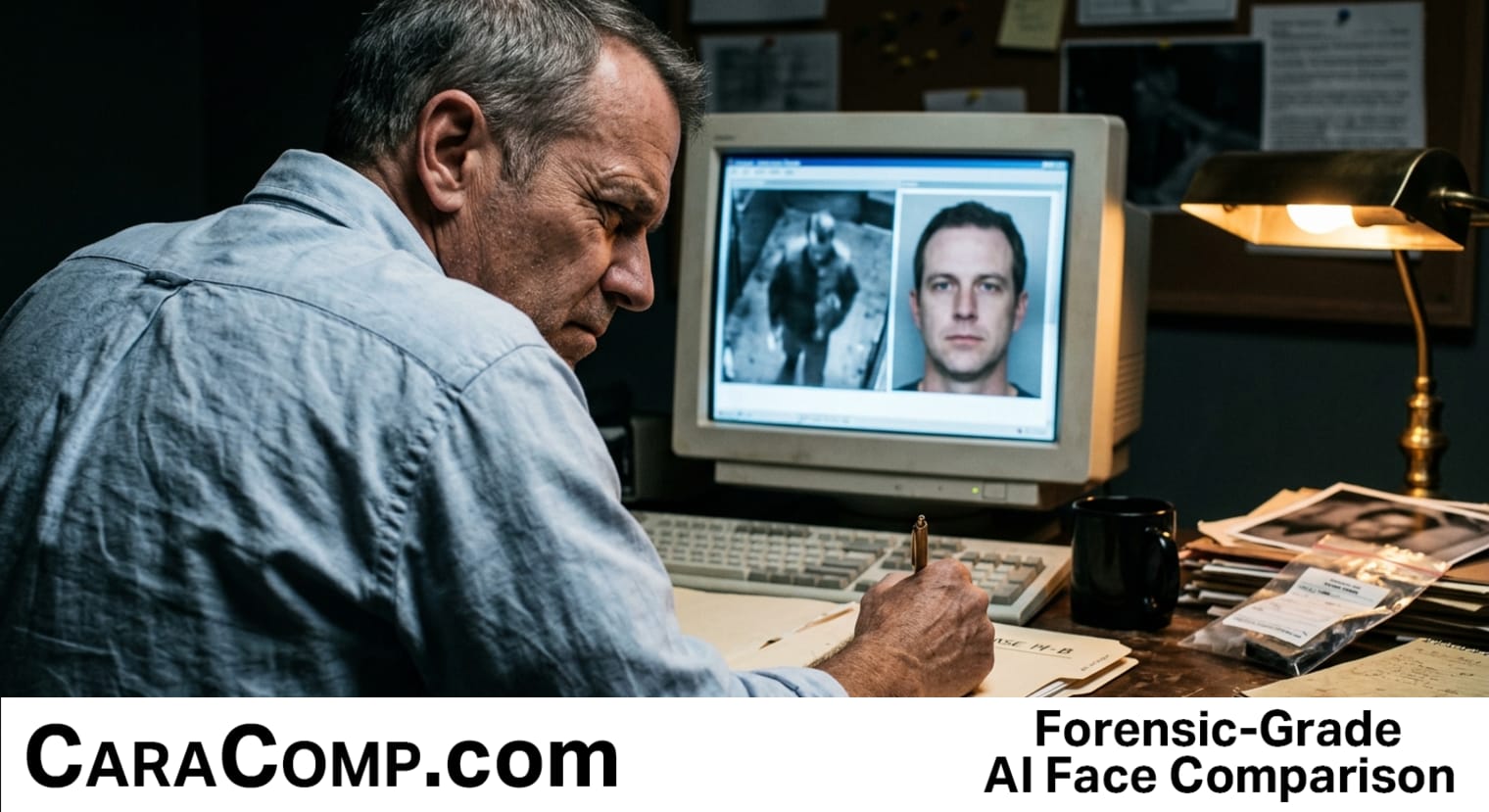
If you think a "94% match confidence" score means you’ve successfully identified a suspect, you aren’t just wrong—you’re dangerously close to professional negligence. In the world of private investigation and OSINT, that number is one of the most misunderstood metrics in the field. It isn’t a probability of guilt or even a definitive statement of identity; it is simply a mathematical output based on a "threshold dial" that most investigators never even see.
The hard truth is that a 0.94 score can be an airtight lead or a total hallucination depending on the quality of your source image and the algorithm's calibration. For years, the industry has been split: you either gambled your reputation on "free" consumer tools with abysmal reliability, or you shelled out $2,400 a year for enterprise software designed for federal agencies. This gap has left solo investigators and small firms in a precarious position, relying on manual side-by-side photo comparisons that take hours and lack the scientific weight required for court-ready reporting.
At CaraComp, we view facial comparison as a specialized methodology, not a magic "identify" button. Professional investigators don't need surveillance; they need forensic-grade Euclidean distance analysis that measures facial geometry with mathematical precision. When you’re dealing with grainy CCTV footage or an off-angle social media profile, a "94%" match without the underlying Euclidean data is just a guess. You need to know how the machine reached that conclusion, and more importantly, you need the tools to verify it without spending three hours on a single pair of photos.
Key Industry Implications:
- The "Confidence Score" trap is the leading cause of investigative errors. Without understanding the threshold settings and image quality assessment, a high match score on low-quality surveillance footage is statistically prone to false positives that can ruin lives and reputations.
- Affordability no longer justifies technical inferiority. The era of "good enough" consumer search tools is over; solo investigators now have access to the same Euclidean distance analysis used by major agencies, allowing for professional-grade comparison at a fraction of the legacy cost.
- Court-admissible reporting is the new baseline. A screenshot of a match is not evidence. Modern investigators must provide standardized, professional reports that separate "facial recognition" (scanning crowds) from "facial comparison" (analytical side-by-side evidence) to maintain credibility in legal proceedings.
The distinction between a lead and a verdict is a trained human reviewer armed with the right data. If you aren't using professional-grade comparison tools, you aren't just behind the curve—you're working with a blind spot that could cost you your next case.
Read the full article on CaraComp: That "94% Match" That Could Ruin Your Life Isn't What You Think


Comments
Post a Comment