Stop Watching the Face: 3 Places Deepfakes Quietly Fall Apart
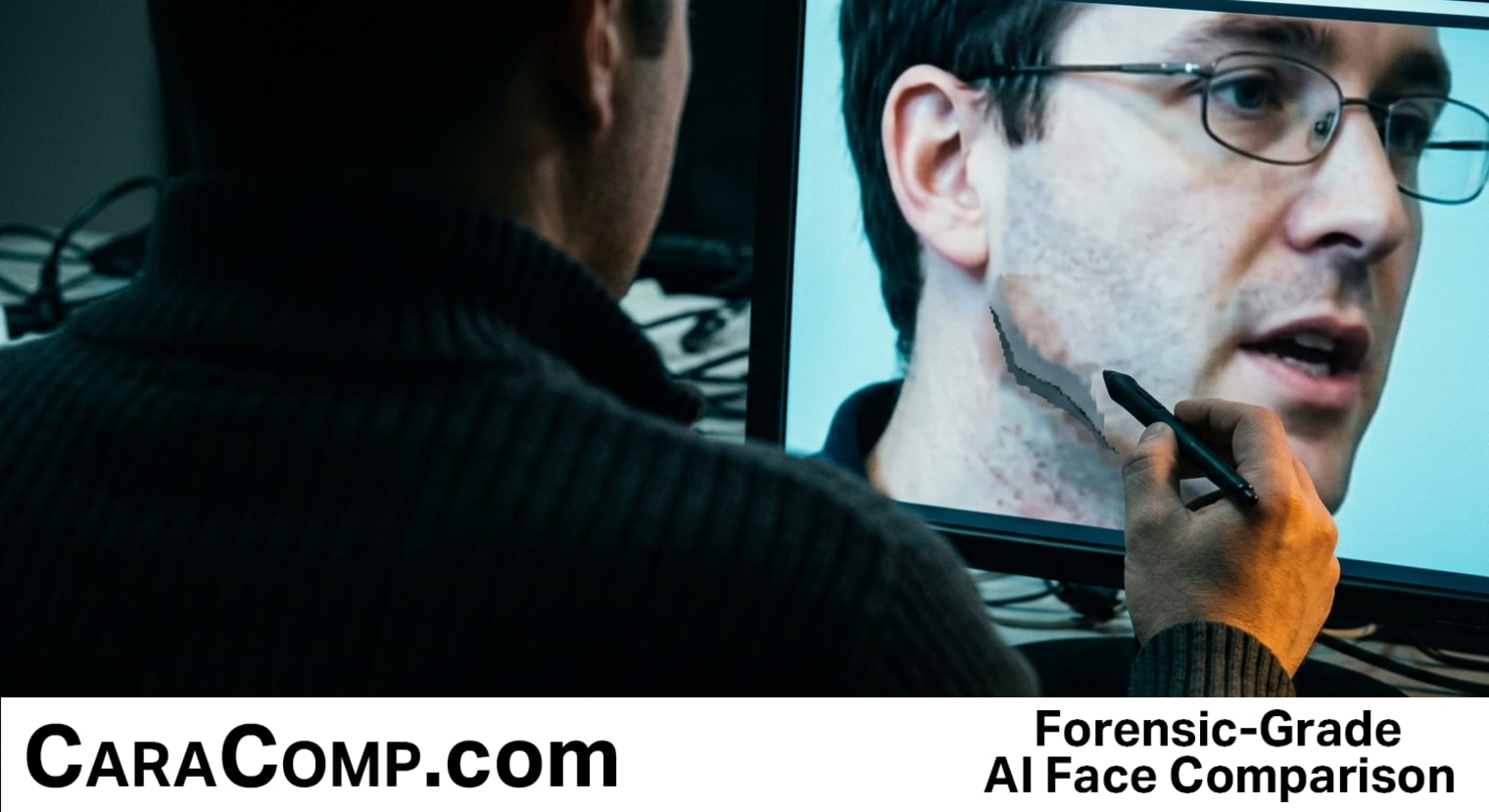
If you are staring at a person’s face to determine if a video is real, you have already lost the investigation. In the high-stakes world of OSINT and private investigations, the face is no longer the "tell"—it is the distraction. Deepfake technology has become remarkably proficient at rendering skin textures and eye movements, but it still struggles with the mathematical consistency required for professional-grade facial comparison.
For the solo investigator or small PI firm, the rise of synthetic media creates a massive credibility gap. You cannot afford to stake your reputation on a "gut feeling" or a consumer-grade search tool with poor reliability. Real investigation technology requires looking at the seams where AI fails: the timing of the mouth, the physics of light, and the Euclidean distance analysis of facial landmarks across multiple frames. When a subject speaks, their lips must follow specific geometric patterns—known as visemes—that AI often miscalculates by mere milliseconds.
These inconsistencies are the digital fingerprints of a forgery. While enterprise-level tools used by federal agencies have caught these errors for years, the solo investigator has historically been priced out of this caliber of analysis. This creates a dangerous environment where fraudulent evidence can slip into a case file simply because the investigator lacked the budget for high-end verification software. We are moving toward a future where every piece of video evidence must be treated as a data set rather than a visual record.
Key implications for modern investigators:
- The transition from visual to quantitative evidence: Human intuition is failing; investigators must rely on tools that measure the mathematical consistency of facial geometry across hundreds of frames to ensure the data is court-ready.
- Reputational risk is the new liability: Presenting a deepfake as legitimate evidence can destroy a firm’s credibility. Professional-grade facial comparison is no longer a luxury but a necessary safeguard against digital manipulation.
- The "Shadow Gap" as a primary forensic target: Because AI generates faces in isolation, it often fails to sync the subject's lighting with the environment, creating a measurable divergence in shadow behavior and edge rendering.
The standard for "due diligence" is shifting. If you aren't analyzing the relationship between moving parts and frame-by-frame geometry, you aren't doing a complete investigation. The tools are finally becoming affordable—there is no longer an excuse to rely on manual, unreliable methods.
Read the full article on CaraComp: Stop Watching the Face: 3 Places Deepfakes Quietly Fall Apart


Comments
Post a Comment