Someone Can Steal Your Phone Number With a Fake ID. Japan Just Made That Nearly Impossible.
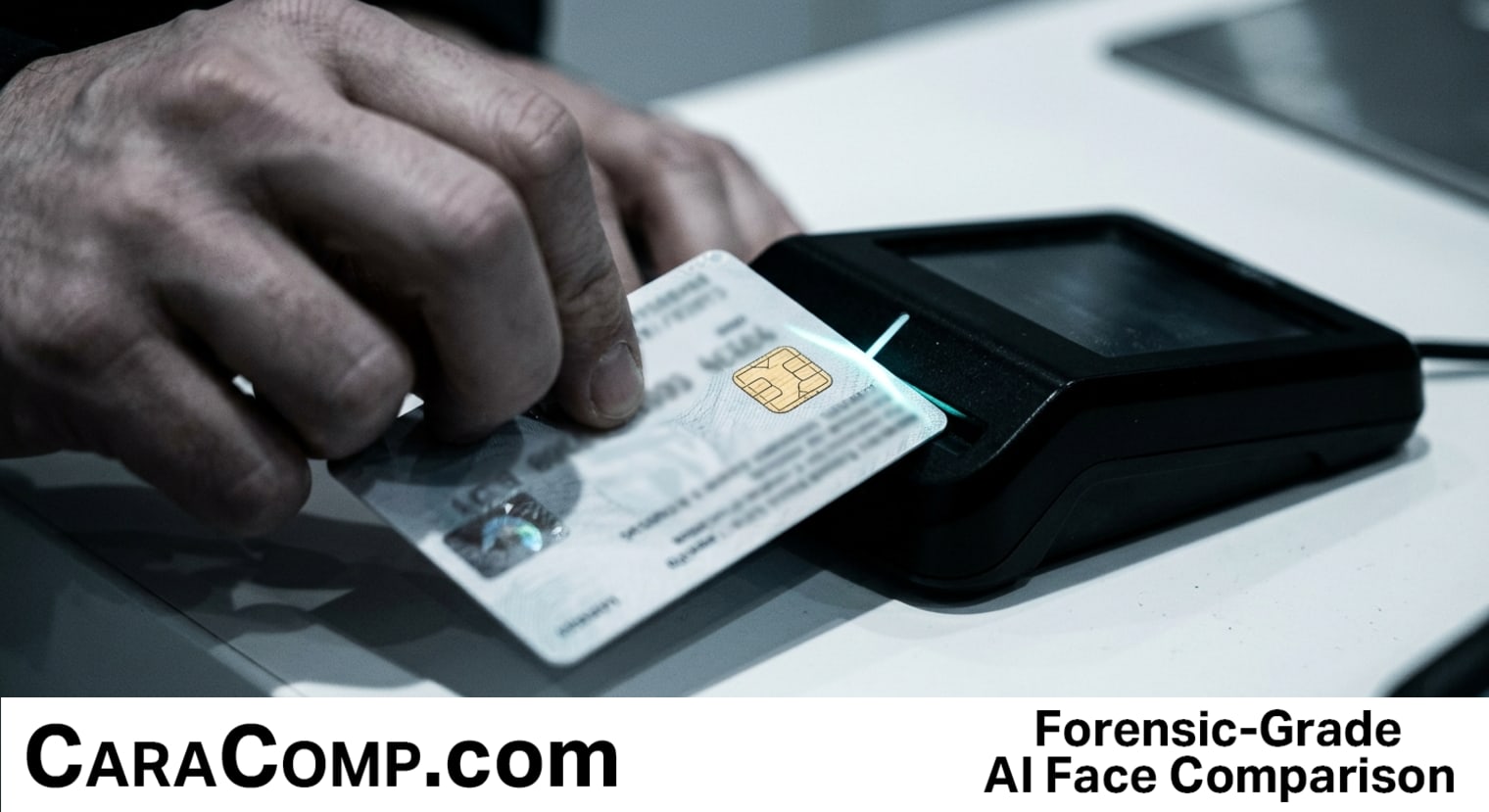
Most identity theft doesn't start with a sophisticated server breach; it starts with a retail clerk making a subjective guess. For years, the "eyeball test"—a store employee looking at a plastic ID and then looking at the person standing in front of them—has been the only thing standing between a fraudster and your entire digital life. Japan’s NTT Docomo just admitted that this human-centric model is broken by mandating chip-based ID verification at store counters.
For private investigators and OSINT professionals, this is a watershed moment. It signals the end of the "manual verification" age. If the world’s largest telecom carriers no longer trust the human eye to confirm an identity, why are so many investigators still relying on manual comparison for their case files? The shift Docomo is making highlights a massive vulnerability: when the stakes are high, subjective visual analysis is a liability.
SIM swapping is the modern investigator’s nightmare because it turns a phone number into a master key for bank accounts and encrypted comms. By reading the internal security chips of government IDs, Docomo is removing the clerk's intuition from the equation. This is exactly where the investigation industry is headed. We are moving away from "I think this is the guy" toward objective, data-driven Euclidean distance analysis. Whether you are verifying a subject for an insurance fraud case or tracking a person of interest through OSINT, the margin for error provided by manual comparison is no longer acceptable.
- The "Eyeball Test" is Officially Dead: If major corporations are moving to cryptographic and biometric-adjacent verification, investigators who continue to rely on manual photo matching are leaving themselves open to professional embarrassment and court challenges.
- Phone Numbers as Master Keys: Every investigator must realize that a hijacked mobile account is the ultimate entry point for bad actors; verifying the identity of whoever is handling that SIM is now the most critical link in the security chain.
- The Rise of Mathematical Certainty: This news proves that identity verification is moving toward a standard of objective analysis. Tools that offer batch processing and professional comparison reports are no longer "luxury" items—they are the new baseline for credible casework.
The tech being deployed in Japan is a preview of the scrutiny every investigator will eventually face. Clients don't want your best guess; they want a report that holds up. If you're still squinting at two photos side-by-side on your monitor, you're already behind the curve.
Read the full article on CaraComp: Someone Can Steal Your Phone Number With a Fake ID. Japan Just Made That Nearly Impossible.


Comments
Post a Comment