Ratan Tata Told Her It Was Safe. It Cost Her ₹4 Lakh.
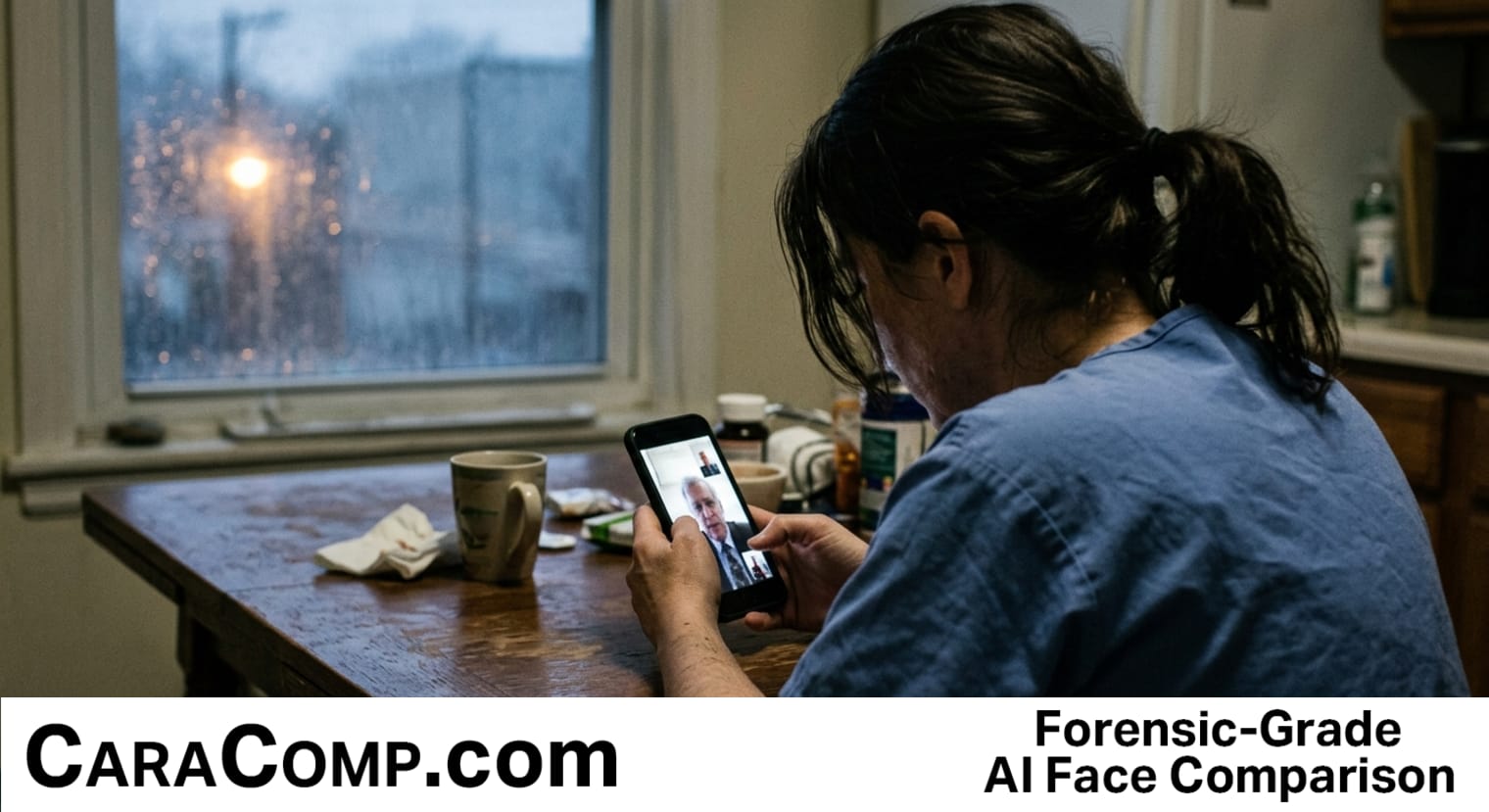
Your eyes are officially a professional liability. If you think you can "just tell" when a video is a fake, you’re operating on a 24.5% accuracy rate—worse than a coin flip. The recent case of a Pune nurse losing ₹4 lakh to a deepfake of Ratan Tata isn't a story about a "gullible" victim; it’s a clinical demonstration of how AI has weaponized authority to bypass human judgment.
For private investigators and OSINT professionals, this is a loud wake-up call. We are entering an era where visual "intuition" is synonymous with negligence. The scam worked because it exploited a familiar face to short-circuit skepticism. If a trained professional can’t distinguish a synthetic celebrity in a high-stakes investment scam, how can a solo PI expect to manually compare blurry CCTV frames or social media profiles with any degree of legal certainty?
At CaraComp, we see this shift every day. The industry is moving away from "looking" at faces toward measuring them. While the scammers use generative AI to create deception, investigators must use Euclidean distance analysis to verify reality. The tragedy of the Pune case is that the technology to debunk these visual lies exists, but it has historically been locked behind $2,000-a-year enterprise contracts that solo investigators can’t justify. That gap is where scammers live.
- Manual verification is a reputational landmine. Relying on human sight for facial comparison is no longer a defensible investigative standard. Objective, metric-based analysis is the only way to provide court-ready evidence that stands up to synthetic threats.
- Authority bias is the new social engineering. Scammers are "renting" the trust of figures like Ratan Tata. Investigators must now treat every "familiar" face in a digital file as a potential deepfake until biometrically verified.
- The "Enterprise Gap" is closing. You don't need a federal budget to access the same Euclidean distance tools the big agencies use. Affordable, batch-processing technology is now the only way to stay ahead of a 900% annual increase in synthetic media.
The Pune nurse didn't just lose money; she lost the ability to trust what she sees. For the modern investigator, your value is no longer just finding the person—it's proving, through data rather than "gut feeling," that the face in the file is the real deal. Stop guessing and start measuring.
Read the full article on CaraComp: Ratan Tata Told Her It Was Safe. It Cost Her ₹4 Lakh.


Comments
Post a Comment