"Mom, I'm in Trouble" — Except It's Not Her. It's AI.
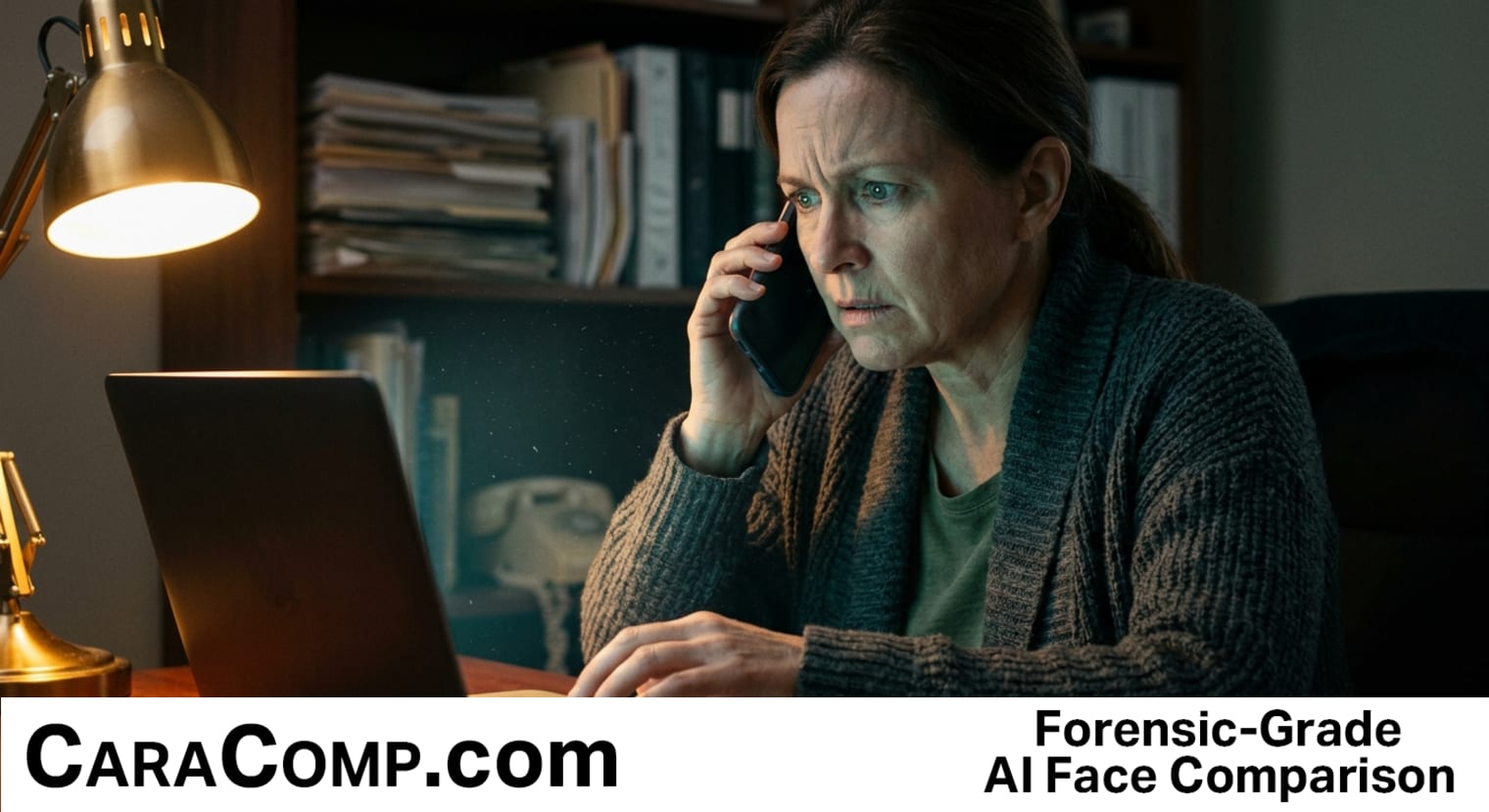
Three seconds. That is the razor-thin margin between a legitimate piece of evidence and a sophisticated digital fabrication. While the general public is just now waking up to the "Mom, I’m in trouble" phone scams, those of us in the investigation industry know this is just the tip of a very dangerous iceberg. If an amateur can clone a human voice from a single Instagram clip, the burden of proof for private investigators and OSINT professionals has just shifted permanently.
The reality is that "gut instinct" is officially dead. In a landscape where deepfake fraud has surged by 3,000%, relying on your eyes and ears to verify a subject's identity is no longer professional—it’s negligent. For the solo investigator or the small PI firm, this tech explosion creates a massive credibility gap. If you aren't using mathematical verification to back up your findings, your case reports won't survive a modern courtroom. We’ve moved past the point where a grainy photo and a "it looks like him" statement carry weight.
At CaraComp, we view this as the "Biometric Blind Spot." To stay ahead, investigators must pivot from simple recognition to rigorous, scientific facial comparison. This isn't about scanning crowds or mass surveillance; it’s about taking the photos you’ve legally obtained and running a Euclidean distance analysis to prove, with data, that Subject A is Subject B. This level of analysis used to be locked behind five-figure enterprise contracts, but in this new AI-saturated landscape, that’s a luxury solo PIs can no longer afford to live without.
- Biometric signals are no longer self-authenticating. Because AI can mimic voice, gait, and facial features from minimal data, investigators must use multi-layered verification tools that rely on geometric math rather than visual "vibes."
- The "Identity Gap" is a liability. Small firms that continue to use manual comparison methods are vulnerable to being outplayed by tech-savvy scammers and better-equipped competitors who can provide court-ready, data-backed reports.
- Scientific comparison is the only defense against deepfakes. As fraudulent visuals become more common, the ability to provide a professional analysis of facial landmarks is what will separate the elite investigators from the amateurs.
The future of investigation isn't about working harder; it’s about ensuring your tech stack is as sophisticated as the threats you're chasing. If you're still spending three hours manually squinting at photos to confirm a match, you're not just slow—you're a target for the next wave of AI-driven deception.
Read the full article on CaraComp: "Mom, I'm in Trouble" — Except It's Not Her. It's AI.


Comments
Post a Comment