Deepfake Voice Scams: One Callback Stops a $25M Theft
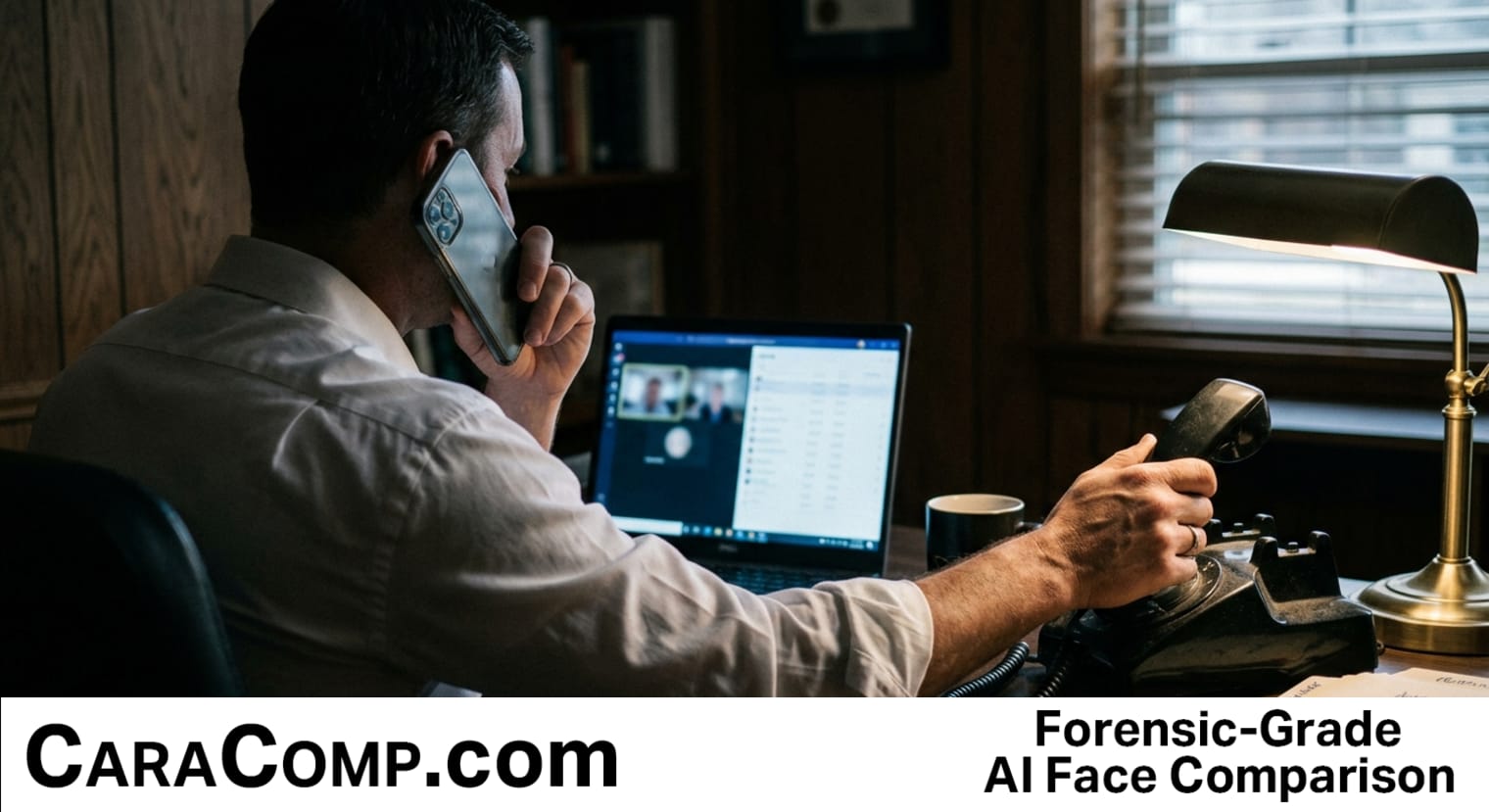
A $25 million digital heist didn't succeed because synthetic media has become completely flawless—it succeeded because human perception is fundamentally broken when evaluating identity under pressure. When a Hong Kong finance employee transferred tens of millions to a room full of deepfaked executives on a video call, the vulnerability wasn’t just generative AI. It was the blind assumption that what looks and sounds authentic must be authentic.
For modern fraud analysts, private investigators, and intelligence professionals, this case exposes a hard reality: trusting the human eye to authenticate identity is now professional negligence. Scammers rely on manufactured urgency to bypass verification protocols because they know a target only needs thirty seconds of misplaced trust to execute a catastrophic mistake. In the field of digital investigation technology, relying on intuition or casual inspection of faces and credentials yields the exact same blind spots.
This development underscores several critical shifts for the investigation industry:
- Surface plausibility is no longer evidence: A generated face or cloned voice only needs to survive quick scrutiny, not forensic analysis. The standard for proof has fundamentally shifted from "does this look right?" to mathematically proven verification.
- Mathematical precision must replace human guesswork: Forensic facial comparison using Euclidean distance analysis evaluates geometric landmark measurements across case photos, stripping away human bias and perceptual flaws that synthetic media exploits.
- Independent verification protocols are non-negotiable: Whether cross-referencing subject imagery across multiple case files or executing out-of-band identity checks, investigation workflows must separate initial claims from rigorous confirmation.
The lesson of the $25 million loss extends far beyond corporate finance. As synthetic media becomes trivial to produce, the gap between investigators using objective, automated case analysis tools and those relying on manual observation will define who uncovers the truth and who gets fooled. High-stakes investigations demand reproducible, court-ready biometric verification—not just a gut feeling that a face or voice seems genuine.
Read the full article on CaraComp: Deepfake Voice Scams: One Callback Stops a $25M Theft


Comments
Post a Comment