CCTV Facial Recognition: Why a 98% Match Proves Nothing
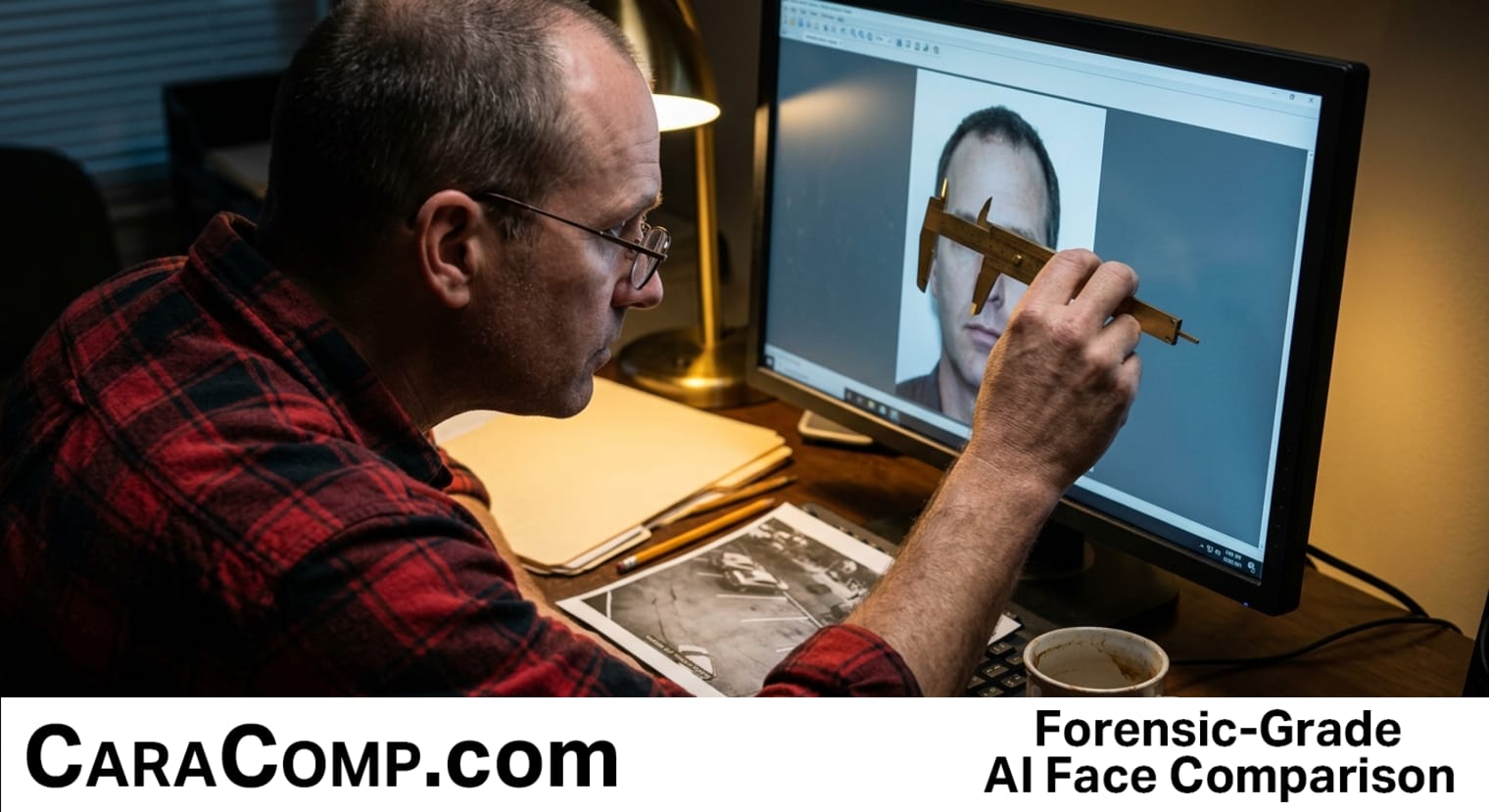
Security cameras are exceptional at answering when and where an event took place, but they are fundamentally blind to identity. The dangerous misconception spreading across the security landscape is that automated video systems deliver instant, open-and-shut verdicts. When a system outputs a "98% match," it has not identified a human being—it has simply calculated a mathematical proximity score between two geometric templates.
Treating raw video output as conclusive proof bypasses the foundational science of biometric case analysis. A camera lens only records pixels. Converting that visual data into dependable evidence requires structured facial comparison, where specialized software maps landmarks and computes precise Euclidean distance analysis against a verified reference image. Angle shifts, poor lighting, and frame compression inevitably alter facial geometry. Without a disciplined side-by-side comparison process, a high confidence score remains an unverified lead rather than defensible evidence.
For private investigators, insurance fraud teams, and law enforcement professionals, staking a case outcome on raw automated scores is an enormous liability. Modern investigation technology must bridge the gap between initial capture and verified analysis.
- Match percentages measure geometric proximity, not guilt: Euclidean distance analysis scores spatial relationships between landmark points, meaning every high-percentage output still demands rigorous, documented human verification.
- Recording and facial comparison are two separate disciplines: Video hardware merely establishes event timelines, whereas dedicated facial comparison tools perform the mathematical evaluation needed to support court-ready reporting.
- Structured methodology protects investigator credibility: Reliable case resolution depends on repeatable, standardized side-by-side analysis rather than blind trust in automated camera alerts.
Professional investigations cannot rely on automated assumptions. The future of the industry belongs to professionals who combine advanced, accessible comparison tools with sound investigative judgment to turn ambiguous footage into definitive facts.
Read the full article on CaraComp: CCTV Facial Recognition: Why a 98% Match Proves Nothing


Comments
Post a Comment