Biometric ID: A Stolen Card Still Passes the First Check
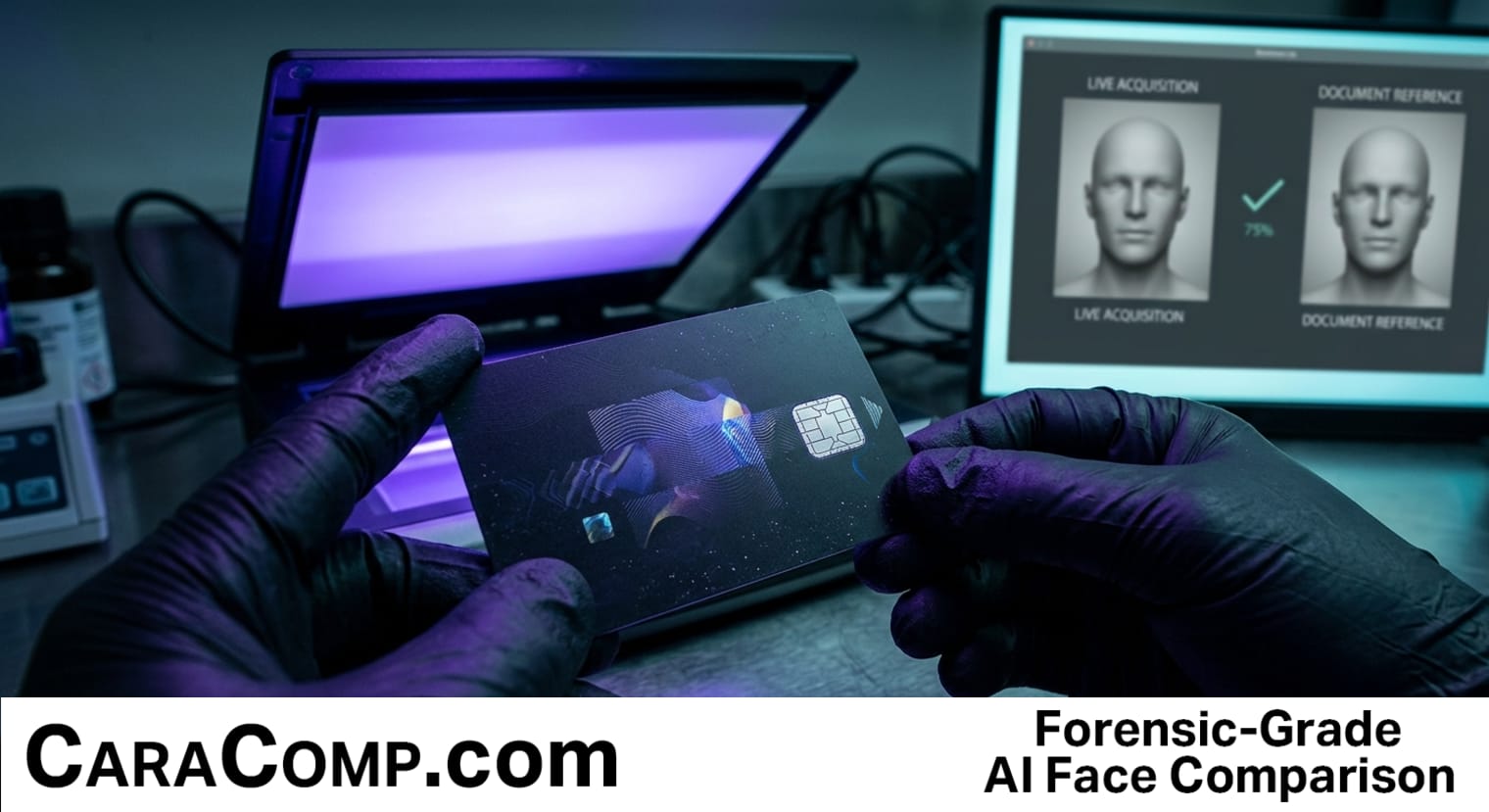
A fraudster carrying a stolen national ID card can breeze through top-tier cryptographic security checks without triggering a single alert. As Switzerland rolls out its new chip-embedded identity cards, governments continue celebrating document security upgrades while glossing over a critical operational gap: authentic paperwork does not equal an authenticated human being.
The global identity infrastructure repeatedly makes the fatal mistake of treating document verification and identity verification as the same step. Cryptographic chips confirm that an ID is genuine, unaltered, and signed by an issuing authority. That is only half the battle. Catching an imposter requires an entirely separate discipline: rigorous, objective facial comparison between the individual and the reference image on file. When security workflows conflate document integrity with facial verification, the entire process fails.
For private investigators, insurance fraud analysts, and OSINT researchers, this distinction is where casework succeeds or falls apart. High-stakes investigations cannot rely on the superficial assumption that a credential tells the full story. Proving identity requires objective mathematical measurements—specifically Euclidean distance analysis—to verify whether two faces across case photos, records, and evidence files actually match.
The rollout of new biometric standards highlights three vital takeaways for modern investigation technology:
- Hardware security does not prevent identity theft: A genuine, stolen credential passes cryptographic document checks every time; only strict, direct facial comparison exposes the imposter.
- Manual visual inspection is obsolete: Human eyes are prone to fatigue and bias. Investigators need repeatable mathematical comparison to produce reliable, court-ready match metrics.
- The industry is prioritizing 1-to-1 comparison over broad scanning: Defensible investigative methodology focuses on verifiable side-by-side case analysis rather than unchecked mass-database matching.
As biometric credentials become standard, the illusion that tamper-resistant hardware eliminates fraud will collapse. The investigators who solve complex identity cases will not be the ones trusting digital chips at face value—they will be the ones who apply automated, enterprise-grade facial comparison directly to their case files.
Read the full article on CaraComp: Biometric ID: A Stolen Card Still Passes the First Check


Comments
Post a Comment