Biometric Data Meaning: One Face Scan, 75-Year Record
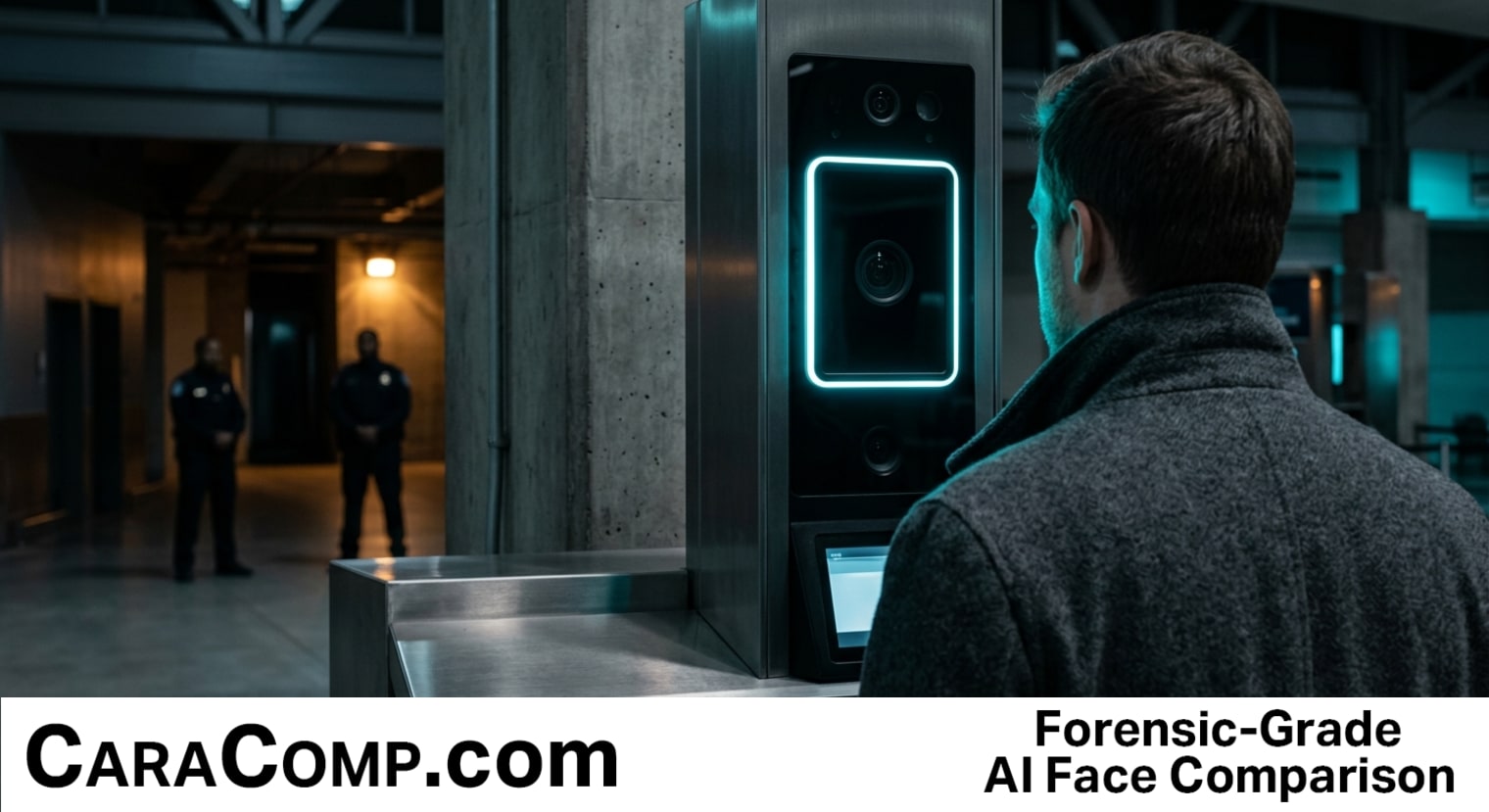
A split-second face scan at an airport kiosk does far more than confirm an airline ticket—it quietly binds physical biometrics to federal records for up to 75 years. While travelers assume a kiosk merely asks "is this you," the transaction actually triggers an automatic pipeline feeding traveler data into at least five interlinked government databases. The real story unfolding at major travel hubs is not about whether facial analysis works, but about how long that data persists after the gate closes.
The growing backlash from privacy advocates against airport biometric contracts exposes a fundamental misunderstanding that continues to plague the biometrics sector: conflating algorithm precision with data governance. A 99.9% accurate mathematical match is not the controversy. The issue is that standard verification events are being hardwired into long-term data-sharing pipelines without clear transparency for the individual being scanned.
For private investigators and OSINT specialists, this friction highlights a vital technical boundary. There is a massive operational difference between sprawling, multi-agency data aggregation and targeted facial comparison. True investigative workflow relies on isolated case analysis—using Euclidean distance measurements to evaluate specific evidence photos side-by-side within a secure file, without sending proprietary case files into perpetual federal repositories.
The downstream fallout from travel biometrics provides crucial takeaways for the future of identity analysis:
- Verification is distinct from data retention: A mathematical match takes under a second, but administrative policies decide whether that biometric signature vanishes immediately or sits in systems like IDENT for decades.
- Targeted case comparison protects data integrity: Professional investigators must separate closed-loop facial comparison tools from open-ended surveillance databases to keep evidence defensible and isolated.
- Governance drives public pushback, not algorithm math: Resistance to biometric systems stems from opaque data-sharing pipelines rather than false matches, proving that data stewardship matters just as much as matching accuracy.
As regulatory scrutiny over biometric pipelines intensifies, the investigative industry must double down on transparent, focused case comparison tools that respect the boundary between active case analysis and indefinite record storage.
Read the full article on CaraComp: Biometric Data Meaning: One Face Scan, 75-Year Record


Comments
Post a Comment