Applying for a Remote Job? Your Face Is Now Evidence.
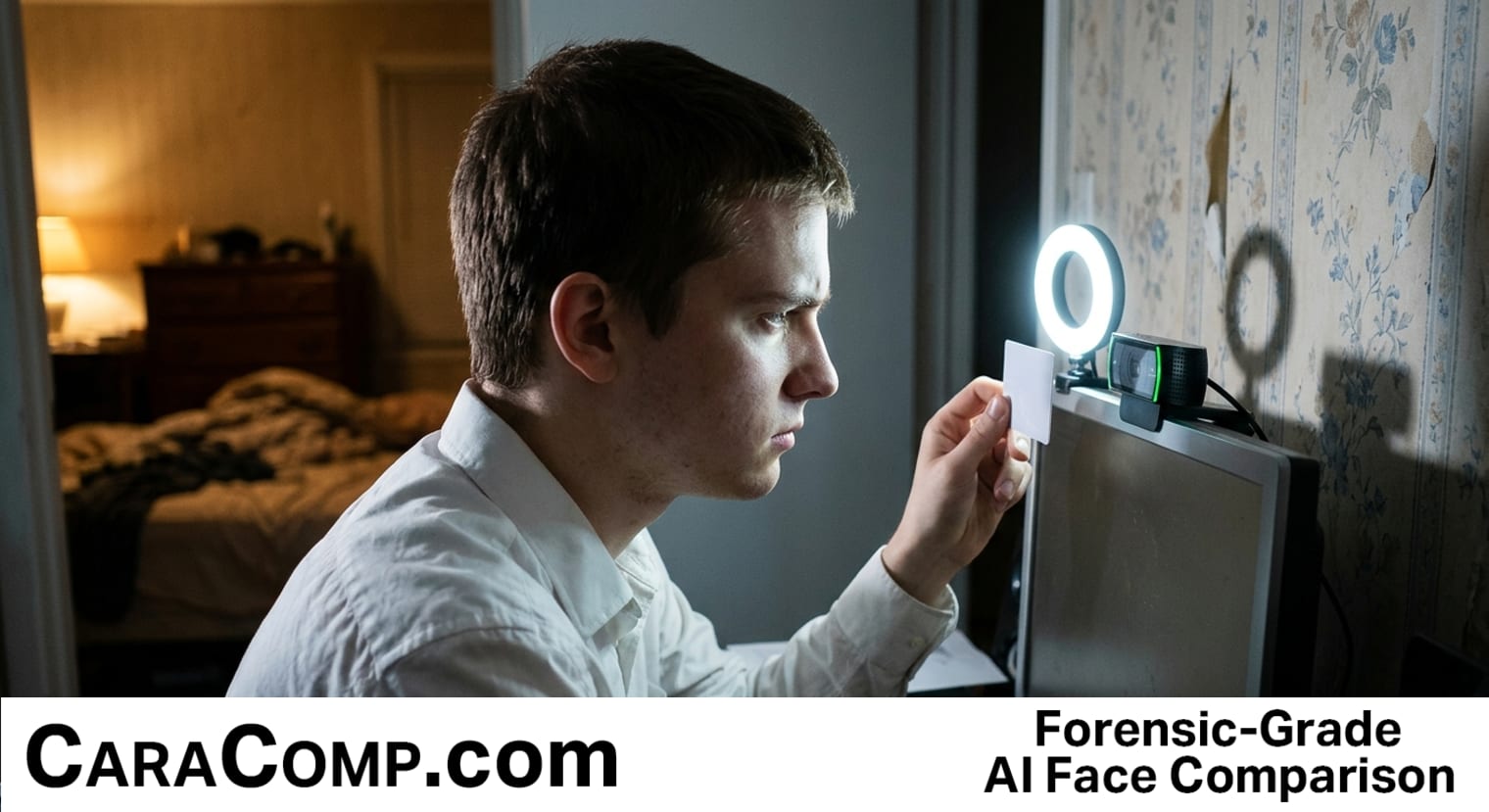
The next time you sit down for a remote job interview, the hiring manager might care less about your resume and more about the electrical outlets on your wall. In a frantic attempt to combat deepfake candidates, employers are now demanding applicants pan their cameras around their rooms to prove they aren’t sitting in a professional fraud studio. It sounds like a scene from a cyberpunk thriller, but it is the new reality of identity verification in a world where nearly 40% of technical interviews are being flagged for AI-assisted cheating.
As an industry insider at CaraComp, I see this shift as a massive wake-up call for the investigative community. While HR departments are scrambling with eye-tracking software and wall-outlet checks, the core of the issue is a crisis of identity. The technology used to verify that "Person A" is actually "Person A" has traditionally been locked behind $2,000-a-year enterprise contracts, leaving solo private investigators and small firms to rely on manual comparisons or unreliable consumer tools. This gap is where fraud thrives.
What we are witnessing is the "investigative-ification" of every remote interaction. If a hiring manager needs to perform Euclidean distance analysis to ensure a candidate is real, then the tools to perform that analysis must become accessible to the people on the front lines of fraud prevention. We don't need more invasive behavior monitoring; we need professional-grade facial comparison that is affordable, reliable, and court-ready. The industry is currently confusing scanning people with the legitimate, forensic comparison of case evidence. For investigators, this trend highlights several critical shifts:
- The "Trust Gap" is a New Revenue Stream: As identity fraud becomes common in hiring, the demand for professional OSINT and background investigators who can provide definitive, biometric-backed reports is going to explode.
- Enterprise Tech is No Longer Optional: When HR departments start using biometric scans, solo investigators cannot show up with manual methods and expect to remain competitive or credible.
- Comparison Over Scanning: The future of the field isn't about scanning crowds; it is about the precision of side-by-side analysis that proves identity beyond a reasonable doubt for case files and professional presentations.
The stakes have never been higher. If you are still spending three hours manually comparing faces across case photos while the rest of the world is adopting biometric verification, you aren't just behind the curve—you're losing the race. We need to democratize these tools so the "sharp investigator" isn't just the one with the biggest budget, but the one with the best tech.
Read the full article on CaraComp: Applying for a Remote Job? Your Face Is Now Evidence.


Comments
Post a Comment