AI Faked Your Kid's Voice. Your Insurance Just Called It "Not Covered."
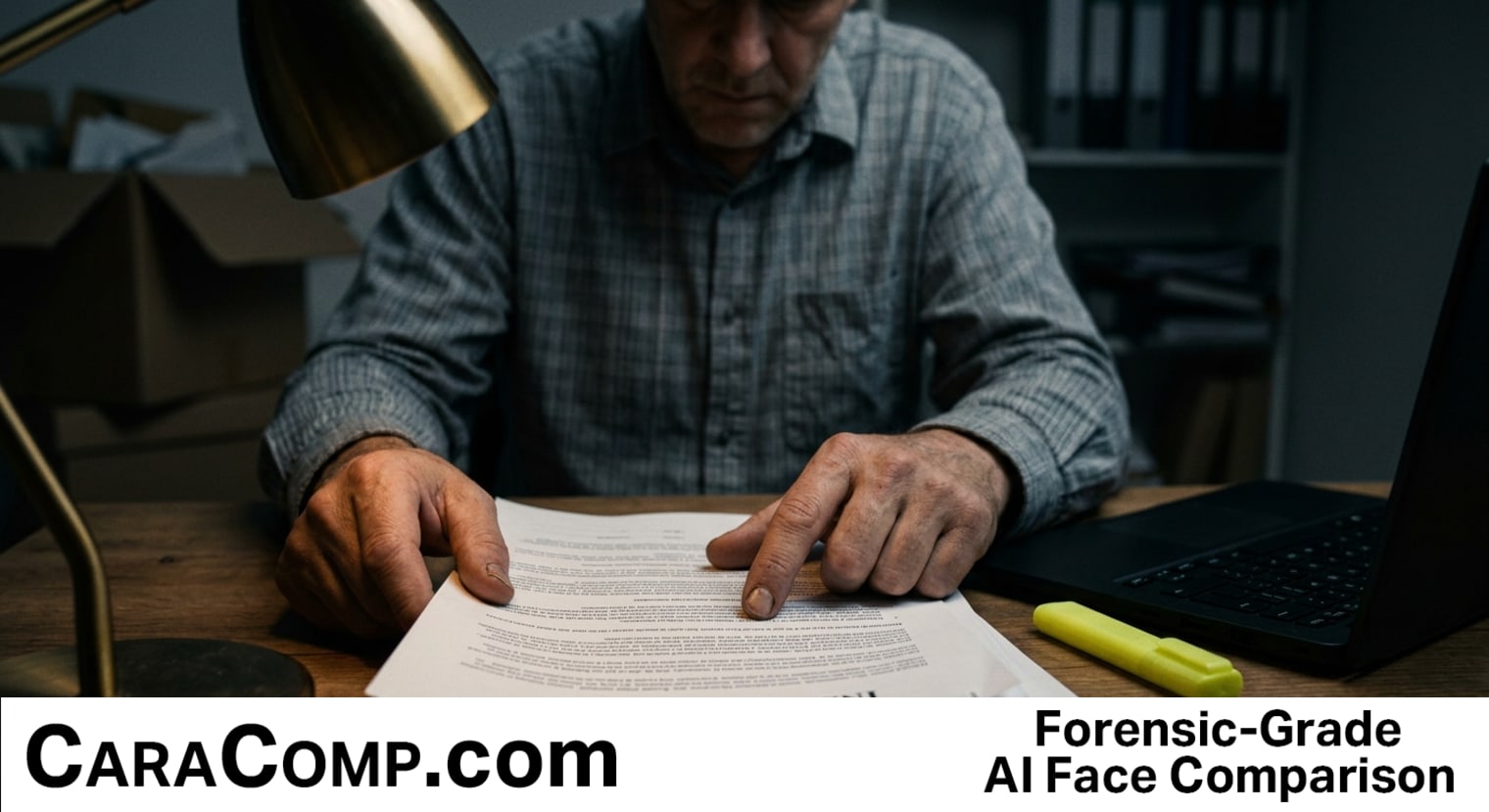
Your insurance company just found a legal loophole to leave you stranded: if an AI-generated voice or face tricked you into wiring money, it might not count as "human-to-human" fraud. It is being called the "intervening agency" exclusion, and it is a massive wake-up call for every private investigator and OSINT professional in the field. While insurance carriers are busy rewriting fine print to avoid paying out for deepfake scams, the professional investigator is being thrust into the center of a new evidentiary war where "proof of identity" is the only currency that matters.
In the investigation space, we have entered a reality where simply spotting a familiar face in a photo isn't enough for a professional case file. As bad actors weaponize AI to clone voices and faces, the demand for rigorous, court-ready analysis has moved from a luxury to a baseline requirement. If a client loses six figures because of an AI-generated impersonation, the first person they call after their insurance carrier denies the claim is a specialist who can provide objective, mathematical proof of what happened. This is where manual methods fail and professional technology becomes mandatory.
For solo PIs and small firms, this creates a massive technology gap. You are expected to provide the same caliber of analysis as federal agencies but on a fraction of the budget. Relying on manual comparisons or unreliable consumer-grade search tools is a liability you cannot afford to take. When insurance lawyers start arguing about whether a scam was "authorized" or "automated," your investigative report needs to be backed by precise Euclidean distance analysis—the same math used by enterprise tools—to prove matches with clinical certainty.
The future of investigation is no longer just about finding a face; it is about authenticating it with such precision that the results hold up under the scrutiny of a courtroom. As the insurance safety net shrinks, the value of the tech-savvy investigator who can provide affordable, reliable facial comparison is skyrocketing.
- The Burden of Proof is Shifting: With insurance companies excluding deepfake fraud, the responsibility to authenticate identity falls entirely on investigators and the technical reliability of their evidence.
- Enterprise-Grade Analysis is the New Baseline: Solo firms can no longer rely on manual comparison; they need court-ready reporting and Euclidean distance analysis to maintain their professional reputation.
- The Rise of "Authentication" Services: Investigative revenue will increasingly come from proving that a subject is—or isn't—who they claim to be in high-stakes fraud cases.
Read the full article on CaraComp: AI Faked Your Kid's Voice. Your Insurance Just Called It "Not Covered."


Comments
Post a Comment