A Camera Scanned His Face at School — Then His Family's Grocery Money Was on the Line
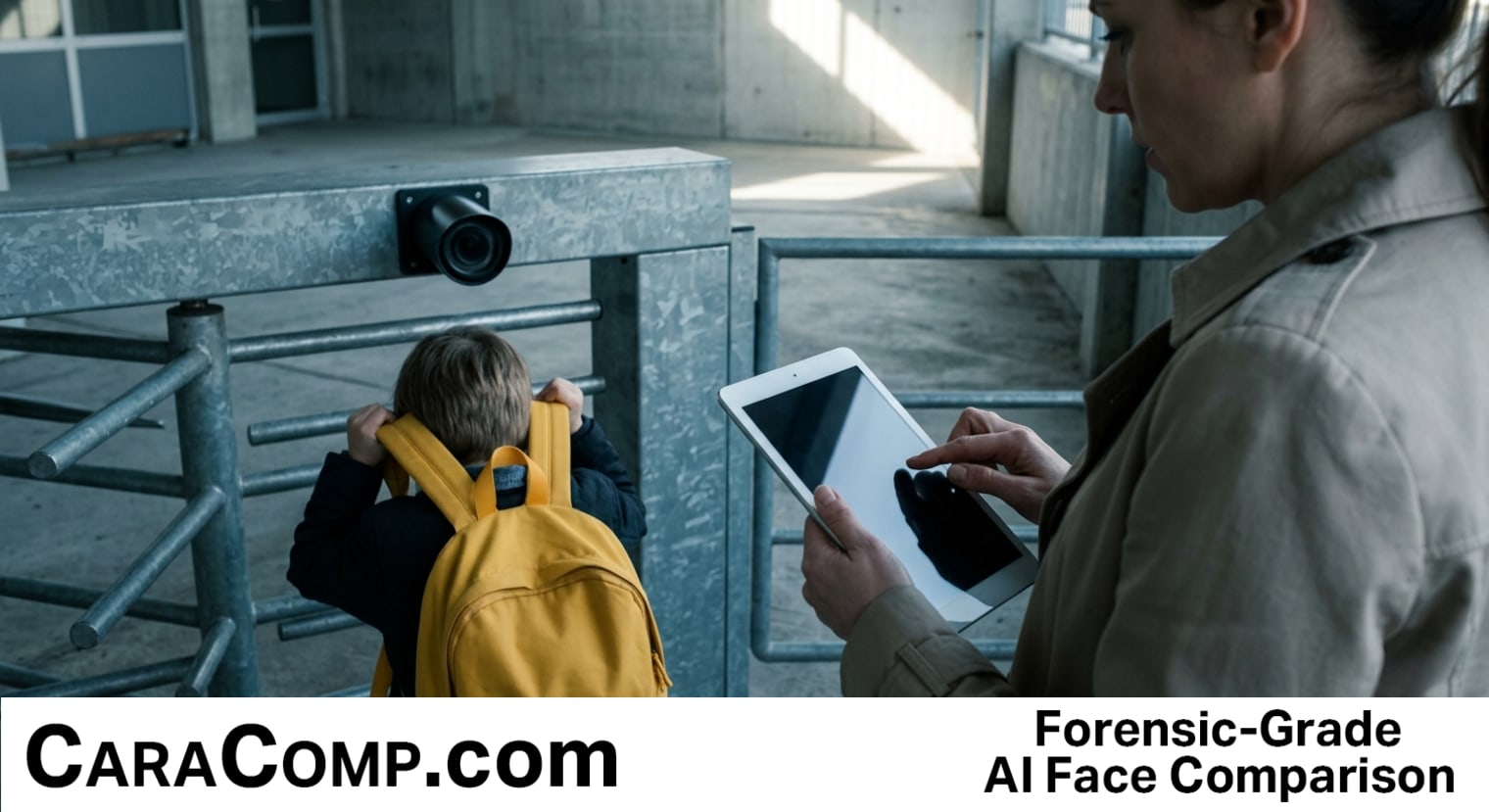
When an automated algorithm scanning school gates has the power to accidentally jeopardize a family's grocery budget, regulatory backlash is inevitable. In Paraná, Brazil, biometric checkpoints were used to log student attendance and directly govern welfare disbursements. Brazil's data protection watchdog swiftly intervened, suspending the program and putting mass biometric collection directly in the regulatory crosshairs for 2026 and 2027.
This shutdown marks a critical turning point for the biometrics and investigation sectors. The breakdown in Brazil illustrates what happens when organizations confuse indiscriminate, automated crowd scanning with deliberate, precise investigation technology. When public algorithms operate without strict human oversight, algorithmic errors carry devastating real-world consequences—inviting aggressive bans from privacy watchdogs.
For private investigators, OSINT analysts, and fraud specialists, this development underscores the vital distinction between controversial mass collection and controlled facial comparison. Defensible case analysis does not involve indiscriminate sweeping. It demands targeted, side-by-side Euclidean distance analysis on specific case files, allowing an investigator to verify matches, eliminate false leads, and maintain total evidential integrity.
The key implications for the field are clear:
- Indiscriminate mass scanning is hitting a regulatory wall: Data authorities are aggressively clamping down on automated public checkpoints, making broad biometric collection an enormous legal liability.
- Targeted facial comparison remains the gold standard: Legitimate investigations require human-in-the-loop analysis. Comparing specific, case-related photos side-by-side avoids compliance pitfalls while delivering accurate identification.
- Court-ready verification is mandatory: As scrutiny intensifies, investigators must move away from opaque consumer tools and rely on transparent, math-backed metrics that hold up under legal examination.
The collapse of Paraná's automated attendance experiment proves that poorly implemented, broad biometric programs will always collapse under regulatory pressure. The future belongs to precise, controlled facial comparison tools built to assist professional case analysis, not replace human judgment.
Read the full article on CaraComp: A Camera Scanned His Face at School — Then His Family's Grocery Money Was on the Line


Comments
Post a Comment