45 States Acted on Deepfakes. Massachusetts Went Home.
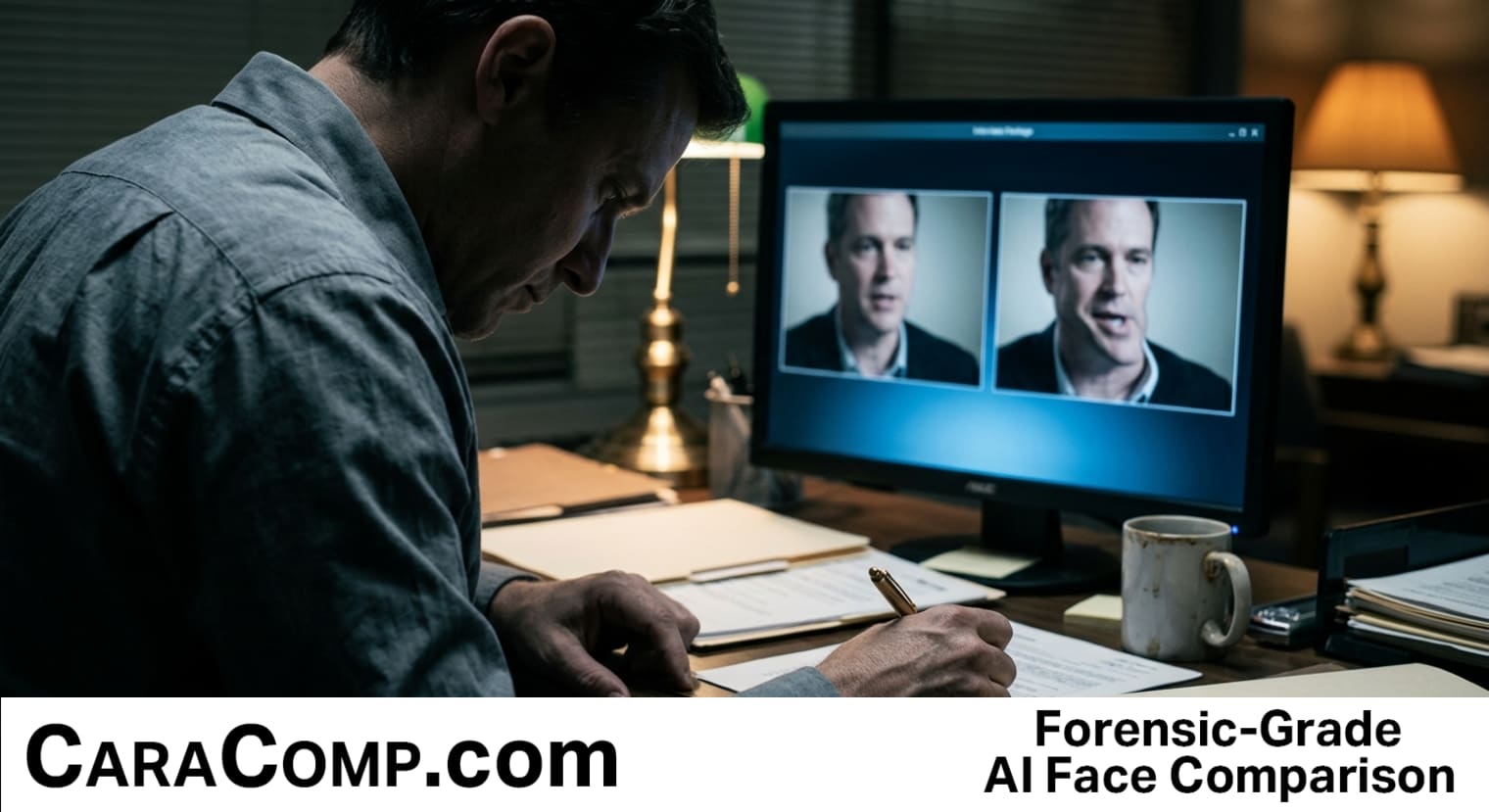
Massachusetts just handed a "get out of jail free" card to every digital charlatan and bad actor looking to weaponize synthetic media. While 45 other states moved to secure their elections and protect citizens from AI-generated deception, Bay State lawmakers essentially went home and left the lights off. For private investigators and OSINT professionals, this legislative void isn't just a political failure—it is a massive expansion of the "truth gap" that only enterprise-grade investigation technology can bridge.
When a gubernatorial candidate like Michael Minogue is forced to run against a digital ghost—a video using his face and voice to spout lies—and the law offers zero recourse, we have officially entered the Wild West of evidence. If the law won't stop the creation of synthetic content, the burden of proof shifts entirely to the investigator’s ability to verify identity through cold, hard data. This is where the distinction between "looking at a photo" and performing actual Euclidean distance analysis becomes the difference between a closed case and a professional disaster.
The reality is that solo investigators are now on the front lines of a verification war. When state lines don't stop deepfakes, and the legal system is three steps behind the latest generative model, your clients aren't paying you for your "best guess." They are paying you for court-ready certainty. If you are still relying on manual side-by-side comparisons or unreliable consumer search tools, you are leaving yourself—and your reputation—exposed in a state that has officially declared a "free-for-all" on digital authenticity.
Key implications for the investigative industry:
- The "Truth Gap" is a Revenue Opportunity: As legislative protection fails, the demand for professional facial comparison and synthetic media verification will skyrocket. Investigators who can provide objective, data-backed reports will replace those who rely on "gut feelings."
- Jurisdictional Chaos is the New Normal: With a patchwork of 45 different state laws and massive gaps like the one in Massachusetts, bad actors will deliberately operate from "safe haven" states. Investigators must be prepared to track and verify identity across borders where legal frameworks are non-existent.
- Evidence Standards are Shifting: In a world of fake audio and video, standard photographic evidence is no longer "self-authenticating." Professional investigators need batch processing and technical comparison tools to prove a subject's identity with mathematical precision.
The legislative session may have ended in a stalemate, but the clock on digital deception is still ticking. If the state won't provide the guardrails, it's up to the sharpest investigators to provide the proof.
Read the full article on CaraComp: 45 States Acted on Deepfakes. Massachusetts Went Home.


Comments
Post a Comment