419 Arrested for Fake Videos — The One in Your Group Chat Could Be Next
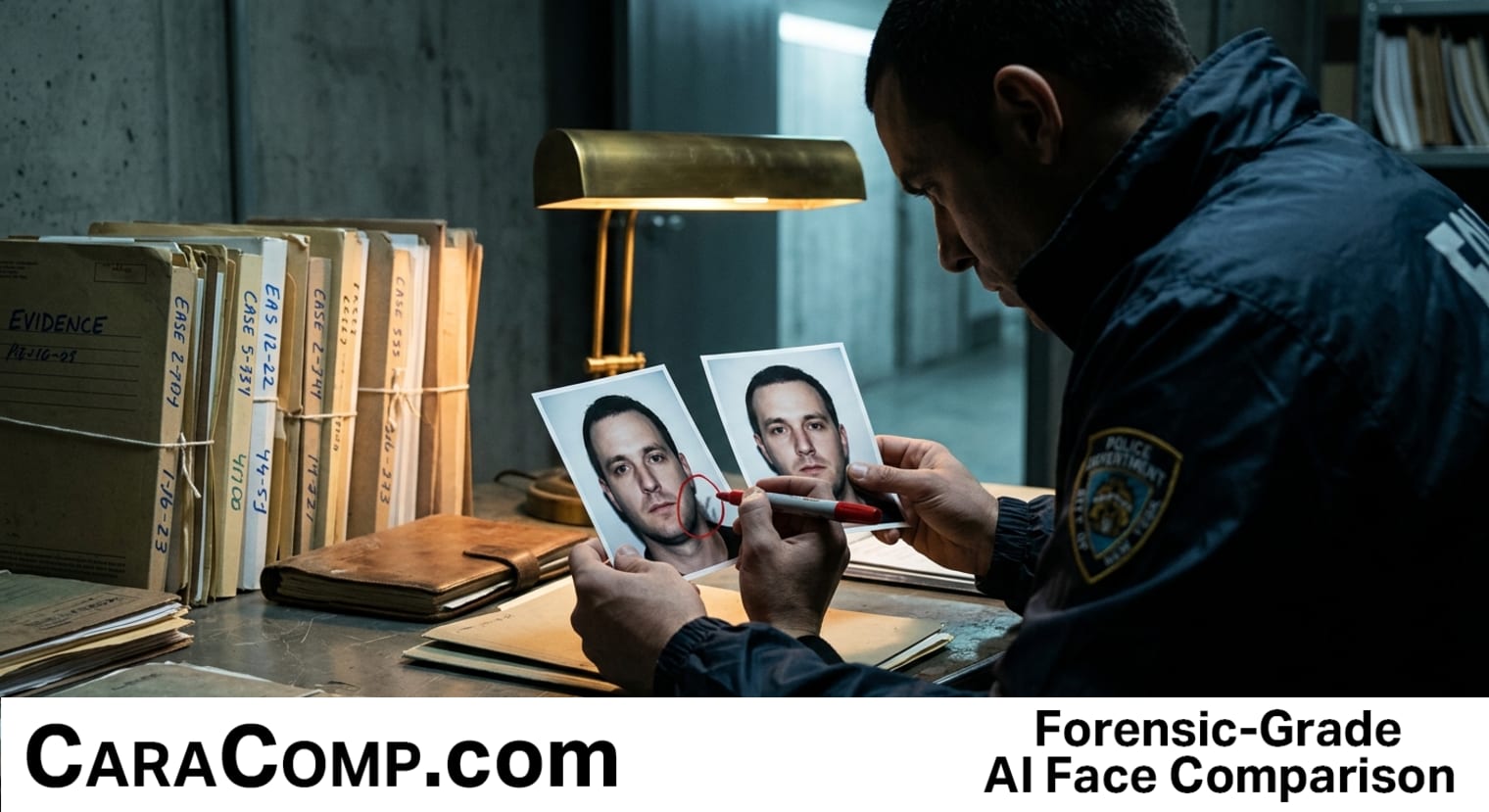
Four hundred and nineteen arrests in a single sweep is no longer just a headline—it’s a warning shot for every private investigator still relying on manual photo comparison. When the Korean National Police Agency dismantled a deepfake production ring of this scale, they didn't just catch a few "bad actors"; they exposed an industrial-grade supply chain of digital deception. For the solo PI or OSINT researcher, this news confirms a terrifying reality: the "fake" you are looking for isn't just a prank, it’s a professional manufacture.
From an investigative standpoint, the sheer volume of 1,636 separate cases handled by a single detection tool proves that we have moved past the age of "eyeballing" evidence. If you are still spending three hours squinting at side-by-side photos to determine a match, you aren't just wasting time—you are falling behind an adversary that is now operating at factory scale. The "identity gap" in our industry is widening. While state-level agencies use AI forensic techniques to reconstruct criminal processes, many independent investigators are still stuck with unreliable consumer tools or manual methods that wouldn't hold up for five seconds in a court of law.
The standard for "due diligence" has shifted. In a world where 419 people can be arrested for producing fakes, your reputation as an investigator hinges on scientific rigor. You need the same Euclidean distance analysis used by federal agencies, but without the $2,000-a-year price tag that keeps enterprise tech out of reach for small firms.
- Manual comparison is now a professional liability. With deepfake incidents increasing by 1,500%, relying on human judgment is a gamble. Investigators must adopt batch comparison tools to handle the sheer volume of modern case photos.
- Affordable, enterprise-grade analysis is the only equalizer. To maintain a competitive edge, solo PIs must move away from "trust me" results and toward court-ready reporting based on biometric distance and forensic data.
The Korean bust proves that the technology to catch these criminals exists. The question is whether independent investigators will equip themselves with those same tools or continue to bring a knife to a digital gunfight. It’s time to stop guessing and start analyzing.
Read the full article on CaraComp: 419 Arrested for Fake Videos — The One in Your Group Chat Could Be Next


Comments
Post a Comment