1 in 30 Times, the Face Scanner Rejects the Right Person — Here's Why
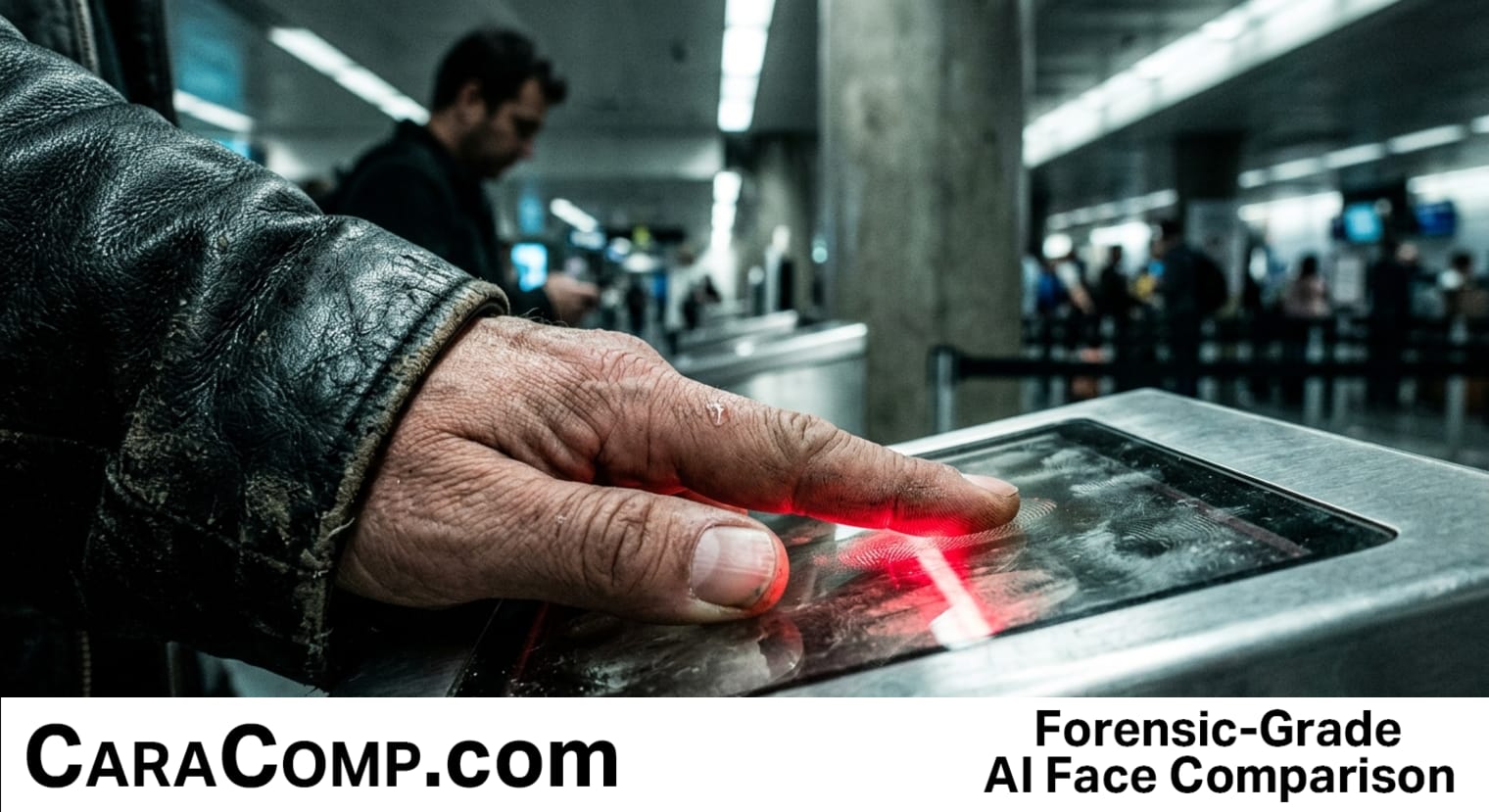
If you are relying on a biometric system that rejects one out of every thirty legitimate users, you aren’t running a high-tech security protocol—you’re playing a high-stakes game of chance. Recent data from NIST reveals a staggering 3.4% false rejection rate for real-world facial recognition kiosks. For the average traveler or pharmacy customer, it’s a minor annoyance. For a professional investigator, that kind of margin for error is a career-ender.
The industry is currently obsessed with "fast and flashy" kiosks that prioritize throughput over precision. These systems often fail because they rely on "stale templates"—comparing a 2025 face against a master copy from 2022. They buckle under poor lighting and shift their matching thresholds just to keep the line moving. This is the "black box" problem of consumer-grade biometrics: when the machine says "no match," it rarely tells you why. It doesn't account for the Euclidean distance analysis or the environmental variables that any serious OSINT professional or private investigator knows are critical to a positive identification.
In the investigative world, we don't have the luxury of a "do-over" at a kiosk. We are dealing with grainy CCTV footage, insurance fraud suspects dodging the camera, and social media photos taken in the worst possible lighting. We don't need a system that scans crowds; we need precision facial comparison tools that allow us to verify identity with mathematical certainty. The failure of these kiosks proves that the "set it and forget it" approach to AI is a myth. High-stakes case analysis requires tools that put the power back in the investigator's hands, providing professional-grade reporting that holds up under scrutiny.
- Reliability is the only currency that matters in the field: A 3.4% failure rate is acceptable for a grocery store kiosk, but it is catastrophic for a fraud investigation. Investigators must use tools that prioritize "comparison" over "surveillance" to ensure every match is backed by data, not just a black-box algorithm.
- Environment is a variable, not a constant: Kiosks fail because the real world is messy. Professional investigation technology must be able to handle "dirty" data—lighting shifts, angle changes, and aging—without throwing a false negative.
The shift toward ubiquitous kiosks has blinded the public to the limitations of the technology. As industry insiders, we know better. The future of facial comparison isn't in a kiosk at the airport; it's in the hands of the sharp investigators who use enterprise-grade analysis to close cases faster than the machine ever could.
Read the full article on CaraComp: 1 in 30 Times, the Face Scanner Rejects the Right Person — Here's Why


Comments
Post a Comment