Your Selfie Now Unlocks Your Pension — And Scammers Have a $15 Workaround
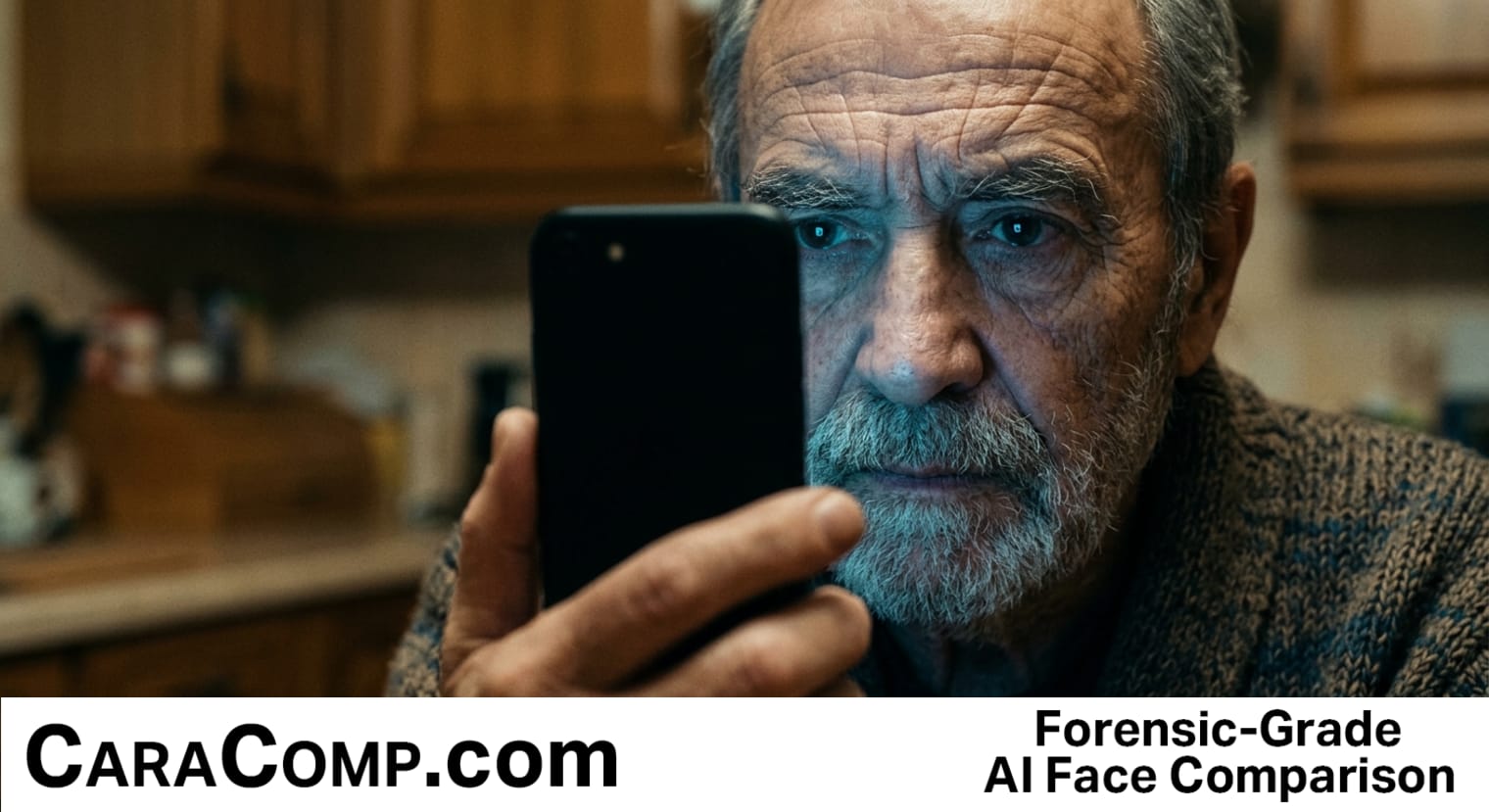
Criminals are buying your face for $15. That is the current market rate for a high-quality digital "fake identity" on the dark web, and it is exactly why the UN Joint Staff Pension Fund just had to undergo a massive security audit to protect 70,000 retirees. When a selfie becomes the key to unlocking a lifetime of savings, the line between a "proof-of-life" check and a total financial wipeout comes down to the math behind the mask.
For private investigators and OSINT researchers, this news is a loud warning shot. We are moving into a landscape where a "lookalike" is no longer a coincidence—it is a manufactured product. As pension funds and banks pivot to facial verification to release payments, the margin for error in identity verification has officially hit zero. If you are still relying on manual "eyeballing" to compare subjects across case photos, you are operating with a massive blind spot that scammers are already exploiting.
The UN’s move to certify their spoof protection via BixeLab proves that biometric analysis is no longer a "future" tech; it is the current gatekeeper of global wealth. However, while enterprise agencies spend six figures on these systems, solo investigators are often left in the dust, stuck with unreliable consumer tools or hours of manual labor. This creates a dangerous tech gap. In a world where a fraudulent match can be generated for the price of a lunch, investigators need the same Euclidean distance analysis used by the big players to confirm identities with mathematical certainty.
- The commoditization of fraud means investigators must now move faster than the software generating the fakes. If you aren't using professional-grade facial comparison to verify subjects, you're not just slow—you're a liability to your clients.
- Court-ready reporting is the new baseline. As biometrics become the standard for pensions and banks, "I think it’s him" won't hold up in a fraud investigation. You need data-backed, professional analysis that can withstand legal scrutiny.
- Identity is the new currency. As more systems move to facial-access models, the ability to perform high-speed, batch facial comparison is becoming the most critical skill set in the investigator’s toolkit.
The standard has changed. If you're still manually comparing faces, you’re bringing a magnifying glass to a deepfake fight. It’s time to adopt the tools that turn "looks like" into "proven match."
Read the full article on CaraComp: Your Selfie Now Unlocks Your Pension — And Scammers Have a $15 Workaround


Comments
Post a Comment