Your Selfie Isn't What's Protecting You: The 4 Hidden Checks Running Behind Every ID Scan
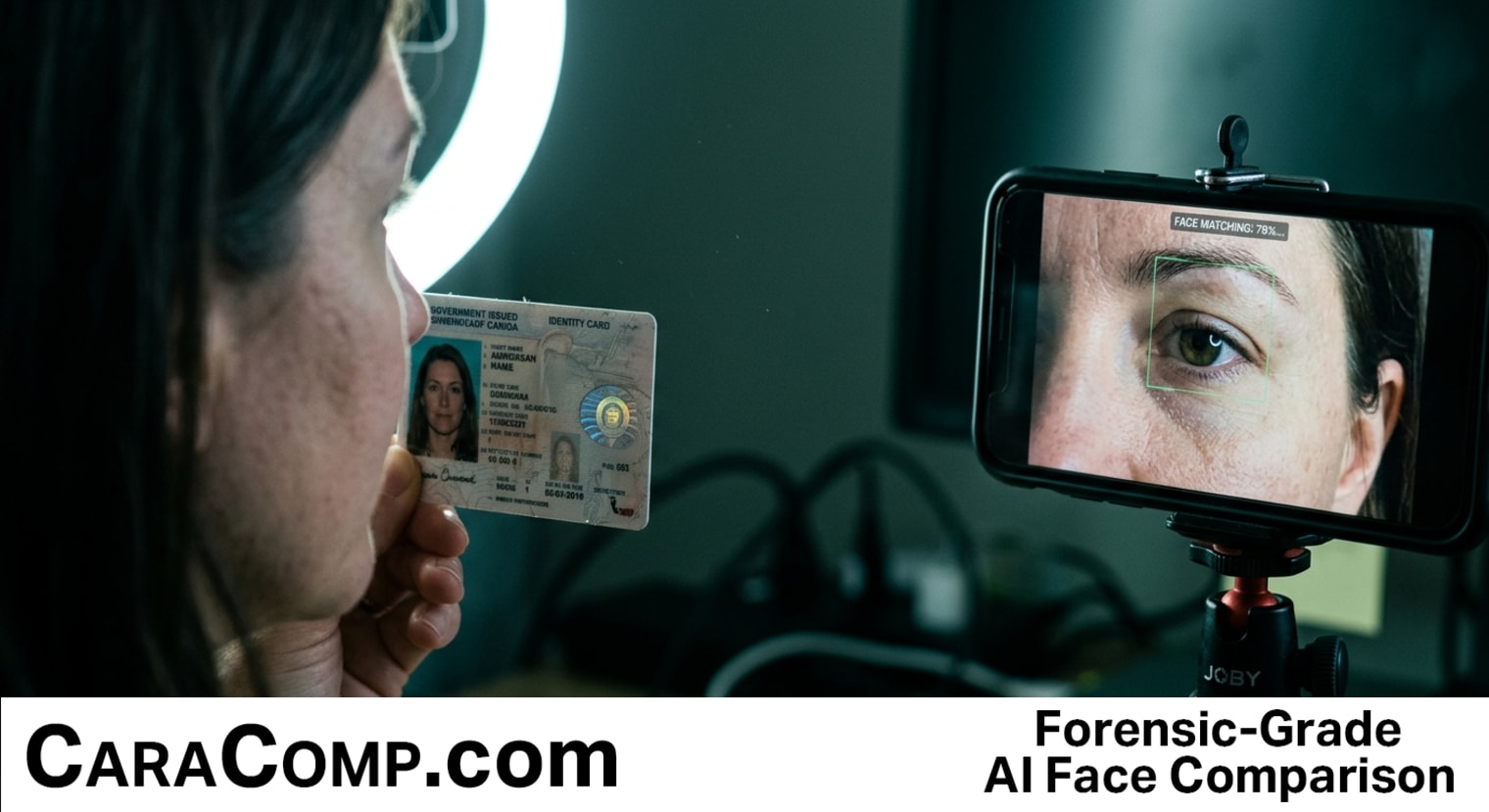
A 1,100% surge in deepfake fraud just turned your manual facial comparisons into a massive professional liability. If you are still "eyeballing" photos to confirm a subject's identity, you aren't just working slowly—you are likely missing the sophisticated synthetic masks and document forgeries that are now becoming industry standard for bad actors. The reality is that a simple selfie match is no longer the "gold standard" of identity; it is merely one layer in a high-stakes digital arms race.
For the solo private investigator or OSINT researcher, this news is a wake-up call. Large enterprises are currently stacking document forensics, liveness detection, and behavioral biometrics to verify a single person. Meanwhile, many field investigators are still spending three-plus hours manually squinting at grainy social media photos and driver's licenses. The gap between enterprise-grade security and the tools available to the independent investigator has never been wider, or more dangerous for your reputation.
Professional facial comparison requires more than a "hunch." It requires Euclidean distance analysis—the same mathematical precision used by federal agencies to map facial anchor points and calculate a definitive confidence score. In an environment where synthetic identities are rising by over 300% year-over-year, claiming a match in a court-ready report based on manual observation is increasingly indefensible. You need the math to back up the claim.
At CaraComp, we’ve watched the market gatekeep this technology behind $2,000-a-year enterprise contracts. We believe solo investigators deserve the same analytical horsepower as a state-level lab without the "big brother" surveillance baggage or the exclusionary pricing. Transitioning from manual "spotting" to algorithmic comparison isn't just about speed; it's about survival in a field where the "human eye" is officially being outpaced by AI-generated deception.
- Manual comparison is a liability — With deepfake fraud skyrocketing, relying on visual "gut feelings" leaves investigators open to missing synthetic fakes that only Euclidean distance analysis can catch.
- Thresholds determine truth — A facial match is only as good as its confidence score; professional-grade tools provide the mathematical "threshold" required for reports to be considered court-admissible.
- The tech gap is closing — Solo PIs no longer need five-figure budgets to access the multi-layered verification logic that banks and government agencies use to stay ahead of identity fraud.
The days of "good enough" photo matching are over. If you aren't using professional comparison software, you're effectively guessing in a world where the fraudsters have already upgraded their tools.
Read the full article on CaraComp: Your Selfie Isn't What's Protecting You: The 4 Hidden Checks Running Behind Every ID Scan


Comments
Post a Comment