Your Phone Number Is About to Need Your Face
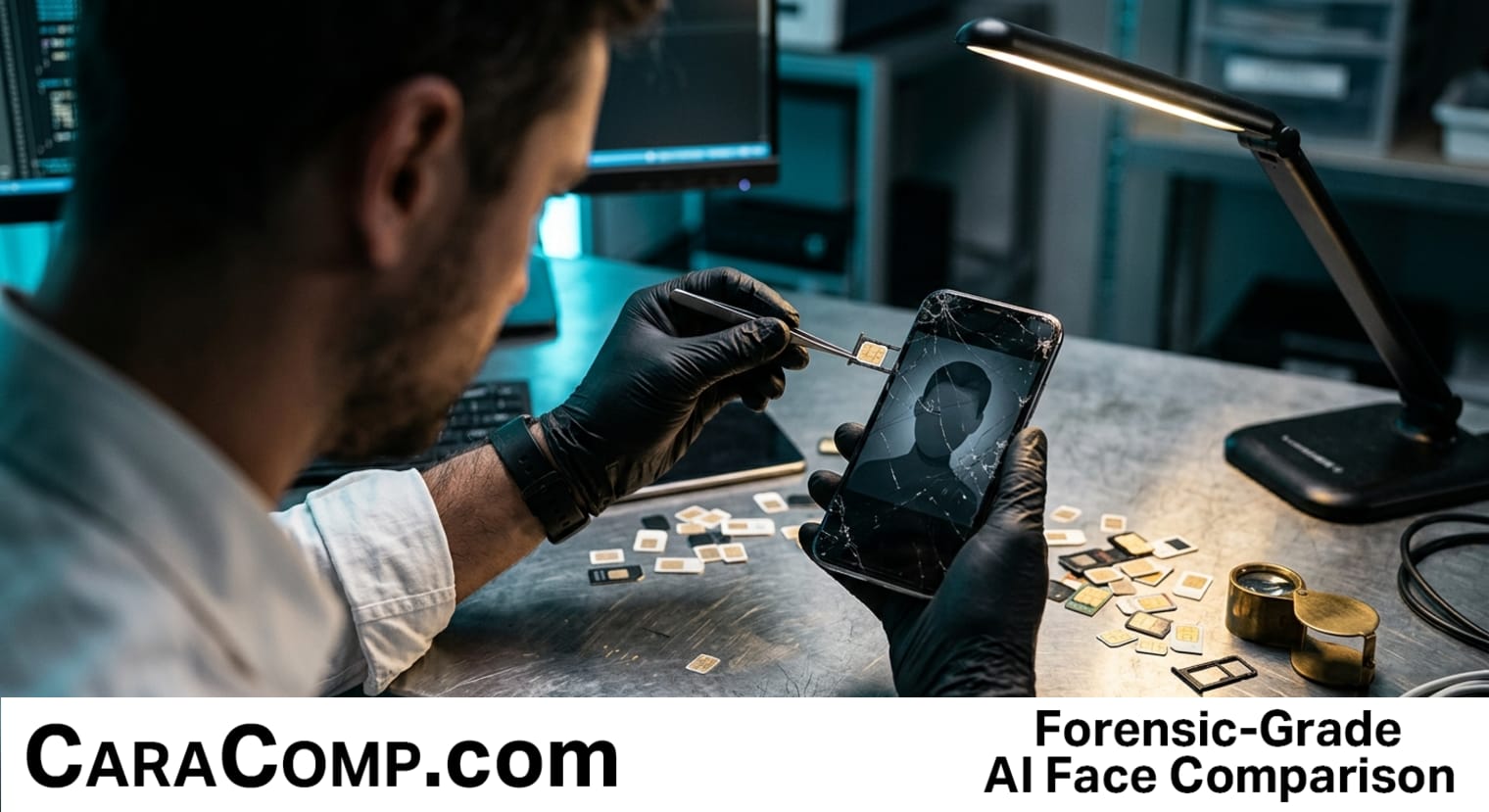
India just vaporized 50 million mobile connections in a single move, and it wasn’t because of a billing glitch or a network outage. It was because an algorithm realized that 50 million "unique" subscribers actually shared the same handful of faces. If you’re an investigator still relying on manual photo reviews or basic skip tracing, this is the wake-up call you can't afford to ignore: the phone number is officially a biometric anchor.
The system India deployed, known as ASTR, uses the exact same Euclidean distance analysis that high-level forensic experts use to compare facial features across thousands of records. It doesn't just "look" at a photo; it maps the geometry of the face to find matches that the human eye—and traditional databases—miss. For the solo PI or the small firm, this news is a double-edged sword. It proves that facial comparison technology is the most effective way to dismantle fraud, but it also means that the "old way" of investigating is becoming obsolete at lightning speed.
We are seeing a fundamental shift in how identity is verified. When a phone number becomes as tightly regulated as a passport, the data points you collect on a subject change. Your ability to compare a "selfie" from a SIM registration against a social media profile or a surveillance still isn't just a "nice-to-have" skill anymore—it’s the barrier to entry for modern case analysis. The fraud centers India shut down were using thousands of SIMs per person; they relied on the fact that humans are too slow to spot a face repeated a thousand times. They didn't count on AI doing it in seconds.
Key implications for the investigative industry:
- Biometric anchors are the new standard: Phone numbers are no longer just contact info; they are identity checkpoints that will increasingly require biometric verification, making facial comparison tools essential for verifying subjects.
- Manual comparison is a professional liability: When a government can scan 1.34 billion faces to find fraud, a PI spending three hours manually squinting at two photos is not just being "thorough"—they are being inefficient and prone to error.
- The "Enterprise Gap" is closing: The same Euclidean distance analysis used by massive government systems is finally accessible to solo firms, leveled the playing field for those who adopt it early.
The takeaway is clear: the infrastructure of identity has changed. You can either keep manual methods and pray you don't miss a match, or you can use the same tech caliber as federal agencies to close cases before the competition even starts their search.
Read the full article on CaraComp: Your Phone Number Is About to Need Your Face


Comments
Post a Comment