Your Payment App Is About to Become Your ID — and Scammers Already Know It
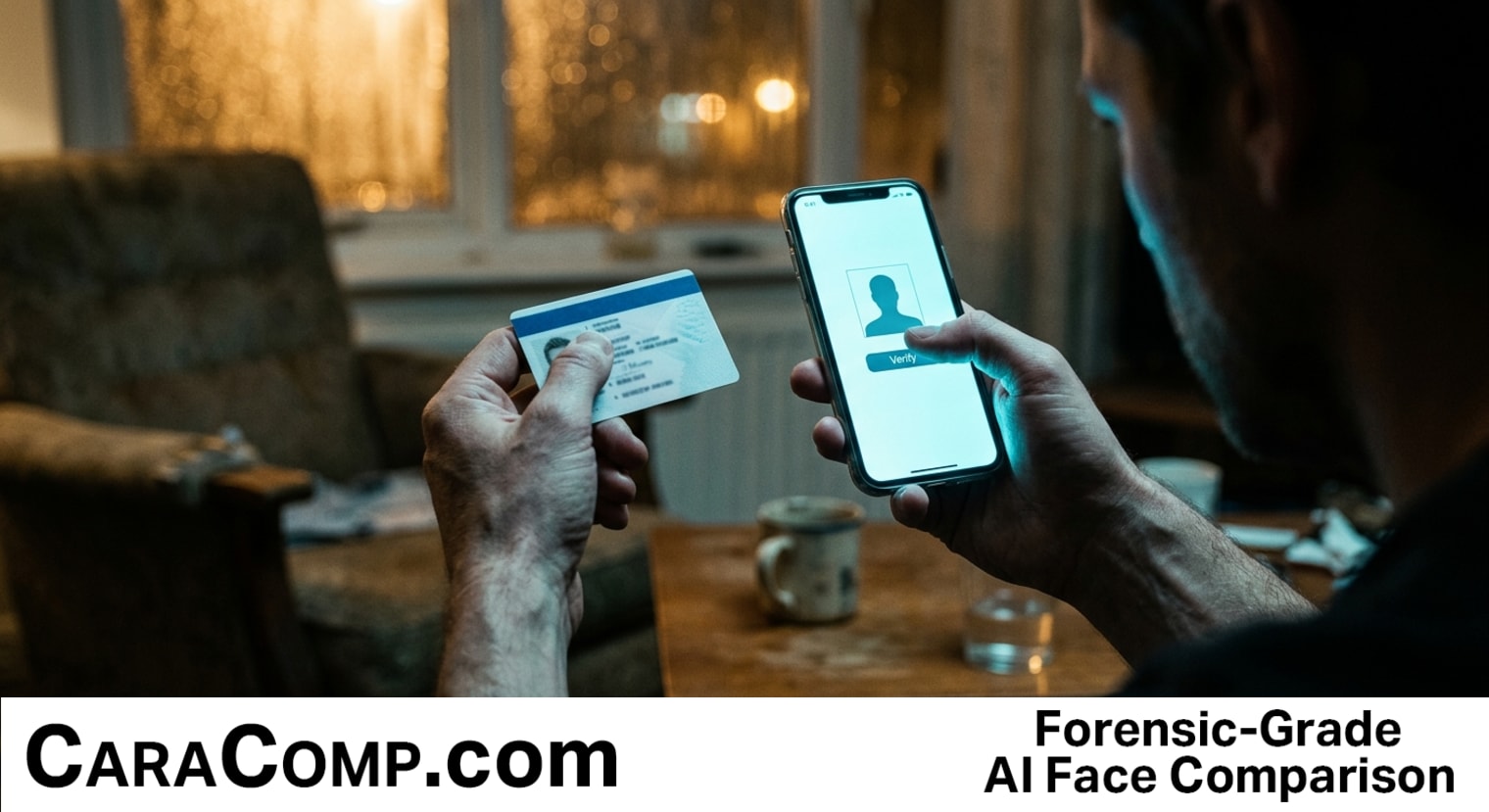
Imagine a world where losing access to your digital wallet doesn't just mean losing your credit cards—it means losing your very ability to prove you exist. South Korea just crossed that rubicon by allowing payment apps to verify government ID photos in real time. While the fintech industry celebrates this as a milestone for convenience, for the modern investigator, it signals a massive expansion of the "identity attack surface" that will redefine fraud cases for the next decade.
When a payment app becomes a government-sanctioned identity hub, the stakes for facial comparison move from "interesting" to "mission-critical." For private investigators and OSINT researchers, the news out of Seoul isn't just about international banking; it’s a warning shot. We are entering an age where a single "verify your identity" prompt can be weaponized by AI to hijack a person's entire legal persona. If you aren't using professional-grade tools to vet these images, you're essentially bringing a knife to a deepfake gunfight.
The core of the problem is that as verification becomes more integrated, it becomes more invisible. Scammers are already mimicking these real-time biometric checks to bypass traditional security. For a solo PI or an insurance fraud investigator, the "manual eye test" is officially dead. You cannot simply look at two photos and decide if they match when the adversary is using synthetic media to bridge the gap. You need Euclidean distance analysis—the same math used by federal agencies—to provide a court-ready report that proves a match or exposes a fraud.
- The rise of the "Master Identity" target — By consolidating payment and government ID, we've created a single point of failure that scammers will exploit using sophisticated facial spoofs.
- The end of manual photo review — Investigators can no longer stake their reputation on visual guesses; professional facial comparison that measures geometric distances between features is now the only way to maintain credibility in court.
- The democratization of enterprise tech — As these scams become more complex, solo investigators must adopt the same caliber of biometrics used by big banks, or risk falling behind the tech-savvy criminals they are chasing.
At CaraComp, we see this shift as a call to action. You shouldn't need a government budget to access the Euclidean distance analysis required to debunk a synthetic identity. The future of investigation isn't just about finding people; it's about proving they are who they claim to be with mathematical certainty.
Read the full article on CaraComp: Your Payment App Is About to Become Your ID — and Scammers Already Know It


Comments
Post a Comment