Your Kid's ID Photo Just Became Someone Else's Database
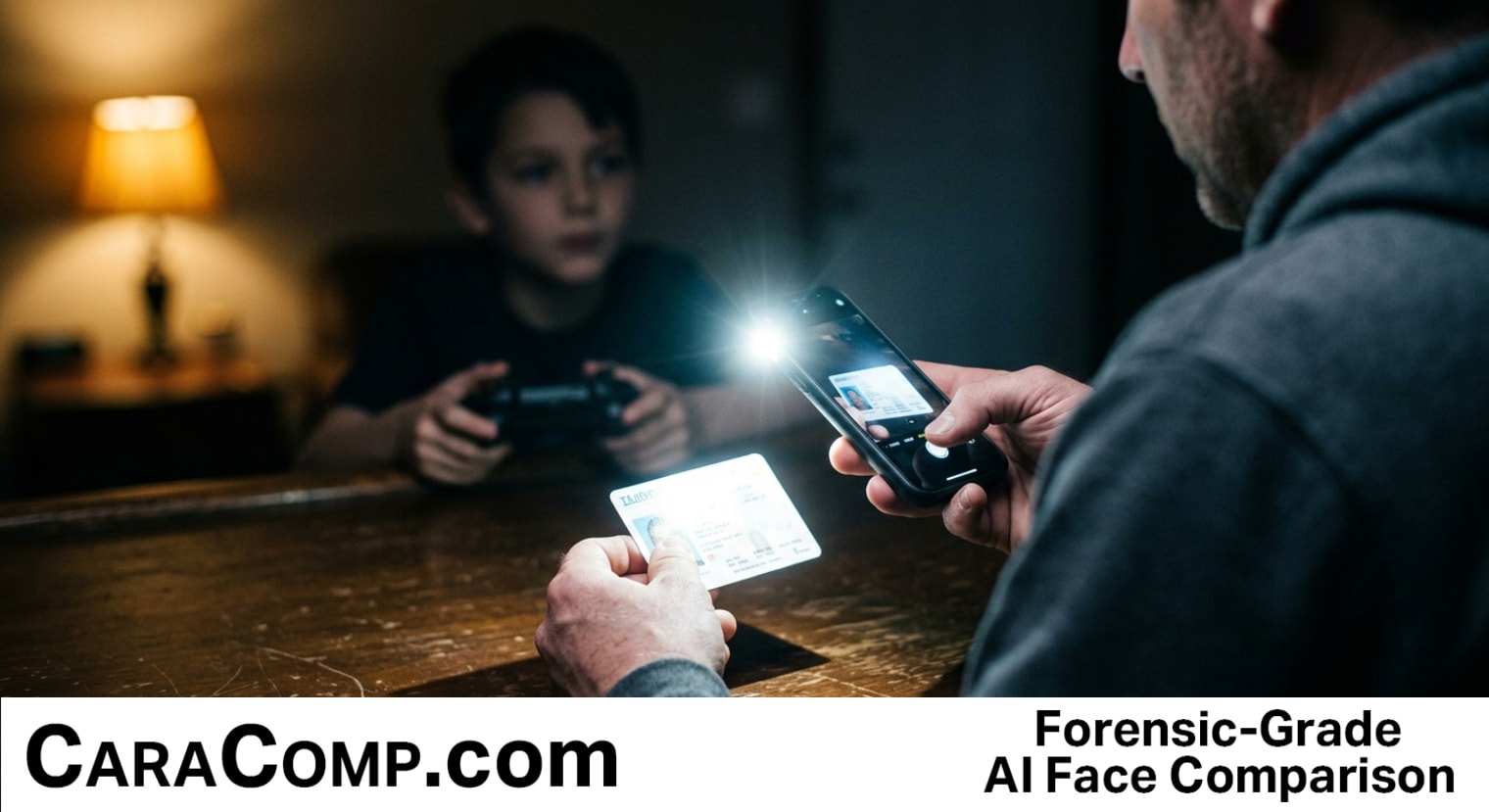
The Supreme Court just handed a blank check to every third-party verification vendor in the country, and your family’s biometric data is the currency. By greenlighting Texas’s App Store Accountability Act, the court isn't just protecting children; it’s effectively forcing millions of parents to upload high-resolution government IDs and facial scans into the systems of unvetted middleman companies. For the professional investigative community, this move highlights a dangerous trend: the conflation of "verification" with professional-grade analysis.
As investigators, we understand the technical nuance that regulators often miss. There is a massive structural difference between mass-market biometric collection and precise facial comparison. While these new laws mandate "verification," they rarely mandate the security or the mathematical precision—like Euclidean distance analysis—that professional investigators rely on to close cases. Instead, we are seeing the creation of massive, vulnerable "junk databases" of facial data that are one breach away from disaster. We’ve already seen third-party vendors fail to protect Discord users; now, that risk is being scaled to every app store in Texas and beyond.
The reality is that these consumer-facing "black box" tools are often built for speed and compliance, not for investigative integrity. They lack the court-ready reporting and the batch processing capabilities that a serious solo investigator or OSINT professional requires. While the public is being forced into these systems, the professional response must be a shift toward controlled, enterprise-grade technology that keeps the investigator in the driver’s seat. We don't need more surveillance; we need better tools to analyze the data we already have legally and securely.
- Biometric data is the new honey pot — Mandating ID uploads for millions of users creates a centralized target for bad actors, making family data more vulnerable than ever before.
- Verification is not Analysis — Consumer-grade tools being used for these mandates lack the professional Euclidean distance analysis required to provide reliable, court-admissible evidence in real-world investigations.
- The "Compliance Gap" creates investigative noise — As more states follow Texas, investigators will be forced to sift through more unreliable, low-fidelity biometric markers, emphasizing the need for high-precision comparison software.
This ruling is a wake-up call. The distinction between a "quick check" and a professional investigative methodology has never been more critical. If you are still relying on manual comparisons or unverified consumer tools to handle facial data, you are already behind the curve in a world where biometric data is becoming the primary point of failure.
Read the full article on CaraComp: Your Kid's ID Photo Just Became Someone Else's Database


Comments
Post a Comment