Your Kid's Birthday Photo Is All a Stranger Needs — And It Takes 15 Minutes
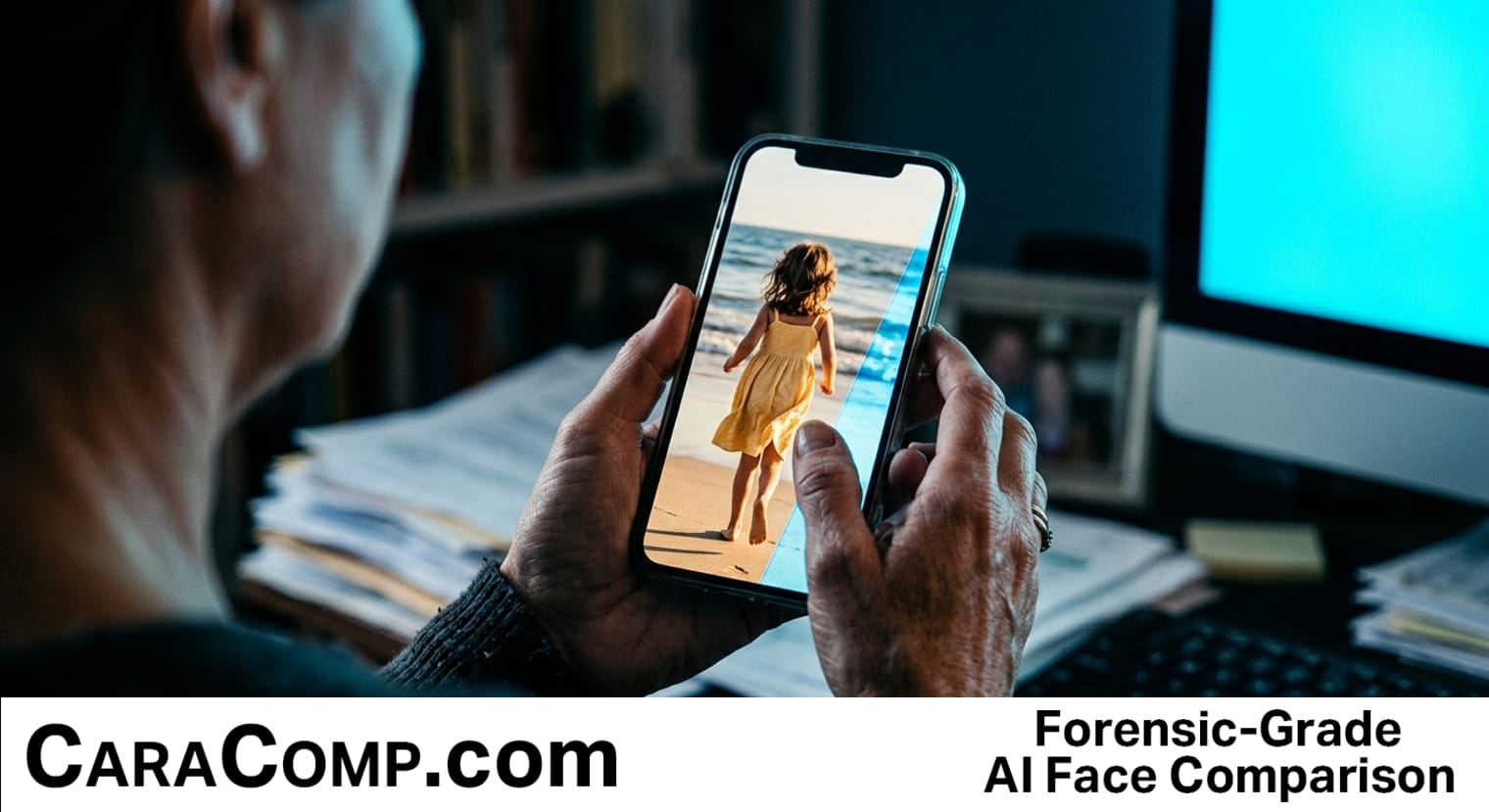
Your child’s digital identity can be weaponized in less time than it takes to finish a lunch break. The UK National Crime Agency’s latest warning isn't just another "internet safety" memo—it’s a cold admission that the technical barrier for creating harmful deepfakes has effectively collapsed. With just 20 public photos and 15 minutes of AI processing, a bad actor can turn a birthday snapshot into a targeted nightmare. For investigators, this represents a massive shift in how we handle digital evidence and victim identification.
In the investigative sector, we see this as a problem of Euclidean distance analysis and data permanence. The same mathematical precision used to close insurance fraud cases or identify subjects in OSINT research is being mirrored by bad actors to synthesize identities. The "15-minute problem" highlights that the gap between a "harmless photo" and a biometric source file has vanished. While the general public is just now waking up to the risks of oversharing, professional investigators are already seeing the fallout in case files involving extortion and identity theft.
The problem isn't the act of sharing; it's the total lack of friction. Parents are inadvertently providing the high-resolution source material required for LoRA fine-tuning—the tech that allows AI to mimic a specific face with haunting accuracy. We have to stop treating facial comparison as a "future" risk. It is the current frontline. When a private investigator or a detective is tasked with finding the source of a manipulated image or verifying a victim's identity, they need tools that can parse these biometric markers instantly without an enterprise-level budget.
Key implications for investigators and digital safety:
- Facial data is now a permanent biometric liability: Once a face is indexed and fine-tuned by an AI model, that identity exists in a searchable, manipulatable state forever, far outlasting the original social media post.
- The shift from "Surveillance" to "Comparison": Modern case resolution relies on side-by-side analysis of known versus synthesized images to prove origin and intent. Professional facial comparison is no longer optional; it is a requirement for court-ready reporting.
- The "Accessibility Gap" is dangerous: Bad actors are using cheap, accessible AI. Investigators must have access to equally affordable, enterprise-grade Euclidean analysis to keep pace, or they risk missing critical matches in high-stakes cases.
We are moving into a period where a person’s face is their most public-facing vulnerability. Investigators who don't have the technology to analyze these biometric distances in seconds aren't just behind the curve—they're losing the race against AI-driven exploitation.
Read the full article on CaraComp: Your Kid's Birthday Photo Is All a Stranger Needs — And It Takes 15 Minutes


Comments
Post a Comment