Your Face Was Scanned Saturday. Nobody Asked If That Was Legal.
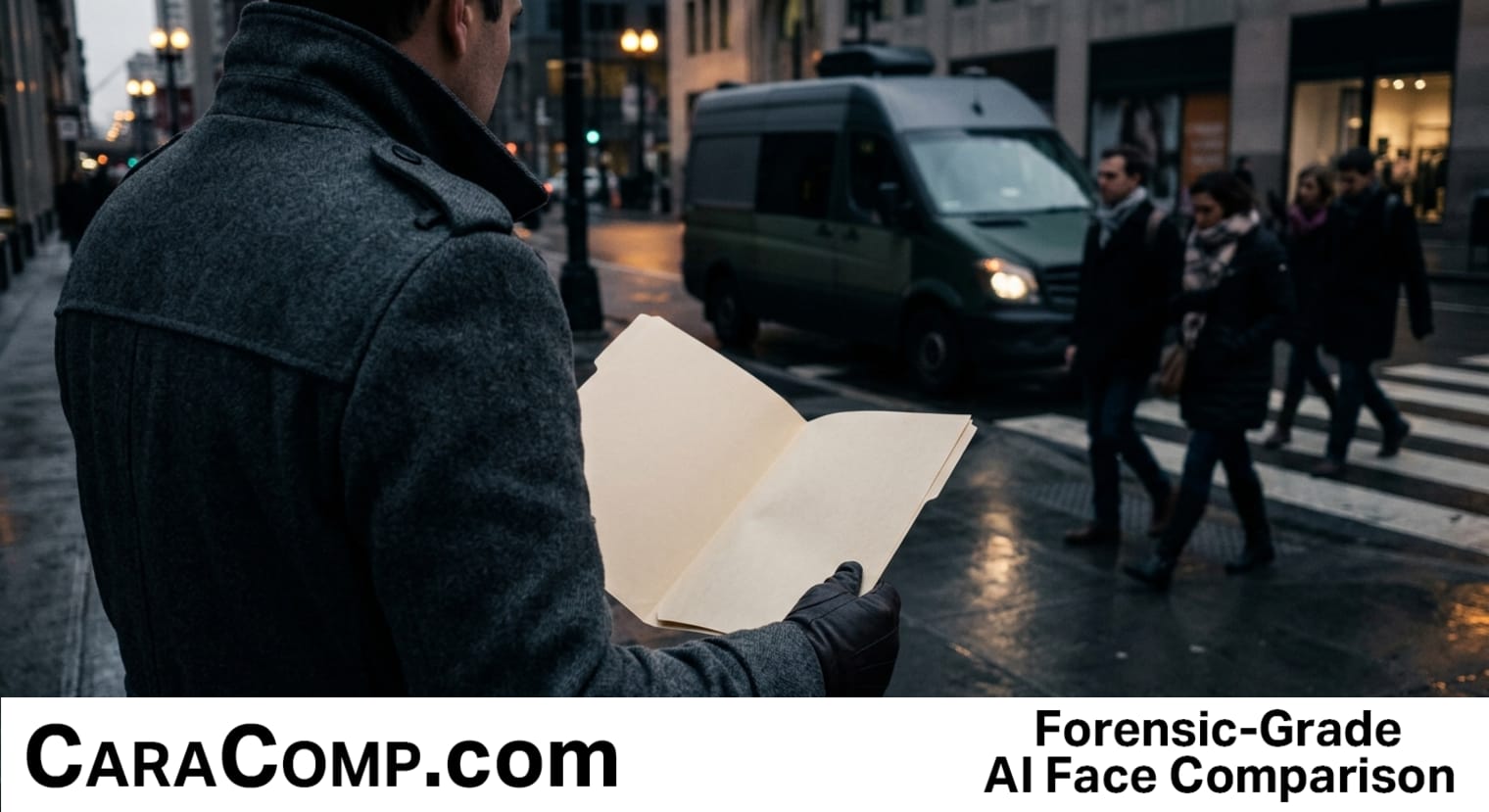
Imagine walking past a van on a busy Saturday afternoon, minding your own business, only to have your biometric data instantly cross-referenced against a database of 4,000 targets without a single piece of legislation authorizing the scan. In Western Australia, this wasn't a "what-if" scenario—it was a week-long reality where 130,000 faces were processed before the state’s privacy watchdog was even invited to the conversation. When the rules are written after the cameras start rolling, we aren't performing law enforcement; we’re performing an uncontrolled experiment on the public.
For the professional investigator, this story is a massive red flag. There is a fundamental distinction between the controversial world of mass public scanning and the surgical, necessary work of facial comparison. At CaraComp, we know that the real value of AI isn't in casting a net over a city—it’s in the precise, Euclidean distance analysis of specific subjects in a controlled case file. While big agencies are busy dodging privacy commissioners, solo private investigators and OSINT researchers are left wondering if the regulatory backlash will eventually snatch away the tools they need to close legitimate insurance fraud or missing persons cases.
The industry is currently obsessed with "accuracy scores," but as this trial proves, accuracy is a hollow metric without a rigorous process. A tool that claims 99% accuracy in a lab often collapses when faced with the motion blur and harsh lighting of a sidewalk. For a solo PI, relying on a tool that lacks a professional, court-ready reporting structure isn't just lazy—it’s a threat to their reputation. We need to move away from the "black box" approach and toward transparent, investigative methodology that treats facial comparison as a forensic science rather than a surveillance dragnet.
- The governance gap creates a liability for all investigators. When high-profile trials skip privacy reviews, it invites heavy-handed regulations that may eventually restrict access to affordable, enterprise-grade comparison tools for small firms.
- Real-world conditions destroy lab-tested benchmarks. Pedestrian scans often suffer a 30-40% drop in confidence due to camera angles, meaning thousands of innocent people could be flagged simply because the lighting was off.
- Professionalism requires a paper trail. For biometrics to be admissible and respected, investigators must use tools that provide a clear analysis of Euclidean distance and standard investigative reporting, not just a "yes/no" notification.
The future of this technology shouldn't be reserved for government agencies with six-figure budgets and no oversight. It belongs to the sharp, tech-savvy investigator who understands that the right tool, used within a clear ethical framework, is what actually closes cases and wins client trust.
Read the full article on CaraComp: Your Face Was Scanned Saturday. Nobody Asked If That Was Legal.


Comments
Post a Comment